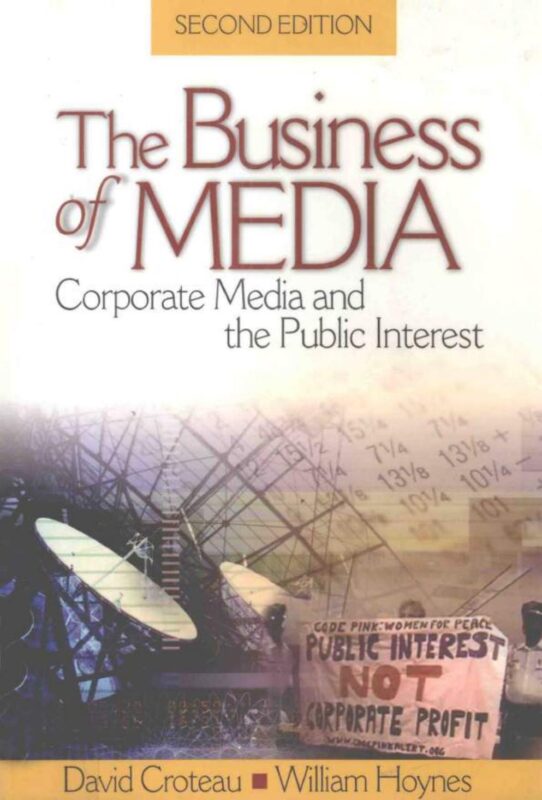
The Business of Media Corporate Media and the Public interest 2nd Edition By David R Croteau, William Hoynes, David Croteau
$30.00
Secure checkout
Instant digital download
PDF document
Document details
- Pages
- 331
- File size
- 24.97 MB
- Format
- Digital PDF
- Course
- Education
- Category
- eBook[PDF]
Sign in or create a free account to continue. Your purchase will be saved in My Downloads.
About this ebook
The Business of Media: Corporate Media and the Public Interest (2nd Edition) by David R. Croteau and William Hoynes focuses on the core tension between the media industry's pursuit of profits and a democratic society's need for a public interest sphere. [1]
The textbook is divided into structured thematic sections that address the following core topics: [1, 2]
1. Profits and the Public Interest: Theoretical Frameworks
- The Market Model vs. The Public Sphere Model: The book contrasts the assumptions of a commercial market framework (treating audiences as consumers and media as products) with a public sphere framework (treating audiences as citizens and media as resources for democracy). [1, 2]
- Unique Economics of Media: Explores why media companies operate differently from other consumer goods industries due to their unique social and civic responsibilities. [1]
- Conflicting Logics: Analysis of how the logic of hyper-profitability clashes with the traditional values of journalism and public service. [1, 2]
2. Industry Structure, Deregulation, and Corporate Strategy
- The Evolution of Media Policy: Examines the shifting history of government oversight, focusing on the trend toward deregulation (such as the impact of the Telecommunications Act) and how policy shapes the industry. [1, 2]
- The Rise of Media Conglomerates: Details the transition from independent outlets to massive multi-industry media giants through aggressive mergers and acquisitions (e.g., Disney, AOL Time Warner, Viacom). [1, 2]
- Corporate Strategies: Details strategies such as vertical and horizontal integration, synergy, globalization, and cross-promotion across multiple media platforms. [1, 2]
3. How Business Strategies Shape Media Content
- Homogenization and Imitation: Critiques how commercial pressures result in standardized, low-risk content (e.g., replicating successful formulas or creating formulas focused solely on hits and stars).
- Trivialization and Sensationalism: Investigates how profit-driven media prioritizes sensational or celebrity-driven entertainment over substantive investigative reporting.
- Commercial Constraints and Corporate Censorship: Discusses how self-censorship, conflicts of interest, and the reliance on advertiser funding restrict the depth and scope of media narratives. [1, 2]
4. Social, Political, and Democratic Implications
- Impact on Democracy and Voting: Studies how the commercialization of the news affects the quality of political debate and shapes the public’s understanding of citizenship.
- The Threat of Monopolies: Analyzes the concentration of media ownership and how a lack of independent voices impacts cultural and democratic diversity. [1, 2]
5. Media Activism and Shaping the Future
- Alternative Media and Citizen Activism: Focuses on grassroot citizen efforts, public monitoring, and movements aimed at creating independent media alternatives.
- The Future of Public Policy: Explores the role of public broadcasting systems, media literacy, and policy reform required to realign the media landscape with the public interest. [1, 2]
File included
tmpphp65Gexe
24.97 MB
Related ebooks