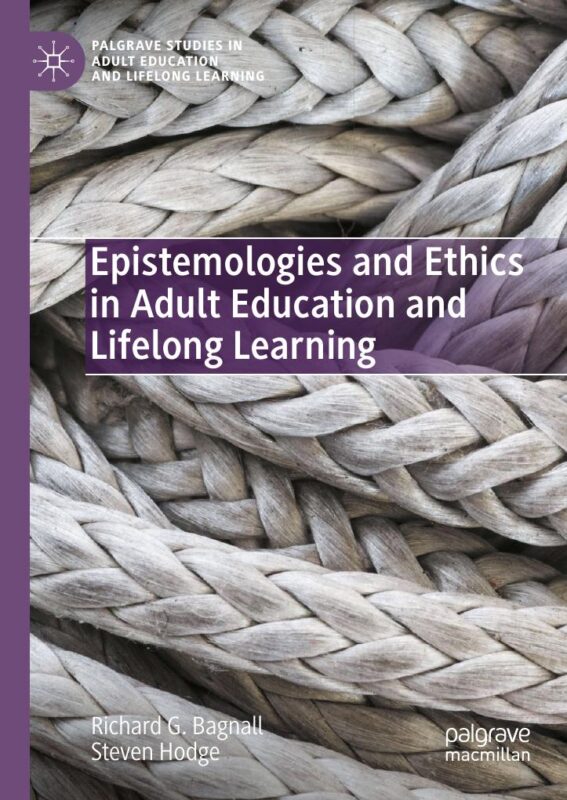
Epistemologies and Ethics in Adult Education and Lifelong Learning 1st Edition By Richard Bagnall, Steven Hodge
$30.00
Secure checkout
Instant digital download
PDF document
Document details
- Pages
- 346
- File size
- 3.36 MB
- Format
- Digital PDF
- Course
- Education
- Category
- eBook[PDF]
Sign in or create a free account to continue. Your purchase will be saved in My Downloads.
About this ebook
Epistemologies and Ethics in Adult Education and Lifelong Learning (1st Edition, 2022) by Richard G. Bagnall and Steven Hodge is a foundational theoretical text published by Palgrave Macmillan. The book provides a comprehensive framework for understanding how different theories of knowledge (epistemologies) and moral frameworks (ethics) conflict and coexist within modern adult education policy and practice. [1, 2]
Core Conceptual Framework
The authors argue that knowledge in lifelong learning is inherently normative—meaning that what counts as "learning" depends entirely on what kind of knowledge a society or institution values most. They identify four primary epistemological and ethical frameworks that shape the field: [1, 2, 3]
- Disciplinary Epistemology: Focuses on objective, traditional academic knowledge. Its ethical counterpart is ethical reasoning, prioritizing scholarly deliberation and liberal education. [1]
- Developmental Epistemology: Prioritizes individual rights, personal growth, and human well-being. [1]
- Emancipatory Epistemology: Focuses on liberating oppressed or marginalized groups from cultural or political restrictions. Its ethical core is ethical transformation to create a more socially just world. [1, 2]
- Design Epistemology: Centers on instrumental, technical, and procedural efficacy. It views ethics as ethical accommodation, where learning is structured through outcomes-based, competence-driven, and behaviorist models to help individuals fit efficiently into the workforce. [1, 2]
Key Arguments & Contemporary Relevance
- The Dominance of Design: The authors highlight that Design Epistemology currently dominates global educational policies, resulting in the heavy vocationalization, upskilling, and performance-tracking seen in modern adult education. [1, 2, 3]
- The Rise of Reflexivity: The text warns that as design epistemology reacts to modern cultural shifts, it is morphing into a reflexive epistemology focused on an "ethic of authenticity," which risks creating morally isolating or disabling tendencies for learners. [1, 2]
- Hidden Assumptions: Bagnall and Hodge stress that educators and policymakers often ignore these deeply embedded philosophical assumptions. Becoming aware of them is crucial for understanding what is truly at stake in lifelong learning curricular debates. [1]
Target Audience
This academic text is heavily utilized by educational theorists, postgraduate researchers, and policymakers studying adult learning frameworks, curriculum design, and educational philosophy. []
File included
tmpphpspOIuL
3.36 MB
Related ebooks