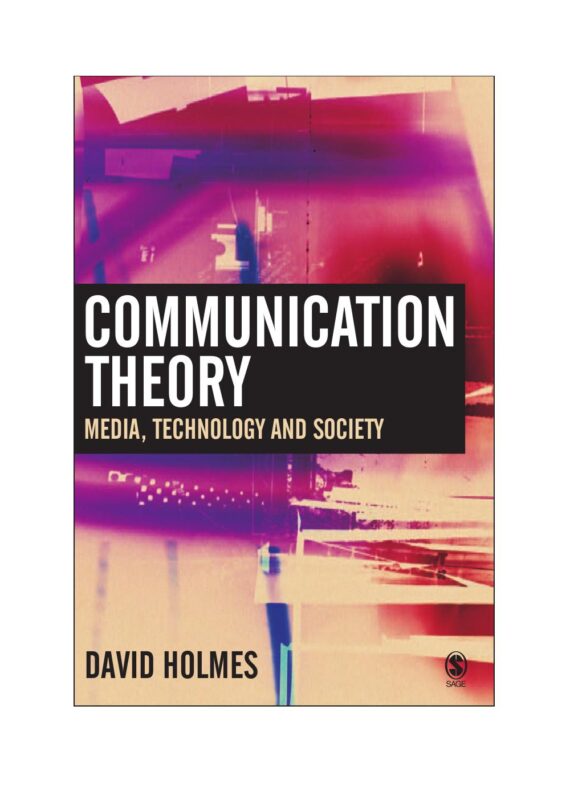
Communication Theory Media Technology and Society By David Holmes
$28.00
Secure checkout
Instant digital download
PDF document
Document details
- Pages
- 272
- File size
- 1.38 MB
- Format
- Digital PDF
- Course
- Education
- Category
- eBook[PDF]
Sign in or create a free account to continue. Your purchase will be saved in My Downloads.
About this ebook
The Communication Theory: Media, Technology and Society by David Holmes (published by SAGE Publications) bridges media studies and the sociology of communication. It analyzes the massive shift from traditional broadcasting to interactive, digital environments. [1, 2, 3, 4]
The book is structured around several foundational topics and thematic chapters: [1]
1. Introduction: A Second Media Age?
- Explores the framework of the "first media age" (characterized by centralized, one-to-many broadcast media like television and radio) versus the "second media age" (characterized by decentralized, interactive network structures like the Internet).
- Critiques technological determinism and outlines how new technologies reshape social relations. [1, 2, 3, 4]
2. Theories of Cybersociety
- Reviews traditional communication models—such as Lasswell’s "Who says what, in which channel..."—and evaluates why they must be reassessed for cyberspace. [1, 2, 3]
- Discusses the impact of technological convergence, looking at infrastructure (satellites, optical fiber) and services (combining text, images, and data). [1]
- Evaluates the core shift from message-centered analysis to looking closely at network forms and medium materiality. [1, 2]
3. Interaction versus Integration
- Challenges how we define "interactivity" in the digital age.
- Distinguishes between the transportation metaphor of communication (treating media as simple data-exchange channels) and communication as a space for ritual or social integration. [1, 2]
4. Telecommunity
- Investigates how communities are formed and sustained when mediated through technology.
- Explores the concept of virtual communities versus broadcast communities and how digital spaces extend, reproduce, or substitute face-to-face social life. [1, 2, 3]
5. The Interrelation between Broadcast and Network Communication
- Argues that the broadcast age hasn't simply ended; instead, broadcast and network media exist in a mutually constitutive relationship.
- Examines the socio-technical dynamics of how analogue and digital cultures bleed into one another. [1, 2, 3]
6. Cyberspace and Virtual Reality
File included
tmpphpcqLrpr
1.38 MB
Related ebooks