
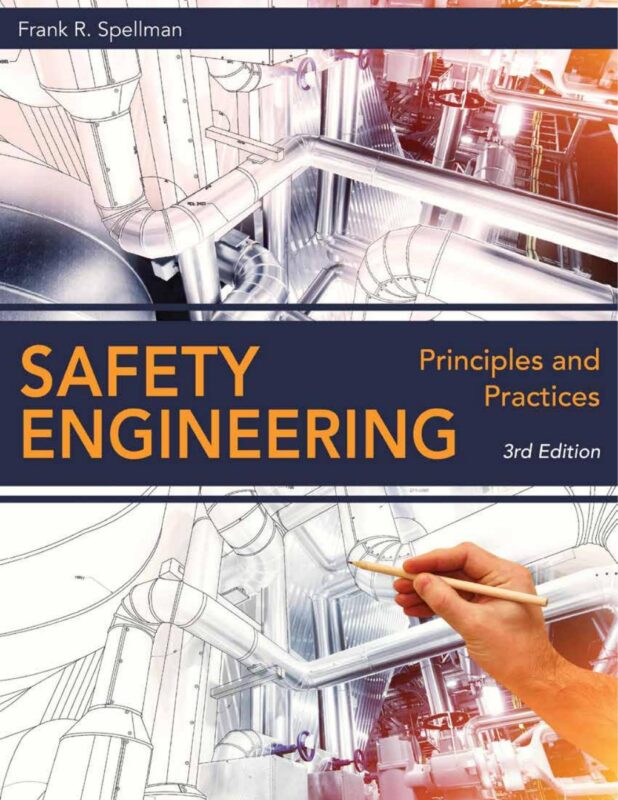
Safety Engineering: Principles and Practices 3rd Edition By Frank Spellman
$30.00
Secure checkout
Instant digital download
PDF document
Document details
- Pages
- 515
- File size
- 7.08 MB
- Format
- Digital PDF
- Course
- Engineering
- Category
- eBook[PDF]
Sign in or create a free account to continue. Your purchase will be saved in My Downloads.
About this ebook
The third edition of Safety Engineering: Principles and Practices by Frank R. Spellman bridges the gap between theoretical safety sciences and real-world industrial applications. It serves as both a practical textbook and a reference guide for safety directors, supervisors, and managers. [1, 2]
The textbook primarily focuses on the following core topics and concepts:
1. Regulatory Compliance & Administrative Practices
- Identifying Regulatory Requirements: Navigating occupational safety laws and federal regulations.
- OSHA Standards Compliance: Deep dive into specific provisions of the Title 29 Code of Federal Regulations (CFR), focusing on tracking injury causes and hazard control.
- Recordkeeping Requirements: Meeting paperwork standards, logs, and injury/illness documentation mandates.
- Inspection Readiness: Preparing workplace protocols for safety audits and government inspections. [1, 2]
2. Accident Prevention & Emergency Response
- Accident Investigations: Methods for identifying root causes of occupational mishaps to prevent recurrence.
- Emergency Response Planning: Constructing and managing cohesive protocols for workplace disasters or crises.
- Hazard Planning & Controls: Eliminating or reducing occupational risks through proactive preventive engineering. [1, 2]
3. Contemporary Worker Problems & Industrial Hygiene
- Modern Worker Challenges: Handling evolving workplace environments and psychological factors.
- Industrial Hygiene Basics: Engineering controls to reduce physical strains, toxic exposure, or repetitive motion injuries (such as back injury prevention programs).
- Specialized Workplace Hazards: Managing distinct operational environments like confined spaces. [1, 2]
4. Workplace Security, Physical Hazards, and Specialized Stressors
(Building upon foundational material, the book covers several expanded areas of safety management): [1]
- Thermal Stress: Assessing and mitigating the dangers of working in extreme heat or cold environments.
- Security & Vulnerability Assessments: Finding systemic weaknesses in physical facility infrastructures.
- Computer & Data Security: Basic elements of digital safeguards for safety system managers.
- Preventing Workplace Violence: Action plans and safety policies to handle internal or external threats. [1]
File included
tmpphpsTgUVH
7.08 MB
Related ebooks