
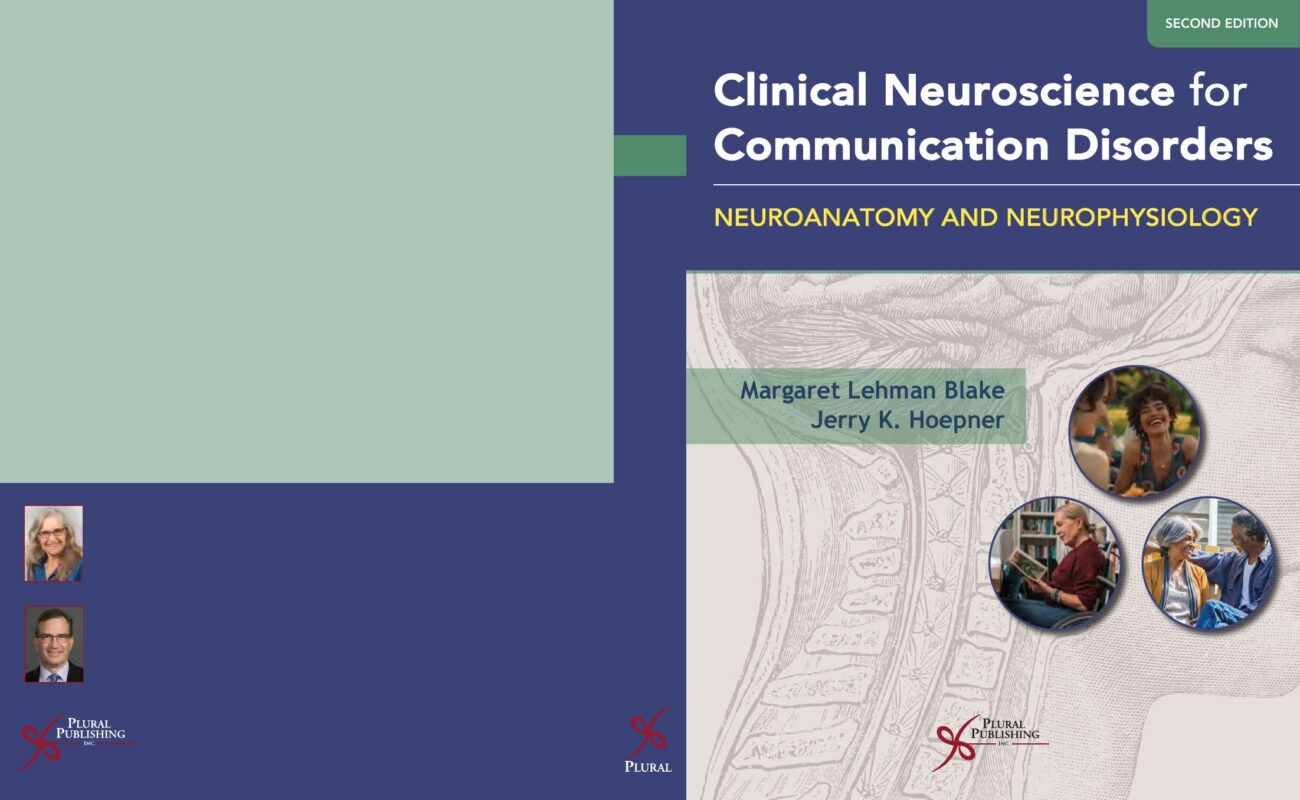
Clinical Neuroscience for Communication Disorders Neuroanatomy and Neurophysiology 2nd Edition By Margaret Lehman Blake, Jerry Hoepner
$30.00
Secure checkout
Instant digital download
PDF document
Document details
- Pages
- 409
- File size
- 6.28 MB
- Format
- Digital PDF
- Course
- Medical Studies
- Category
- eBook[PDF]
Sign in or create a free account to continue. Your purchase will be saved in My Downloads.
About this ebook
Clinical Neuroscience for Communication Disorders: Neuroanatomy and Neurophysiology, Second Edition (written by Margaret Lehman Blake and Jerry K. Hoepner) covers the critical neurological underpinnings of systems involved in speech, language, cognition, hearing, and swallowing. It bridges fundamental anatomical structures with everyday clinical applications for speech-language pathologists and audiologists. [1, 2, 3]
The textbook is structured to cover the following primary topics and chapters: [1]
1. Foundational Anatomy & Physiology
- Overview of the Nervous System: Fundamental organizational structures of the central and peripheral nervous systems.
- Ventricular System: Detailed look at the cranium, ventricles, and meninges protecting the brain.
- Neuron Anatomy and Physiology: The cellular foundations, including neural transmission and communication.
- Neuroembryology: Early development of the nervous system.
- Diencephalon: Structure and function of critical subcortical pathways like the thalamus and hypothalamus. [1]
2. Sensory & Motor Systems
- Somatosensory Systems: Processing touch, temperature, position, and pain.
- Visual System: Anatomy and pathway of visual processing.
- Auditory and Vestibular Systems: Mechanics and neurology behind hearing and balance.
- Chemical Senses: Neurological structures involved in smell and taste.
- Motor Systems: Motor pathways controlling voluntary and involuntary movements.
- Cranial Nerves: Explicitly mapped and connected to the oral mechanism examination and clinical swallowing assessments. [1, 2]
3. Integrated Systems & Advanced Neuroscience Concepts
- Limbic System and Reticular Formation: Neurological centers for emotion, memory, alertness, and arousal.
- Cerebrovascular System: Blood supply to the brain and implications for conditions like strokes.
- Communication and Cognition: Higher-level cognitive processing, moving equally into left and right hemisphere contributions.
- Neuroplasticity: How the brain adapts, changes, and heals, translating directly to rehabilitation principles. [1, 2, 3]
4. Clinical Application
- Clinical Cases: Includes 21 real-world case studies covering a diverse range of both pediatric and adult scenarios (16 acquired adult cases and 5 developmental pediatric cases). These illustrate the interconnectedness of neural systems in speech, language, cognition, and hearing disorders. [1, 2, 3]
File included
tmpphppvoVEX
6.28 MB
Related ebooks