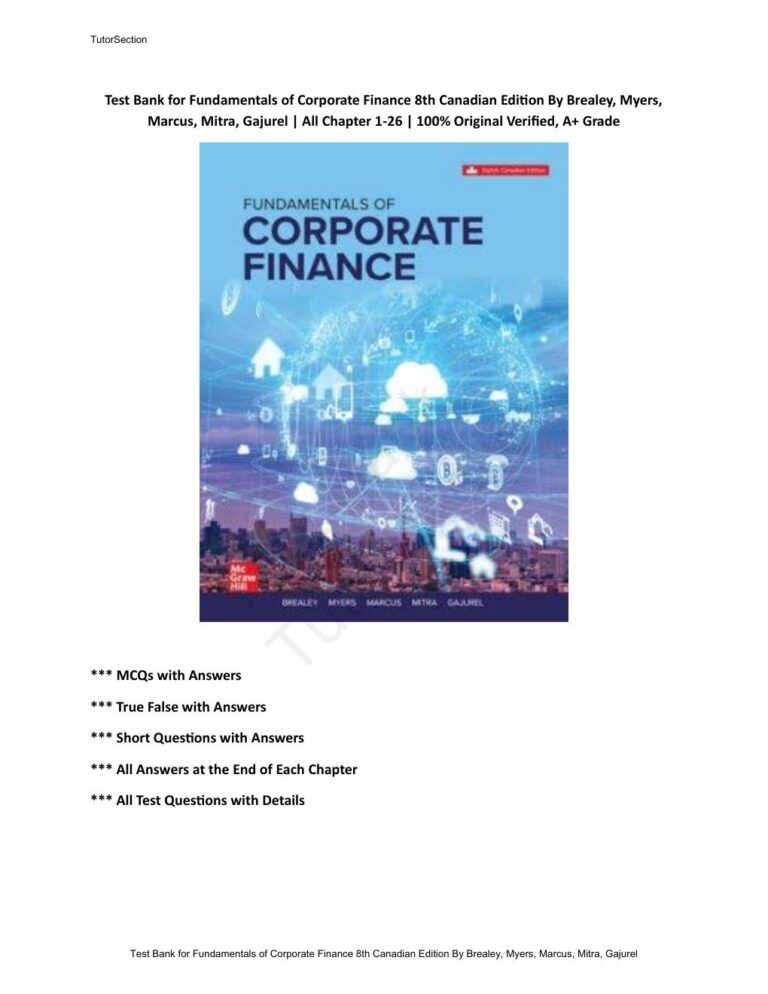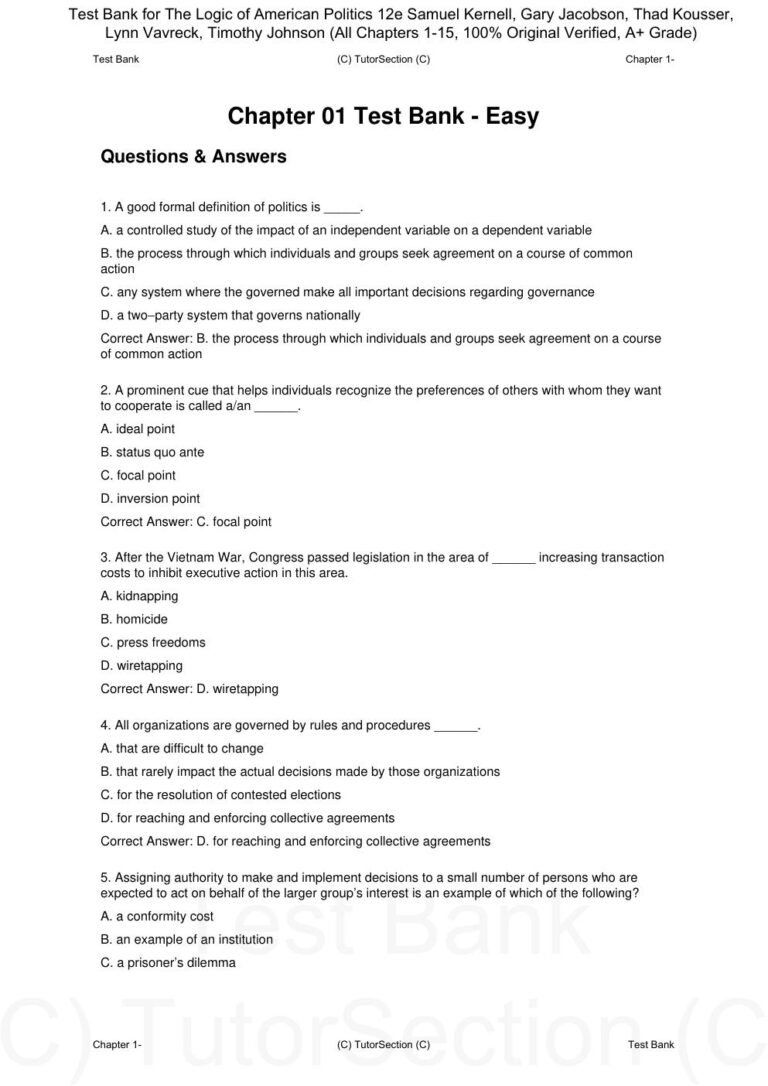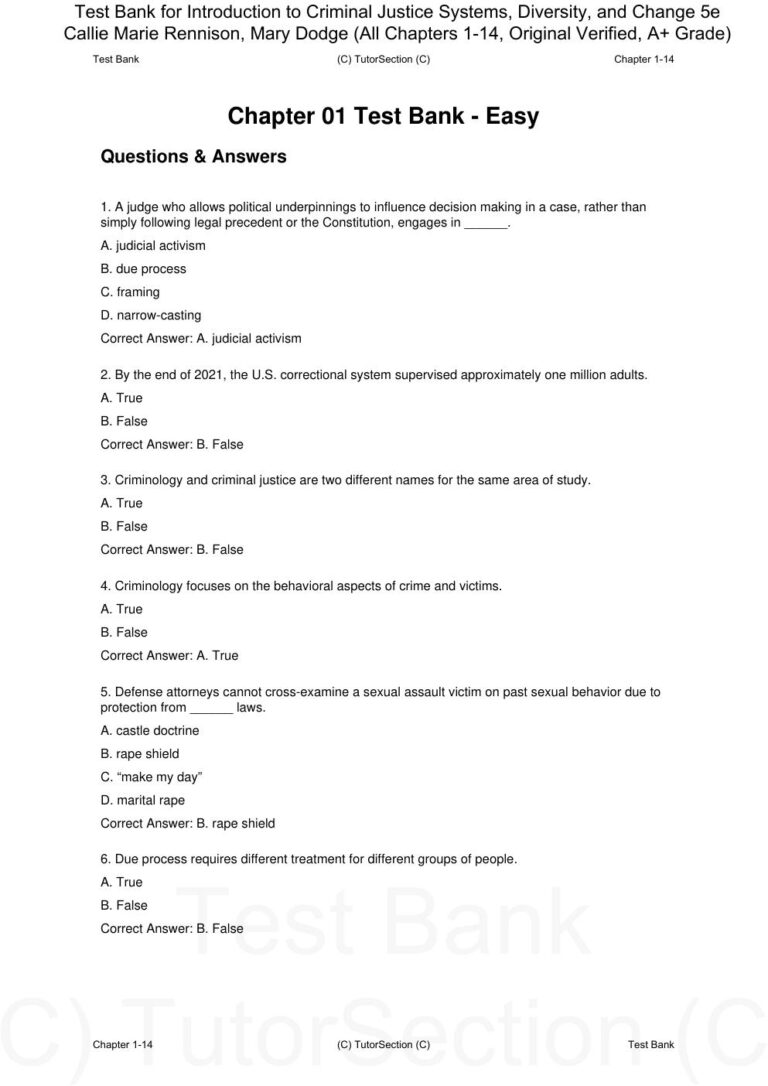
Test Bank for The Norton Introduction to Philosophy, 2nd Edition by Rosen, Gideon, Alex, Joshua | TEST BANK
$26.00
Secure checkout
Instant digital download
PDF document
Document details
- Pages
- 153
- File size
- 2.69 MB
- Format
- Digital PDF
- Course
- Philosophy
- Category
- TEST BANKS
Sign in or create a free account to continue. Your purchase will be saved in My Downloads.
About this ebook
Test Bank for The Norton Introduction to Philosophy, 2nd Edition, 2e by Gideon Rosen, Alex Byrne, Joshua Cohen TEST BANK
ISBN-13: 9780393624427
FULL CHAPTERS INCLUDED
Part I - Philosophy of Religion
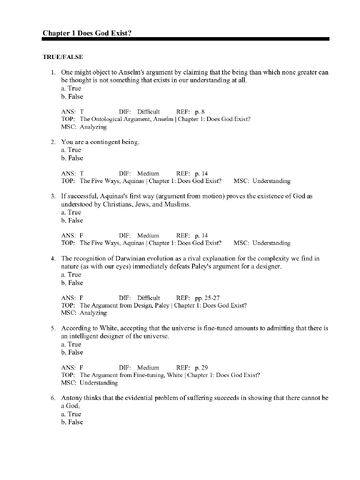
1 - Does God Exist?
Anselm of Canterbury, The Ontological Argument, from Proslogion
Thomas Aquinas, The Five Ways, from Summa Theologica
William Paley, The Argument from Design, from Natural Theology
Roger White, The Argument from Cosmological Fine-Tuning
Louise Antony, No Good Reason — Exploring the Problem of Evil
Eleonore Stump, The Problem of Evil
2 - Is It Reasonable to Believe Without Evidence?
Blaise Pascal, The Wager, from Pensées
Alan Hájek, Pascal’s Ultimate Gamble
W. K . Clifford, The Ethics of Belief
William James, The Will to Believe
Alvin Plantinga, Is Belief in God Properly Basic?
Lara Buchak, When Is Faith Rational?
Part II - Epistemology
3 - What Is Knowledge?
Plato, Meno
Edmund Gettier, Is Justified True Belief Knowledge?
Timothy Williamson, Knowledge and Belief
4 - How Can We Know about What We Have Not Observed?
David Hume, Sceptical Doubts Concerning the Operations of the Understanding, Section IV, and Sceptic
P. F. Strawson, The “Justification” of Induction, from Introduction to Logical Theory
Nelson Goodman, The New Riddle of Induction, from Fact, Fiction, and Forecast
Gilbert Harman, The Inference to the Best Explanation
5 - How Can You Know Your Own Mind or the Mind of Another Person?
Bertrand Russell, The Argument from Analogy, from Human Knowledge: Its Scope and Limits
Saul Kripke, Wittgenstein and Other Minds, from Wittgenstein on Rules and Private Language
Maurice Merleau-Ponty, Man Seen from the Outside, from The World of Perception
D. M. Armstrong, Introspection, from A Materialist Theory of the Mind
Sarah K. Paul, John Doe and Richard Roe
Alex Byrne , Skepticism about the Internal World
6 - How Can We Know About the External World?
René Descartes, Meditation I: What Can Be Called into Doubt, from Meditations on First Philosophy
David Hume, Of Scepticism with Regard to the Senses, from A Treatise of Human Nature
G. E. Moore, Proof of an External World
Jonathan Vogel, Skepticism and Inference to the Best Explanation
Rae Langton, Ignorance of Things in Themselves
PART III - Metaphysics and the philosophy of Mind
7 - Is Mind Material?
René Descartes, Meditation II: The Nature of the Human Mind, and How It Is Better Known than the Bo
Elisabeth of Bohemia, Correspondence with Descartes
Antoine Arnauld, Fourth Set of Objections
Gilbert Ryle, Descartes’ Myth, from The Concept of Mind
J. J. C . Smart, Sensations and Brain Processes
John Searle, Can Computers Think?, from Minds, Brains, and Science
8 - What Is Consciousness?
Thomas Nagel, What Is It Like to Be a Bat?
Frank Jackson, Epiphenomenal Qualia
Patricia Smith Churchland, Are Mental States Irreducible to Neurobiological States?, from Neurophilo
David Chalmers, The Hard Problem of Consciousness
Michael Tye, The Puzzle of Transparency
9 - Are Things as They Appear?
Bertrand Russell, Appearance and Reality, from The Problems of Philosophy
George Berkeley, Three Dialogues Between Hylas and Philonous
Vasubandhu, Twenty Verses with Auto-Commentary
Nick Bostrom, Are We Living in a Computer Simulation?
10 - What Is There?
Stephen Yablo, A Thing and Its Matter
Peter Unger, There Are No Ordinary Things
Gideon Rosen, Numbers and Other Immaterial Objects
Penelope Maddy, Do Numbers Exist?
PART IV - From Metaphysics to Ethics
11 - What Is Personal Identity?
John Locke, Of Identity and Diversity, from An Essay Concerning Human Understanding
Richard Swinburne, The Dualist Theory, from Personal Identity
Derek Parfit, Personal Identity, from Reasons and Persons
Bernard Williams, The Self and the Future
12 - What Is Race? What Is Gender?
Anthony Appiah, The Uncompleted Argument: Du Bois and the Illusion of Race
Sally Haslanger, Gender and Race: (What) Are They? (What) Do We Want Them to Be?
Quayshawn Spencer, Are Folk Races Like Dingoes, Dimes, or Dodos?
Elizabeth Barnes, The Metaphysics of Gender
13 - Do We Possess Free Will?
Galen Strawson, Free Will
Roderick Chisholm, Human Freedom and the Self
A. J. Ayer, Freedom and Necessity
P. F. Strawson, Freedom and Resentment
Harry Frankfurt, Freedom of the Will and the Concept of a Person
Susan Wolf, Sanity and the Metaphysics of Responsibility
Nomy Arpaly, Why Moral Ignorance Is No Excuse
PART V - Ethics
14 - What Is the Right Thing to Do?
Peter Singer, Famine, Affluence, and Morality
Onora O’Neill, The Moral Perplexities of Famine and World Hunger
Judith Jarvis Thomson, A Defense of Abortion
Don Marquis, Why Abortion Is Immoral
Elizabeth Harman, The Moral Significance of Animal Pain and Animal Death
Cora Diamond, Eating Meat and Eating People
15 - Do Your Intentions Matter?
G. E. M. Anscombe, Mr Truman’s Degree
Thomas M. Scanlon, When Do Intentions Matter to Permissibility?
Barbara Herman, Impermissibility and Wrongness
Michele M. Moody-Adams, Culture, Responsibility, and Affected Ignorance
Angela M. Smith, Implicit Bias, Moral Agency, and Moral Responsibility
16 - Which Moral Theory Is Correct?
John Stuart Mill, Utilitarianism
Immanuel Kant, Groundwork of the Metaphysics of Morals
Aristotle, Nicomachean Ethics
Rosalind Hursthouse, Virtue Ethics
Friedrich Nietzsche, On the Genealogy of Morals, Beyond Good and Evil, and the Gay Science
17 - Is Morality Objective?
J. L. Mackie, The Subjectivity of Values, from Ethics: Inventing Right and Wrong
R. Jay Wallace, Moral Subjectivism
Thomas Nagel, Ethics, from the Last Word
Philip L . Quinn, The Divine Command Theory
Elizabeth Harman, Is It Reasonable to “Rely on Intuitions” in Ethics?
Sharon Street, Does Anything Really Matter or Did We Just Evolve to Think So?
Sarah Mcgrath, What Is Weird About Moral Deference?
18 - Why Do What Is Right?
Plato, The Republic
Judith Jarvis Thomson, Why Ought We Do What Is Right?
David Hume, Of the Passions, and Of Morals, from A Treatise of Human Nature; Why Utility Pleases, fr
19 - What Is the Meaning of Life?
Richard Taylor, The Meaning of Life
Susan Wolf, Meaning in Life and Why It Matters
Thomas Nagel, The Absurd
Samuel Scheffler, Death and the Afterlife
PART VI - Political Philosophy
20 - How Can the State Be Justified?
Aristotle, Politics
Thomas Hobbes, Leviathan
Jean-Jacques Rousseau, The Social Contract
A. John Simmons, Rights-Based Justifications for the State
Charles Mills, The Racial Contract
21 - What Is the Value of Liberty?
John Locke, A Letter Concerning Toleration
John Stuart Mill, On Liberty
Patrick Devlin, Morals and the Criminal Law
Amartya Sen, Elements of a Theory of Human Rights
22 - Does Justice Require Equality?
John Rawls, Two Principles of Justice, from A Theory of Justice
Harry Frankfurt, Equality as a Moral Ideal
Martha Nussbaum, Political Equality
Robert Nozick, Distributive Justice, from Anarchy, State, and Utopia
Susan Moller Okin, Is Multiculturalism Bad for Women?
Answers to Test Your Understanding
Glossary
File included
NORTON.pdf
2.69 MB
Related ebooks