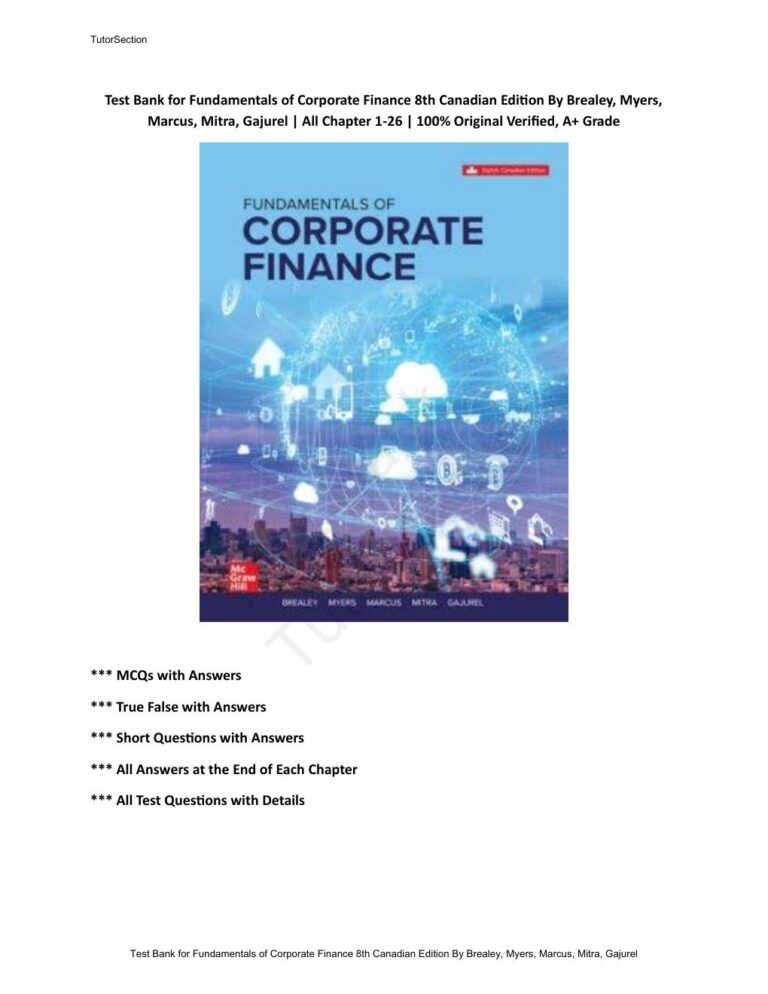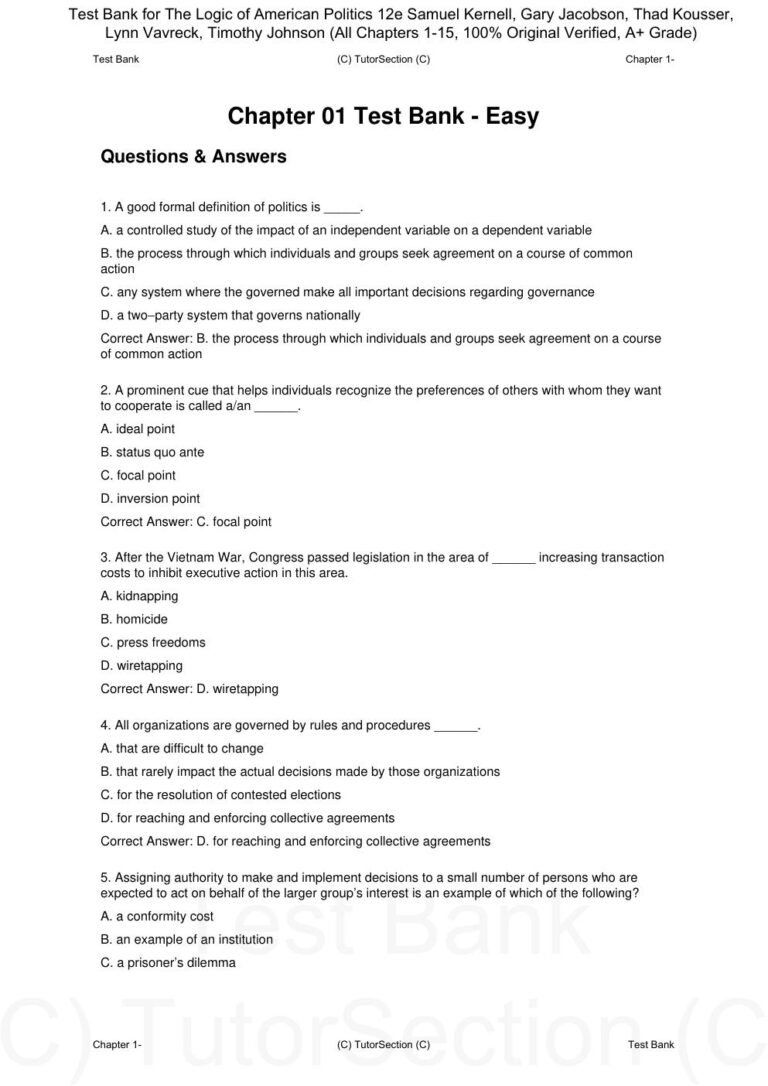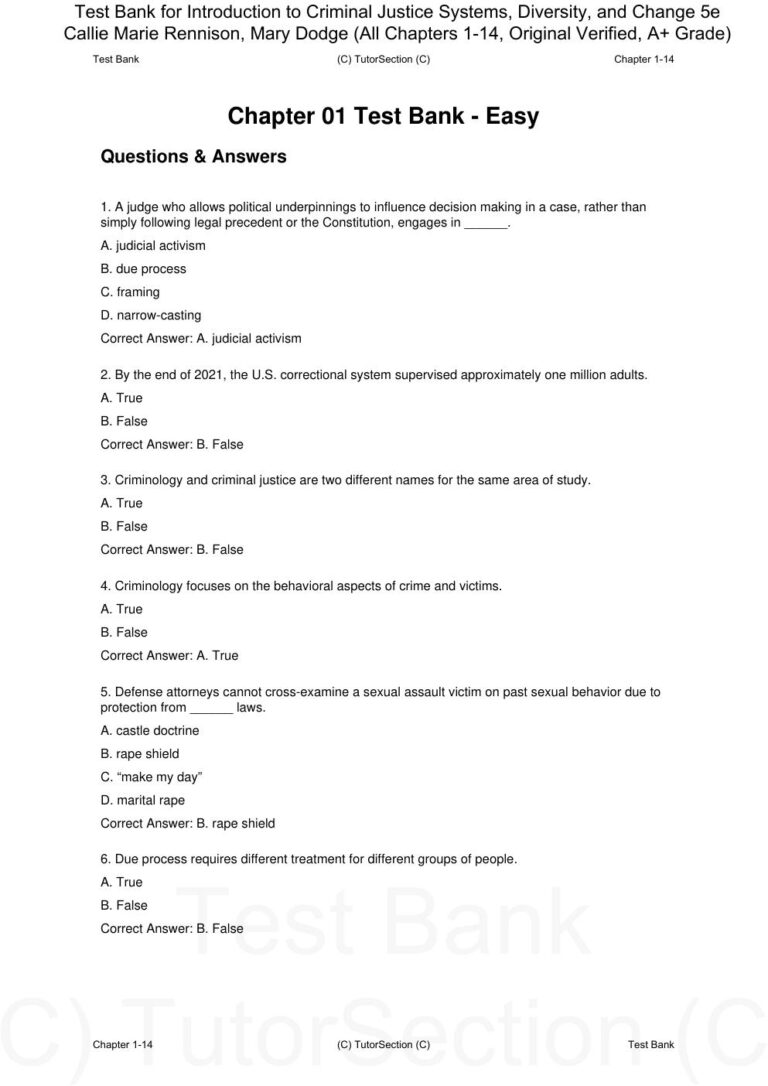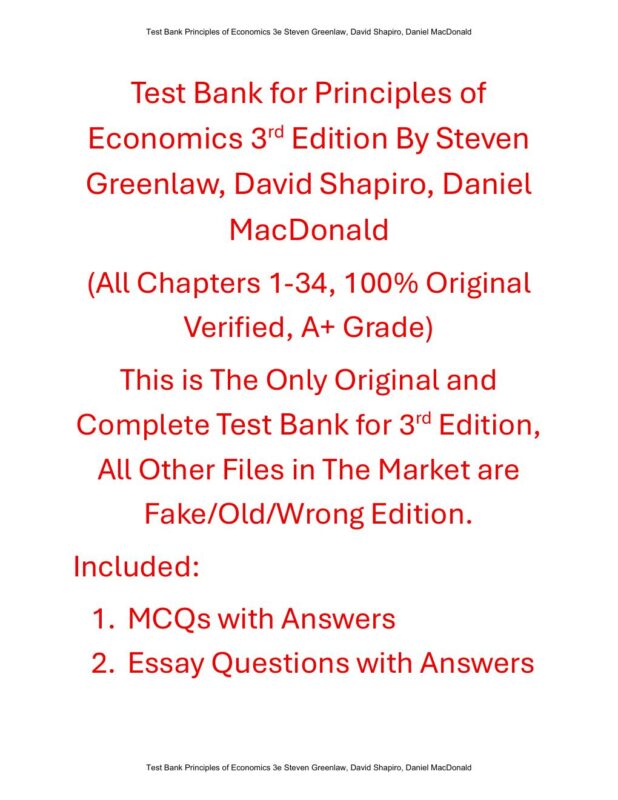
Test Bank for Principles of Economics 3rd Edition By Steven Greenlaw, David Shapiro, Daniel MacDonald (OpenStax)
$30.00
Secure checkout
Instant digital download
PDF document
Document details
- Pages
- 761
- File size
- 5.36 MB
- Format
- Digital PDF
- Course
- Applied Economics
- Category
- TEST BANKS
Sign in or create a free account to continue. Your purchase will be saved in My Downloads.
About this ebook
Test Bank for Principles of Economics 3e is a free, peer-reviewed peer open educational resource (OER) textbook published by OpenStax (Rice University) and authored by Steven A. Greenlaw, David Shapiro, and Daniel MacDonald. Released in December 2022, the third edition provides a comprehensive, balanced introduction to both microeconomics and macroeconomics using conversational language and real-world examples. It is designed for two-semester introductory college courses and is freely accessible online under a CC BY 2.0 license. [1, 2, 3, 4, 5, 6]
Key Features of the 3rd Edition
- Diverse Perspectives: Explores a wider range of diverse contributors and their historical impacts on economic thought.
- Updated Data: Refreshes socioeconomic data, illustrations, and real-world policy scenarios.
- Integrated Math: Balances conceptual framing with essential computational and analytical toolkits. [1, 2, 3, 4, 5]
Textbook Table of Contents Overview
The textbook contains 34 comprehensive chapters organized sequentially from core concepts to microeconomic details, macroeconomic systems, and global trade: [1, 2, 3]
Part 1: Core Economic Foundations
- Chapter 1: Welcome to Economics! (Scarcity, division of labor, micro vs. macro).
- Chapter 2: Choice in a World of Scarcity (Opportunity cost, budget constraints, production possibilities frontier).
- Chapter 3: Demand and Supply (Equilibrium, shifts in demand and supply, price floors/ceilings).
- Chapter 4: Labor and Financial Markets (Supply and demand dynamics in structural markets).
- Chapter 5: Elasticity (Price sensitivity of demand, supply, and income). [1, 2, 3, 4, 5]
Part 2: Microeconomics & Market Structures
- Chapter 6: Consumer Choices (Utility maximization, behavioral economics).
- Chapter 7: Cost and Industry Structure (Fixed vs. variable costs, production curves).
- Chapter 8: Perfect Competition (Price takers, long-run equilibrium).
- Chapter 9: Monopoly (Price makers, barriers to entry).
- Chapter 10: Monopolistic Competition and Oligopoly (Product differentiation, collusion, game theory). [1, 2]
Part 3: Microeconomic Policy & Market Failure [1]
- Chapter 11: Monopoly and Antitrust Policy (Corporate mergers, regulation).
- Chapter 12: Environmental Protection and Negative Externalities (Pollution, command-and-control, market tools).
- Chapter 13: Positive Externalities and Public Goods (Innovation, healthcare, public infrastructure).
- Chapter 14: Poverty and Economic Inequality (Measuring inequality, safety nets).
- Chapter 15: Issues in Labor Markets: Unions, Discrimination, Immigration.
- Chapter 16: Information, Risk, and Insurance (Asymmetric information, moral hazard, adverse selection).
- Chapter 17: Financial Markets (Stocks, bonds, corporate capital mechanisms).
- Chapter 18: Public Economy (Voting systems, special interest groups). [1, 2, 3, 4, 5]
Part 4: The Macroeconomic Perspective & Analysis
- Chapter 19: The Macroeconomic Perspective (Measuring GDP, economic well-being).
- Chapter 20: Economic Growth (Capital deepening, technology, productivity).
- Chapter 21: Unemployment (Cyclical, structural, and frictional labor trends).
- Chapter 22: Inflation (Consumer Price Index, structural economic disruptions).
- Chapter 23: International Trade and Capital Flows (Trade balances, capital accounts).
- Chapter 24: The Aggregate Demand/Aggregate Supply Model (AD/AS equilibrium framework).
- Chapter 25: The Keynesian Perspective (Sticky wages, aggregate demand adjustments).
- Chapter 26: The Neoclassical Perspective (Say's law, long-run flexible prices). [1, 2, 3, 4, 5]
Part 5: Monetary, Fiscal, and Global Policy
- Chapter 27: Money and Banking (The banking system, defining M1 and M2).
- Chapter 28: Monetary Policy and Bank Regulation (The Federal Reserve, interest rates).
- Chapter 29: Exchange Rates and International Capital Flows (Currency values, forex markets).
- Chapter 30: Government Budgets and Fiscal Policy (Taxation, deficits, national debt).
- Chapter 31: The Impacts of Government Borrowing (Crowding out effect).
- Chapter 32: International Trade (Comparative advantage, absolute advantage).
- Chapter 33: Globalization and Protectionism (Tariffs, import quotas, trade agreements).
- Chapter 34: Frontiers of Economic Policy (Emerging systemic topics). [1, 2, 3, 4, 5]
File included
tmpphpP5vne1
5.36 MB
Related ebooks