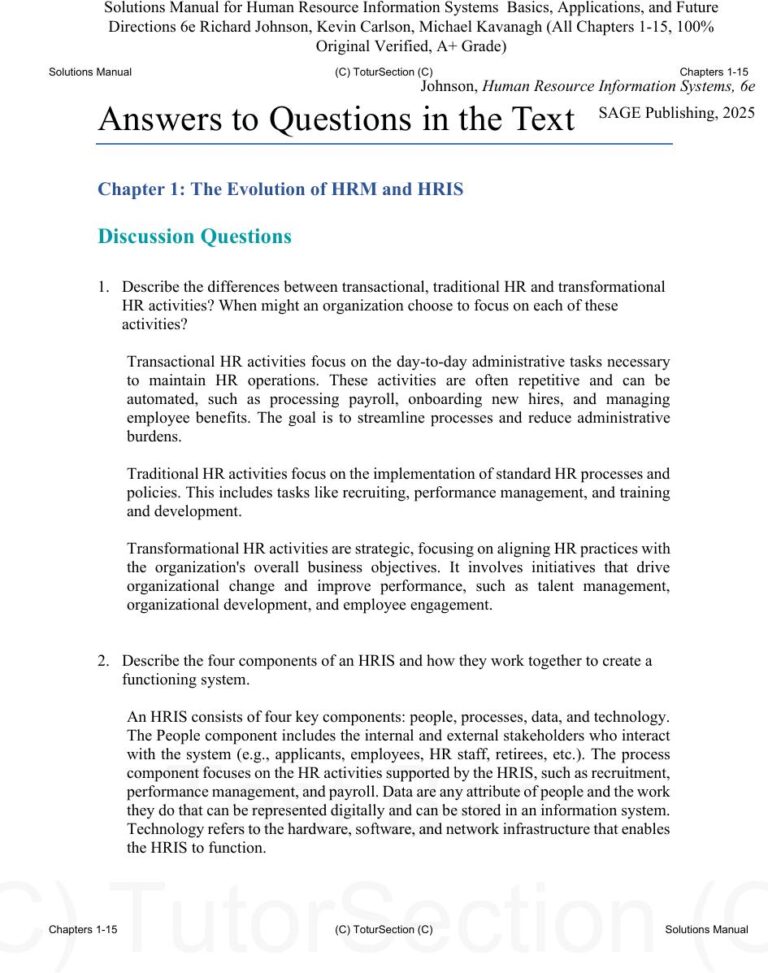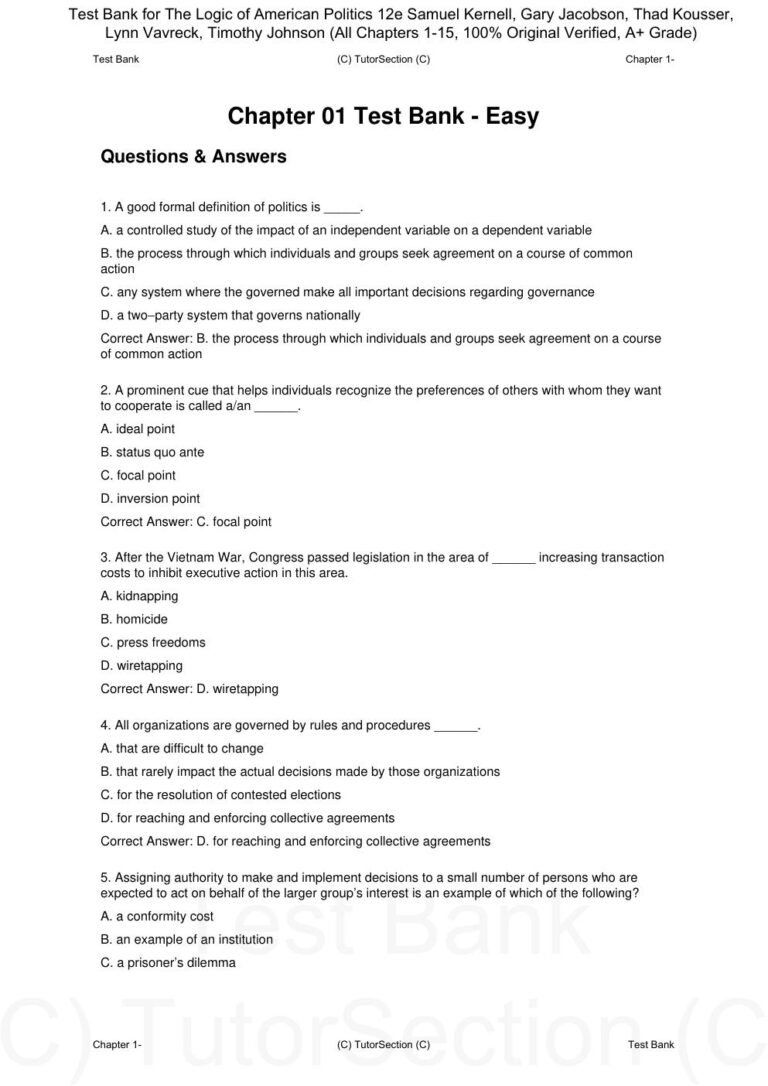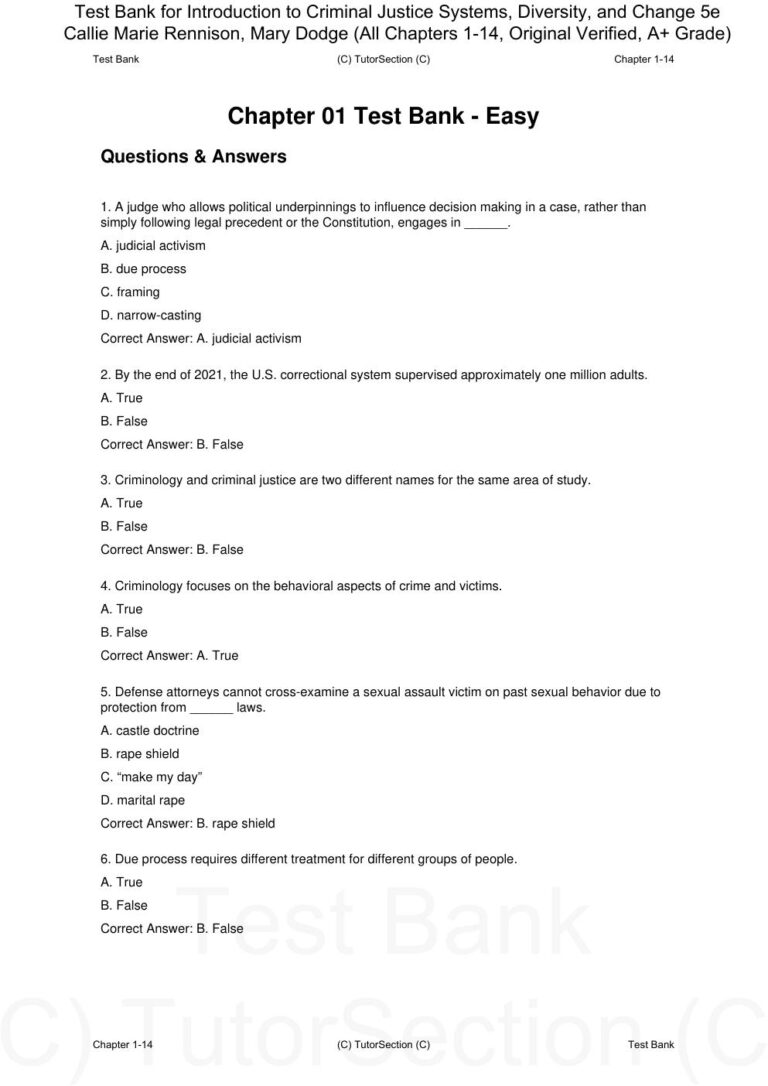

Test Bank for Human Resource Management: An Applied Approach 4th Edition By Jean Phillips (All Chapters 1-14, 100% Original Verified)
$35.00
Secure checkout
Instant digital download
PDF document
Document details
- Pages
- 349
- File size
- 5.16 MB
- Format
- Digital PDF
- Course
- Business
- Category
- TEST BANKS
Sign in or create a free account to continue. Your purchase will be saved in My Downloads.
About this ebook
Test Bank for Human Resource Management: An Applied Approach (4th Edition) by Jean M. Phillips is structured around a total of 14 chapters designed to balance foundational HR theory with practical, real-world skill development. [1, 2]
Part One: The Importance and Context of Human Resource Management
- Chapter 1: Strategic Human Resource Management – Covers what HRM is, how it influences organizational performance, the alignment of HR practices with business strategy execution, and modern issues in HR. [1]
- Chapter 2: The Role of Human Resource Management in Business – Examines organizational culture, high-performance work systems, corporate ethics, social responsibility, global HRM, and HR metrics. [1]
- Chapter 3: Diversity and the Legal Context of HRM – Focuses on risk management, major employment laws, diversity and inclusion, compliance, and handling employment lawsuits. [1]
Part Two: Planning and Staffing
- Chapter 4: Analyzing Work and Human Resource Planning – Details strategic workforce planning, job analysis, forecasting labor demand/supply, gap analysis, action plans, and organizational design. [1, 2]
- Chapter 5: Sourcing and Recruiting – Discusses talent identification, differences between sourcing and recruiting, and the pros/cons of internal vs. external recruiting. [1]
- Chapter 6: Selection and Hiring – Targets candidate evaluation, assessment methods, and legalities surrounding the hiring process. [1, 2]
Part Three: Developing and Managing Performance
- Chapter 7: Training and Development – Covers professional development programs, identifying skills gaps, and evaluating training effectiveness.
- Chapter 8: Performance Management – Explores setting key performance indicators (KPIs), continuous feedback mechanisms, and appraisal systems. [1, 2, 3]
Part Four: Total Rewards
- Chapter 9: Base Compensation – Covers base pay structures and strategic market pricing.
- Chapter 10: Incentives – Examines motivational rewards, variable pay, and performance-based incentive design.
- Chapter 11: Benefits – Discusses health insurance, retirement packages, and flexible benefit plans. [1, 2, 3]
Part Five: Workplace Relationships and Safety
- Chapter 12: Creating a Healthy Work Environment – Reviews workplace safety protocols, occupational health, and wellness programs.
- Chapter 13: Creating Positive Employee-Management Relations – Explores labor relations, workplace conflict resolution, and communication practices.
- Chapter 14: Managing Engagement and Turnover – Focuses on reducing unwanted employee turnover, understanding retention metrics, and enhancing long-term engagement. [1, 2, 3]
File included
tmpphpfBFUPl
5.16 MB
Related ebooks