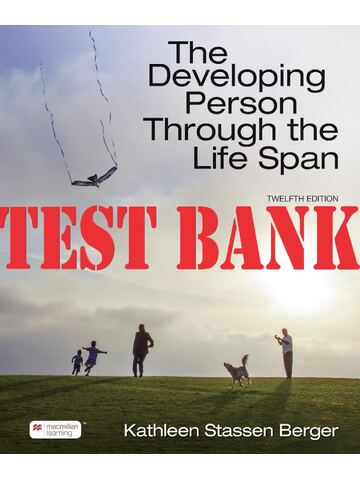
TEST BANK for The Developing Person Through the Life Span 12th Edition By Kathleen Stassen Berger
$26.00
Secure checkout
Instant digital download
PDF document
Document details
- Pages
- 559
- File size
- 6.65 MB
- Format
- Digital PDF
- Course
- Psychology
- Category
- TEST BANKS
Sign in or create a free account to continue. Your purchase will be saved in My Downloads.
About this ebook
TEST BANK for The Developing Person Through the Life Span (12th Edition) by Kathleen Stassen Berger covers chronological human development across three distinct domains: biosocial (physical), cognitive, and psychosocial (social/emotional) development. [1, 2]
The textbook is published by Worth Publishers and structures its chronological chapters around key life stages. [1, 2]
1. The Beginnings
- The Science of Human Development: Introduction to theories, research methods, and the nature-nurture debate.
- From Conception to Birth: Genetic foundations, prenatal development, and birth risks. [1, 2, 3, 4]
2. Infancy and Toddlerhood (The First Two Years)
- Biosocial: Brain growth, motor skills, sensory capabilities, and nutrition.
- Cognitive: Piaget’s sensorimotor stage, infant language acquisition, and memory.
- Psychosocial: Attachment styles, temperament, emotional regulation, and parental bonding. [1, 2]
3. Early Childhood (Ages 2 to 6)
- Biosocial: Physical body changes, motor skills, and health trends.
- Cognitive: Piaget's preoperational thought, Vygotsky’s social learning, and early language development.
- Psychosocial: Emotional regulation, parenting styles, gender identity, and the power of play. [1, 2, 3]
4. Middle Childhood (Ages 6 to 11)
- Biosocial: Brain development, physical health, and childhood obesity trends.
- Cognitive: Logical concrete operational thought, language advancements, and formal schooling.
- Psychosocial: Peer groups, moral development, resilience, and changing family structures. [, 2]
5. Adolescence (Ages 11 to 18)
- Biosocial: Puberty, hormonal changes, and neurological developments.
- Cognitive: Formal operational thinking, adolescent egocentrism, and school transitions.
- Psychosocial: Identity construction, peer pressures, romance, and mental health struggles. [1, 2]
6. Emerging Adulthood (Ages 18 to 25)
- Biosocial: Peak physical performance, risk-taking behaviors, and reproductive health.
- Cognitive: Postformal thought, moral reasoning, and higher education.
- Psychosocial: Career navigation, evolving family relationships, and personal identity consolidation.
7. Adulthood (Ages 25 to 65)
- Biosocial: The physical signs of aging, habits, and health choices.
- Cognitive: Intellect variations, expert cognition, and lifelong learning.
- Psychosocial: Work-life balance, intimacy, marriage, divorce, and parenting. [1]
8. Late Adulthood (Age 65+)
- Biosocial: Theories of aging, physical changes, and neurological health.
- Cognitive: Memory adjustments, processing speed modifications, and wisdom.
- Psychosocial: Retirement dynamics, social circles, grandparenting, and lifestyle adjustments.
9. Epilogue
- Death, Dying, and Bereavement: Cultural views of death, hospice care, and the grieving process.
File included
TEST-BANK-for-The-Developing-Person-Through-the-Life-Span-12th-Edition-By-Kathleen-Stassen-Berger.pdf
6.65 MB
Related ebooks