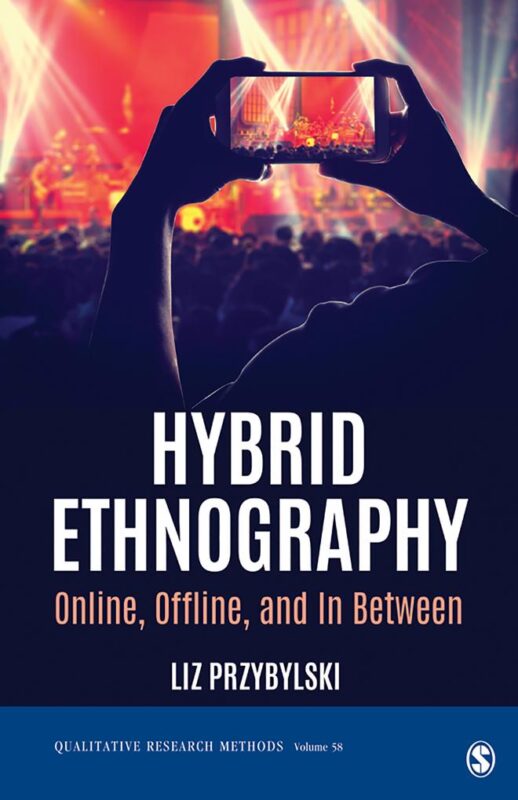
Hybrid Ethnography Online Offline and In Between Vol 58 By Liz Przybylski
$22.00
Secure checkout
Instant digital download
PDF document
Document details
- Pages
- 221
- File size
- 7.08 MB
- Format
- Digital PDF
- Course
- Education
- Category
- eBook[PDF]
Sign in or create a free account to continue. Your purchase will be saved in My Downloads.
About this ebook
The Hybrid Ethnography: Online, Offline, and In Between (Vol. 58 of the SAGE Qualitative Research Methods series) by Liz Przybylski focuses on providing researchers with a concrete, theory-based roadmap to combine digital and face-to-face ethnographic research methods. [1, 2, 3]
Drawing on the author's extensive fieldwork studying hip-hop culture across the United States and Canada, the book is designed in a modular format and covers the following core topics and stages of the research process: [1]
1. Conceptualizing the Hybrid Field
- Rethinking Space and Time: Assessing how digital environments require a fundamental conceptual shift in traditional ethnography, particularly regarding how informant involvement differs across online and physical spaces.
- The "What, Who, When, and Where": Clearly defining parameters for contemporary fieldwork that bridges the digital/physical divide. [1, 2]
2. Project Design and Logistics
- Project Formulation: Designing an ethnographic study that explicitly accounts for both online spaces and physical locations.
- Site Selection: Finding and defining fieldsites that exist "in between" physical venues and digital spheres (e.g., social media, website forums, and messaging groups). [1, 2]
3. Ethics and Participant Relations
- Research Ethics: A continuous, core focus on navigating ethical considerations unique to online landscapes, privacy, and digitized communities. [1]
- Self-Representation and Control: Navigating fieldsites where research subjects maintain greater control over their own self-representation due to technology. [1]
- Shared Results and Accessibility: Laying the groundwork for sharing data and research findings transparently with participants via accessible mediums like blogs, webpages, and videos. [1]
4. Data Collection and Practical Fieldwork
- Multi-Layered Data Gathering: Techniques for integrating multiple strategies over months of fieldwork, including conducting interviews and surveys, documenting face-to-face field experiences, tracking social media interaction, and critically reading web pages and media. [1]
5. Interpretation, Analysis, and Writing
- Hybrid Fieldwork Analysis: Managing, reviewing, and organizing large volumes of information gathered across physical and digital divides. [1]
- Software Integration: Leveraging digital tools and software to aid analysis, such as generating word clouds and visual schemas to isolate key concepts, names, and themes. [1]
- Positionality and Findings: Formulating final conclusions while accounting for the situated position of the researcher and maintaining an ongoing dialogue with fellow participants. [1]
File included
tmpphpTRcL78
7.08 MB
Related ebooks