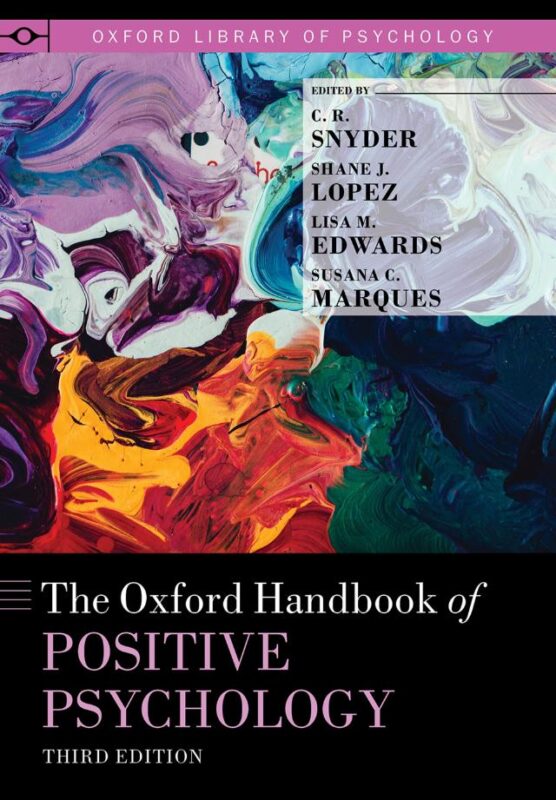
The Oxford Handbook of Positive Psychology 3rd Edition By C.R. Snyder, Shane Lopez, Lisa Edwards, Susana Marques
$30.00
Secure checkout
Instant digital download
PDF document
Document details
- Pages
- 1,027
- File size
- 7.11 MB
- Format
- Digital PDF
- Course
- Education
- Category
- eBook[PDF]
Sign in or create a free account to continue. Your purchase will be saved in My Downloads.
About this ebook
The Oxford Handbook of Positive Psychology (3rd Edition), edited by C.R. Snyder, Shane J. Lopez, Lisa M. Edwards, and Susana C. Marques, is a comprehensive academic reference containing 68 chapters across 11 core sections. It transitions away from traditional pathology to systematically explore human strengths, well-being, resilience, and optimal human functioning. [1, 2]
The primary topics and thematic areas covered in this edition include:
1. Major Developments and Historical Perspectives
- Evolution of the Field: The history, tracking, and future trajectory of positive psychology as it intersects with mainstream psychological branches (social, clinical, personality, counseling, school, and developmental psychology). [1, 2]
- Classification of Strengths: Methodologies for identifying, classifying, and measuring core human virtues and strengths of character (such as the VIA classification system). [1, 2]
2. Emotional and Cognitive Approaches
- Positive Emotions: Comprehensive research on subjective well-being, happiness, and the broaden-and-build theory of positive emotions.
- Cognitive States: Deep dives into the psychology of hope (a legacy topic of lead editors Snyder and Lopez), optimism, flow, and future-mindedness. [1, 2]
3. Biological and Neuroscience Approaches (New to 3rd Edition)
- The Neurobiology of Flourishing: A heavily updated section focusing on the neural mechanisms underlying positive traits.
- Empathy and Altruism: Neuroscientific innovations and emerging brain-imaging research mapping how empathy, altruism, and compassion operate within the human brain. [1, 2]
4. Lifespan Development and Interpersonal Approaches
- Developmental Perspectives: How resilience, positive aging, and personal strengths manifest across different stages of life, from childhood through older adulthood. [1]
- Relationships and Social Connections: The dynamics of friendship, romantic attachment, love, and the foundational role of positive interpersonal relationships in human thriving. [1, 2]
5. Self-Based and Biological Coping Methods
- Self-Regulation and Mastery: Explores self-efficacy, self-esteem, personal control, and identity.
- Overcoming Adversity: Mechanisms for post-traumatic growth, resilience under stress, and utilizing positive virtues to navigate life crises and physical health challenges. [1, 2]
6. Positive Institutions and Applications
- Systemic Flourishing: How positive psychology applies practically inside the environments where people spend their lives, including positive education (schools), positive work environments (organizations), communities, and families.
- Intervention Frameworks: The integration of clinical positive psychology into active interventions, comparing the boundaries and overlaps of psychotherapy, counseling, and personal coaching. [1, 2, 3]
File included
ScholarFriends.com-the-oxford-handbook-of-positive-psychology-3rd-edition-by-cr-snyder-shane-lopez-lisa-edwar.pdf
7.11 MB
Related ebooks