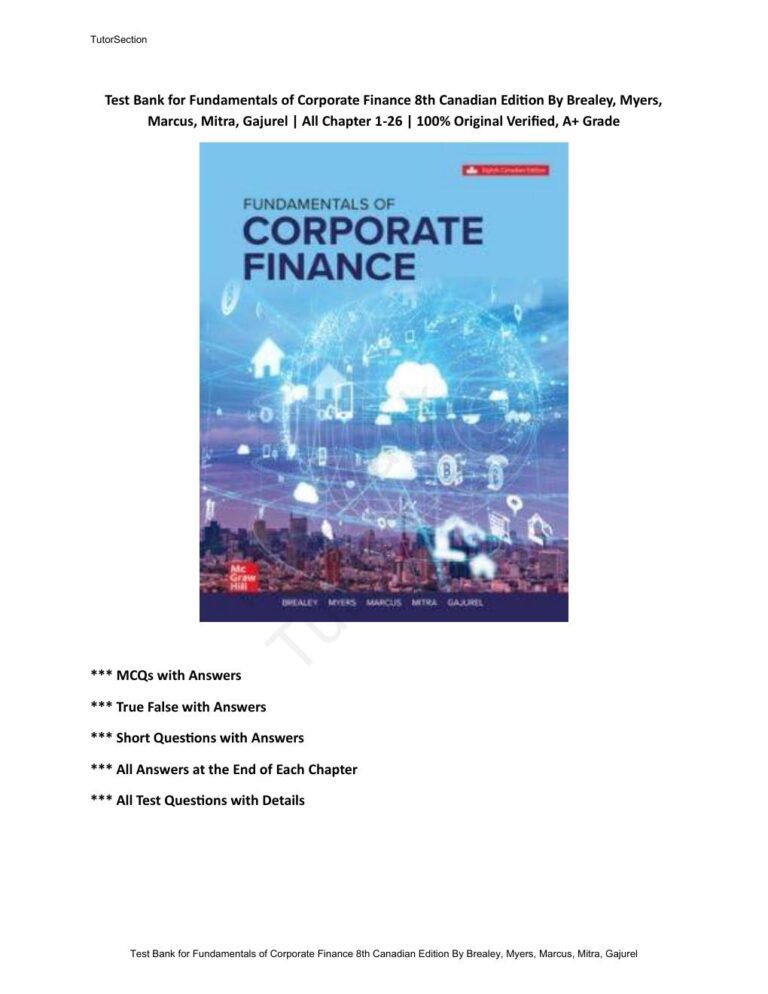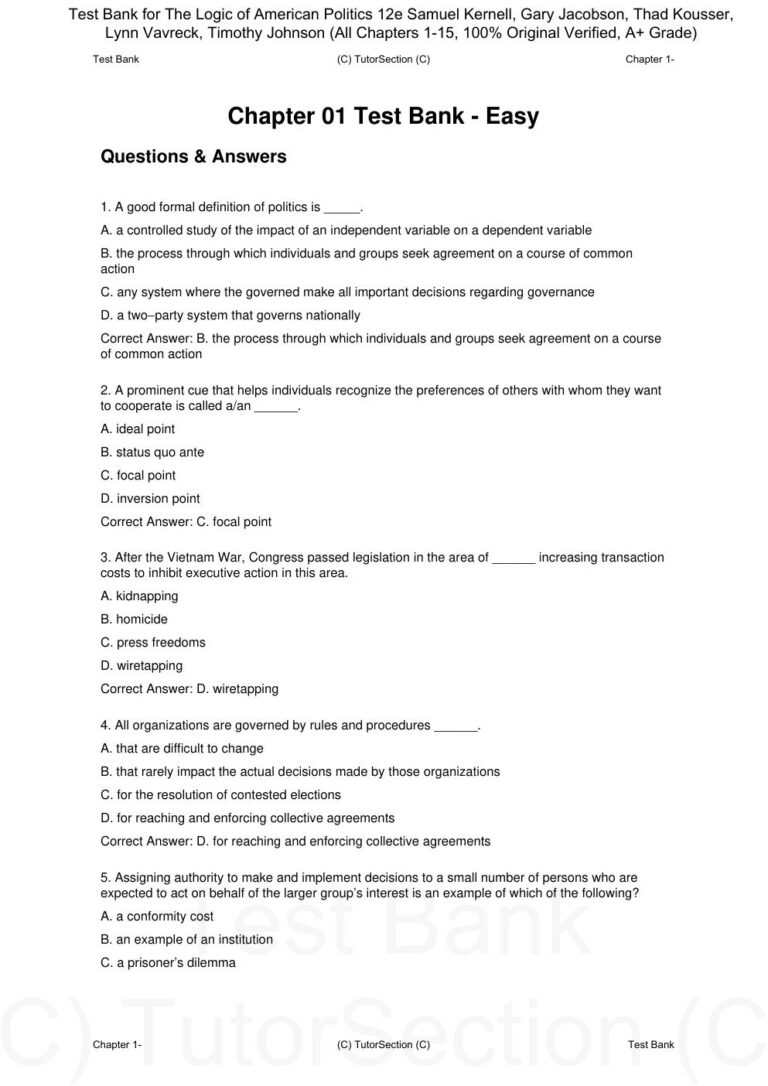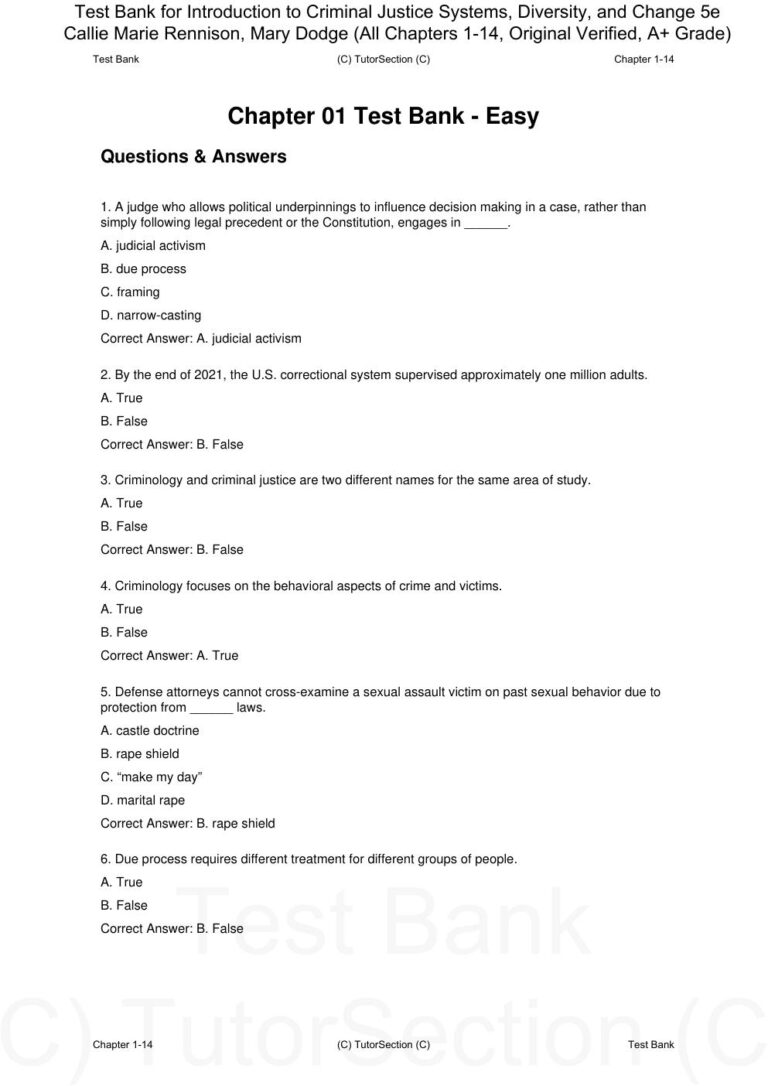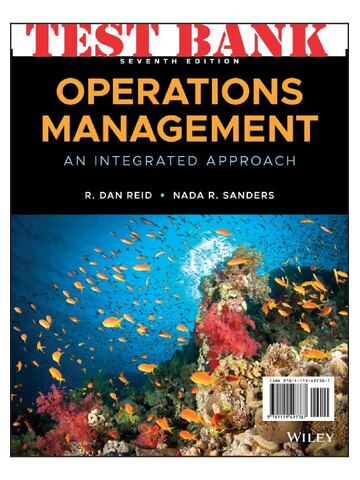
Test Bank For Operations Management: An Integrated Approach, 7th Edition By R. Dan Reid and Nada Sanders Chapter 1-16
$22.00
Secure checkout
Instant digital download
PDF document
Document details
- Pages
- 1,111
- File size
- 3.84 MB
- Format
- Digital PDF
- Course
- Management
- Category
- TEST BANKS
Sign in or create a free account to continue. Your purchase will be saved in My Downloads.
About this ebook
Test Bank For Operations Management: An Integrated Approach, 7th Edition by R. Dan Reid and Nada R. Sanders covers 16 core operational chapters spanning strategic, tactical, manufacturing, and service sector decisions. The textbook emphasizes how operations integrate across all functional areas of business while introducing contemporary trends like Artificial Intelligence, Big Data analytics, and sustainability. [1, 2, 3]
The full breakdown of topics and chapters includes:
Strategic Foundation & System Design
- Chapter 1: Introduction to Operations Management – Core concepts, manufacturing vs. service operations, history, and business integration. [1]
- Chapter 2: Operations Strategy and Competitiveness – Developing operational strategies, competitive priorities, productivity measurements, and strategic design. [1, 2]
- Chapter 3: Product Design and Process Selection – Product development steps, technology choices, process flow analysis, and data analytics in design. [1, 2]
- Chapter 4: Supply Chain Management – Supply chain design, logistics, sourcing, purchasing strategy, and integration technologies. [1]
Quality and Lean Systems
- Chapter 5: Total Quality Management (TQM) – Meaning of quality, TQM philosophy, quality tools, and Six Sigma implementation.
- Chapter 6: Statistical Quality Control (SQC) – Control charts for variables and attributes, process capability, and acceptance sampling.
- Chapter 7: Just-in-Time (JIT) and Lean Systems – Lean principles, Kanban systems, waste elimination, and lean services. [1, 2, 3, 4, 5]
Tactical Planning & Forecasting
- Chapter 8: Forecasting – Qualitative and quantitative forecasting techniques, tracking forecast errors, and predictive analytics.
- Chapter 9: Capacity Planning and Facility Location – Measuring capacity, decision trees, location analysis models, and factor-rating methods.
- Chapter 10: Facility Layout – Product, process, and hybrid layouts, line balancing, and space requirements.
- Chapter 11: Work System Design – Job design, work measurement, labor standards, and worker compensation structures. [1, 2, 3, 4, 5]
Inventory & Execution Management
- Chapter 12: Inventory Management – Economic Order Quantity (EOQ), safety stock, ABC inventory classification, and periodic review systems.
- Chapter 13: Aggregate Planning – Developing aggregate plans, demand options, production leveling, and chase strategies.
- Chapter 14: Resource Planning – Material Requirements Planning (MRP), Capacity Requirements Planning (CRP), and Enterprise Resource Planning (ERP) systems.
- Chapter 15: Scheduling – Operations scheduling, sequencing rules, Gantt charts, and employee scheduling in services.
- Chapter 16: Project Management – Project life cycle, Network diagrams, Critical Path Method (CPM), and PERT analysis. [1, 2, 3, 4]
Emerging & Quantitative Supplements (Online / Companion Material)
File included
Test-Bank-For-Operations-Management-An-Integrated-Approach-7th-Edition-By-Dan-Reid-and-Nada-Sanders-Chapter-1-16.pdf
3.84 MB
Related ebooks