
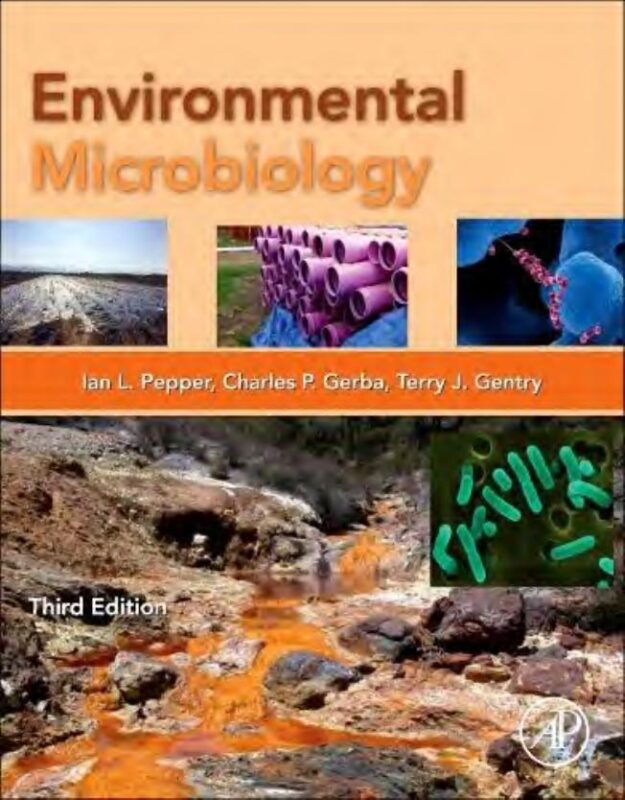
Environmental Microbiology 3rd Edition By Ian Pepper, Charles Gerba and Terry Gentry
$30.00
Secure checkout
Instant digital download
PDF document
Document details
- Pages
- 681
- File size
- 38.23 MB
- Format
- Digital PDF
- Course
- Microbiology
- Category
- eBook[PDF]
Sign in or create a free account to continue. Your purchase will be saved in My Downloads.
About this ebook
The textbook Environmental Microbiology (3rd Edition) by Ian Pepper, Charles Gerba, and Terry Gentry covers the study of microbial fate, isolation, and activity across air, water, soil, and urban environments. [1, 2]
The curriculum is structurally divided into foundational microbiology, specific microbial habitats, modern diagnostic methodologies, biogeochemical ecosystems, and public health/water treatment applications. [1, 2]
1. Foundational Core & Microorganisms
- Review of Microbial Physiology: Cellular structures, metabolic pathways, and growth kinetics of environmental microbes.
- Bacterial Diversity: Taxonomical classification, evolutionary traits, and physiological adaptations to harsh conditions.
- Environmental Virology: Structure, survival, and distribution of bacteriophages, plant viruses, and human enteric viruses.
- Fungi, Algae, and Protozoa: Structure, lifecycle, and ecological functions of eukaryotic microbes in natural habitats.
2. Microbial Environments (Habitats)
- Soil and Subsurface Microbiology: Microbial distribution across soil profiles, vadose zones, and deep subsurfaces.
- Aquatic Environments: Planktonic and benthic communities in freshwater, marine, and estuarine ecosystems.
- Aeromicrobiology: Intramural and extramural transmission of bioaerosols, pollen, and airborne toxins.
- Urban and Indoor Environments: Microbial dynamics within built environments, household surfaces, and occupational spaces. [1]
3. Biogeochemical Cycling & Bioremediation
- Nutrient Cycles: Microbial transformations driving the carbon, nitrogen, sulfur, iron, and phosphorus cycles.
- Biodegradation of Organics: Decomposition pathways for hydrocarbons, pesticides, plastics, and xenobiotic compounds.
- Bioremediation Technologies: Strategies including bioaugmentation, biostimulation, phytoremediation, and in-situ treatment.
- Metal and Metalloid Transformations: Microbial interactions with heavy metals, including methylation, reduction, and bioaccumulation. [1, 2]
4. Advanced Methods and Diagnostic Technologies
- Traditional Culture Methods: Traditional media plating, physiological staining, and enrichment isolation strategies.
- Bioinformation and "Omic" Approaches: Metagenomics, transcriptomics, and proteomics used to evaluate unculturable communities.
- Microbial Source Tracking (MST): Molecular assays used to trace fecal pollution sources in water systems back to specific hosts.
- Immunological and Nucleic Acid Assays: Polymerase Chain Reaction (PCR), qPCR, and ELISA applications for environmental monitoring. [1, 2]
5. Water Quality, Public Health, and Waste Management
- Environmental Pathogens: Waterborne, foodborne, and airborne bacteria, viruses, and parasites causing human disease.
- Land Application of Organic Residuals: Recycling and safety protocols for managing municipal biosolids and animal manures.
- Drinking Water Treatment: Coagulation, filtration, and disinfection techniques designed to remove microbial pathogens.
- Recycled Water Reuse: Treatment technologies and safety metrics governing greywater and wastewater reclamation.
- Microbial Risk Assessment: Quantitative Microbial Risk Assessment (QMRA) frameworks used to determine public health hazards. [1, 2, 3]
6. Global Issues in the Anthropocene Era
- Climate Change Impact: Shifts in infectious disease distribution and global vector dynamics resulting from environmental warming.
- Marine Oil Spill Remediation: Specialized microbial communities utilized to clean large-scale marine oil contaminations.
- Antibiotic-Resistant Bacteria: Environmental proliferation of antibiotic resistance genes (ARGs) via wastewater and runoff.
- Greenhouse Gas Emissions: Microbial contributions to carbon dioxide, methane, and nitrous oxide planetary balances. [1]
File included
tmpphpvyzoE6
38.23 MB
Related ebooks


