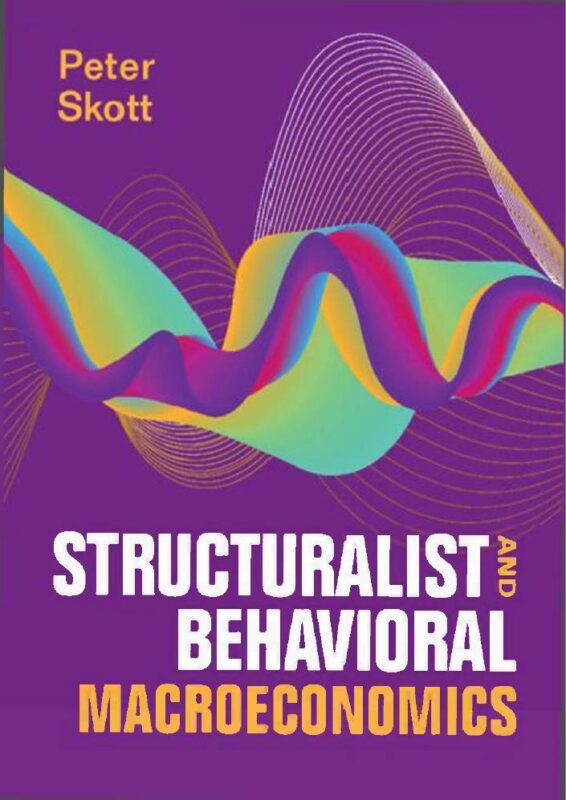
Structuralist and Behavioral Macroeconomics By Skott P
$25.00
Secure checkout
Instant digital download
PDF document
Document details
- Pages
- 396
- File size
- 27.5 MB
- Format
- Digital PDF
- Course
- Education
- Category
- eBook[PDF]
Sign in or create a free account to continue. Your purchase will be saved in My Downloads.
About this ebook
The Structuralist and Behavioral Macroeconomics (published by Cambridge University Press), author Peter Skott presents an empirically grounded alternative to mainstream macroeconomics by combining behavioral insights with Keynesian and institutionalist traditions. [1]
The book is organized into 12 core chapters spanning methodological critiques, micro-foundations of behavior and institutions, and macro-dynamic consequences like instability and secular stagnation: [1, 2]
- Introduction: The State of Macroeconomics: Critiques modern macroeconomic orthodoxy (such as DSGE models and intertemporal optimization) and outlines an alternative behavioral-structuralist approach.
- The Lucas Critique and Representative Agents: Reevaluates the methodological foundations of representative agent models and how policy expectations alter stability.
- Household Consumption and Saving: Re-examines household behaviors using empirical evidence rather than rigid optimization assumptions.
- Saving in a Corporate Economy: Analyzes corporate finance, savings, and investment decisions through an institutional and behavioral lens.
- Phillips Curves and the Natural Rate of Unemployment: Critiques the standard natural rate of unemployment and traditional Phillips curve frameworks.
- Fairness, Money Illusion and Path Dependency: Incorporates social norms, fairness considerations, and psychological anomalies into wage and price dynamics.
- Earnings Inequality, Power Bias and Mismatch: Explores income distribution, power-biased technological change, and structural mismatches in the labor market.
- Macroeconomic Adjustment and Keynes' Instability Argument: Investigates how dynamic market interactions generate endogenous instability rather than automatic self-correction.
- Growth and Cycles: Re-engineers traditional trade cycle and economic growth theories.
- Endogenous Growth Cycles with or without Price Flexibility: Formalizes cyclical growth models under different assumptions regarding price rigidities or flexibility.
- Secular Stagnation and Functional Finance: Discusses long-run stagnation tendencies and advocates for functional finance and active macroeconomic policy priorities.
- Concluding Comments - Evidence-Based Macroeconomics and Economic Theory: Summarizes the path forward for an empirically disciplined, realistic macroeconomic science. [1, 2, 3, 4, 5, 6]
File included
Structuralist-and-Behavioral-Macroeconomics-By-Skott-P.pdf
27.5 MB
Related ebooks