
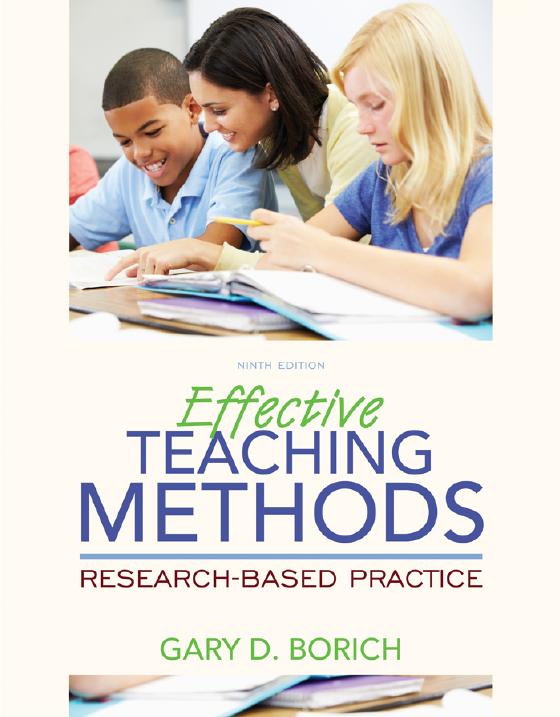
Effective Teaching Methods: Research Based Practice, 9th Edition By Gary D. Borich
$27.00
Secure checkout
Instant digital download
PDF document
Document details
- Pages
- 481
- File size
- 15.33 MB
- Format
- Digital PDF
- Course
- Education
- Category
- eBook[PDF]
Sign in or create a free account to continue. Your purchase will be saved in My Downloads.
About this ebook
The 9th Edition of Effective Teaching Methods: Research-Based Practice by Gary D. Borich focuses on practical, evidence-based instructional strategies designed to engage diverse students, improve classroom management, and boost student achievement. [1, 2]
The textbook is structurally organized into the following core topics and chapters: [1]
Foundational Teaching Principles
-
- The Effective Teacher: Explores the essential traits, responsibilities, behaviors, and classroom interaction styles that characterize successful educators. [1, 2]
- Understanding Your Students: Addresses learner diversity, individual differences, and how socioeconomic and cultural backgrounds impact learning needs. [1, 2]
Classroom Management & Culture
-
- Classroom Management I (Establishing the Learning Climate): Focuses on creating a positive, safe environment, and establishing clear rules and procedures. [1, 2]
- Classroom Management II (Promoting Student Engagement): Targets strategies for keeping students actively focused on learning tasks and minimizing disruptions. [1, 2]
Planning & Instructional Design
-
- Goals, Standards, and Objectives: Breaks down educational standards (such as Common Core), instructional goals, and writing clear behavioral or performance objectives.
- Unit and Lesson Planning: Details how to design comprehensive lesson plans and structural unit outlines to systematically deliver content.
- Technology Integration in Instruction: Covers modern 21st-century educational technologies and methods for blending digital tools into daily lessons. [1, 2, 3, 4, 5, 6]
Delivery & Teaching Strategies
-
- Questioning Strategies: Teaches how to use different cognitive levels of questioning (convergent, divergent, and higher-order thinking) to drive classroom discussion.
- Teaching Strategies for Direct Instruction: Focuses on teacher-led methods like explaining, modeling, lecturing, drill-and-practice, and remediation.
- Teaching Strategies for Indirect Instruction: Explores student-centered approaches such as inquiry-based learning, concept learning, and problem-solving.
- Self-Directed and Constructivist Learning: Promotes strategies that help students take control of their own learning processes and build independent critical thinking skills. [1, 2, 3, 4]
Assessment
File included
tmpphpB38K7Z
15.33 MB
Related ebooks