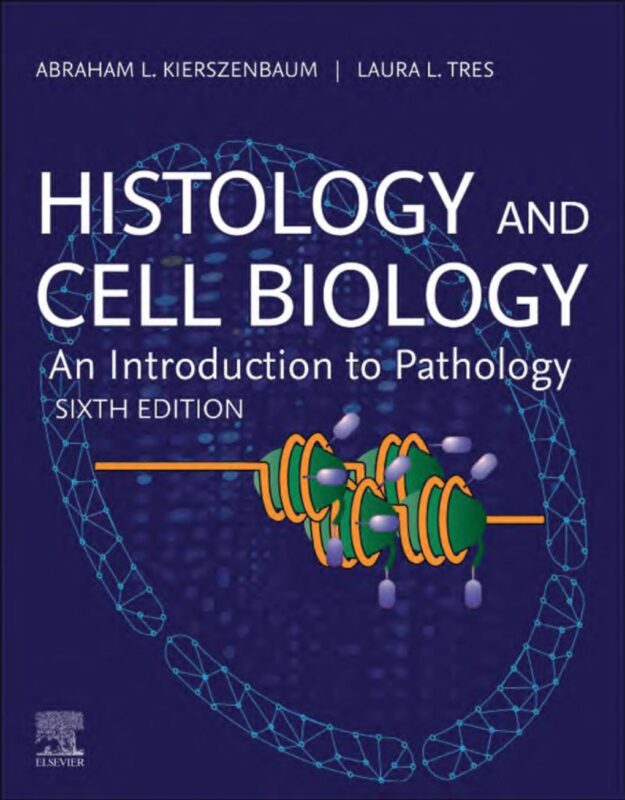
Histology and Cell Biology: An Introduction to Pathology 6th Edition By Abraham Kierszenbaum, Laura Tres
$30.00
Secure checkout
Instant digital download
PDF document
Document details
- Pages
- 827
- File size
- 230.28 KB
- Format
- Digital PDF
- Course
- Histology
- Category
- eBook[PDF]
Sign in or create a free account to continue. Your purchase will be saved in My Downloads.
About this ebook
The 6th edition of Histology and Cell Biology: An Introduction to Pathology by Drs. Abraham L. Kierszenbaum and Laura L. Tres integrates microscopic anatomy with cell biology, physiology, and general pathology. [1, 2]
The textbook is structurally organized into six core parts following the main systems of the human body: [1]
Part I: Basic Tissues and Integrated Cell Biology and General Pathology
- Epithelium: Structure, classification, and function of epithelial layers.
- Epithelial Glands: Exocrine and endocrine gland mechanisms.
- Cell Signaling: Molecular pathways, receptors, and target cell responses.
- Connective Tissue: Extracellular matrix, fibers, and specialized connective cells.
- Osteogenesis: Bone formation, remodeling, cartilage, and joint biology.
- Blood and Hematopoiesis: Blood cell types, plasma components, and bone marrow production.
- Muscle Tissue: Skeletal, cardiac, and smooth muscle structure and contraction.
- Nervous Tissue: Neurons, glial support cells, synapses, and nerve transmission.
- Sensory Organs: Specialized structures governing vision (eye) and hearing (ear). [1, 2]
Part II: Organ Systems: Protection of the Body
- Immune-Lymphatic System: T and B cells, lymph nodes, spleen, thymus, and immune defenses.
- Integumentary System: Layers of the skin, hair follicles, sweat glands, and nails. [1, 2]
Part III: Organ Systems: Blood Circulatory Systems
- Cardiovascular System: Heart wall layers, arteries, veins, capillaries, and microcirculation.
- Respiratory System: Conducting airway passages, lungs, and the blood-air gas exchange barrier.
- Urinary System: Nephron structure, glomerular filtration, and urinary tract lining. [1, 2]
Part IV: Organ Systems: The Alimentary System
- Upper Digestive Segment: Oral cavity, salivary glands, pharynx, and esophagus.
- Lower Digestive Segment: Stomach, small intestine, large intestine, and gastrointestinal mucosa.
- Digestive Glands: Exocrine pancreas, liver lobule architecture, and gallbladder. [1, 2]
Part V: Organ Systems: The Endocrine System
- Neuroendocrine System: Hypothalamic-pituitary axis and diffuse neuroendocrine cells.
- Endocrine System: Thyroid, parathyroid, adrenal glands, and endocrine pancreas. [1, 2]
Part VI: Organ Systems: The Reproductive System
- Spermatogenesis: Testicular structure, Sertoli cells, Leydig cells, and sperm production.
- Sperm Transport and Maturation: Epididymis, vas deferens, and accessory sex glands.
- Folliculogenesis and Menstrual Cycle: Ovarian follicles, ovulation, and uterine endometrial phases.
- Fertilization, Placentation, and Lactation: Zygote formation, placental development, and mammary gland changes. [1, 2]
Key Features unique to the 6th Edition
- Microscope Guidance: New content at the start of each chapter to aid with tissue architectural complexity.
- Integrated Clinical Primers: Dedicated summaries that connect normal histology directly to cell pathology and disease mechanisms. []
File included
tmpphpYKUUC4
230.28 KB
Related ebooks