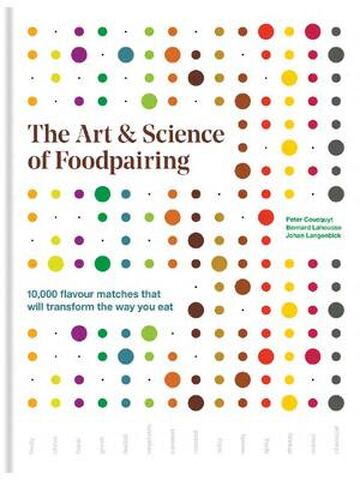
The Art & Science of Foodpairing 1st Edition By Peter Coucquyt, Bernard Lahousse, Johan Langenbick
$29.00
Secure checkout
Instant digital download
PDF document
Document details
- Pages
- 388
- File size
- 28.23 MB
- Format
- Digital PDF
- Course
- Food and Nutrition
- Category
- eBook[PDF]
Sign in or create a free account to continue. Your purchase will be saved in My Downloads.
About this ebook
The Art & Science of Foodpairing (1st Edition) by Peter Coucquyt, Bernard Lahousse, and Johan Langenbick is built around the intersection of culinary artistry, neurogastronomy, and chemical aroma profiles. [1]
The book is structured into two core sections: a foundational scientific introduction and an extensive ingredient pairing directory. The main topics covered in the text include: [1, 2]
1. The Foodpairing® Methodology & System
-
- How It Works: Explains the scientific process of using gas chromatography-mass spectrometry (GC-MS) to analyze ingredient chemistry.
- The Foodpairing® Database: Details how algorithms calculate the mathematical compatibility between different food items based on shared volatile organic compounds.
- Recipe Design: Offers a practical blueprint for taking matched ingredients and balancing them through texture, taste, and temperature. [1, 2, 3]
2. The Science of Flavor, Taste, and Aroma
-
- Neurogastronomy: Explores how human brains perceive flavor, explaining why our sense of smell governs roughly 80% of the overall eating experience. [1, 2]
- Olfaction vs. Gustation: Distinguishes between what we sense on the tongue (the five basic tastes: sweet, sour, salty, bitter, umami) versus what we perceive through the nose. [1, 2]
- The Building Blocks of Flavor: Breaks down the specific chemical families that dictate scent and flavor, such as lactones, esters, aldehydes, phenols, acids, and alcohols. [1, 2]
3. Food Psychology & Culinary Behavior
-
- The Omnivore’s Dilemma: Discusses the psychological tension humans face between wanting safe, familiar foods and craving novel culinary experiences. [1]
- Flavor Associations: Covers how we form learned food associations, build memories around specific dishes, and develop acquired tastes over time. [1]
4. Flavor Transformation via Cooking
-
- Thermal Changes: Investigates how different cooking methods (baking, roasting, boiling, or frying) alter an ingredient's chemical state and release entirely new aroma profiles.
- Building an Aroma Library: Guides readers on how to recognize, catalog, and manipulate aromatic molecules in a home or professional kitchen setting. [, 2]
5. The Ingredient Directory & Flavor Wheels
- 150 Key Ingredient Profiles: Features deep-dive analyses of 150 core ingredients, detailing their primary aromatic characteristics and chemical composition.
- 270 Interactive Flavor Wheels: Uses color-coded taste wheels to visually map out which ingredients share the same dominant aroma molecules.
- 10,000 Flavor Matches: Provides specific data tables matching each food with 10 complementary ingredients and 10 optimal cooking techniques.
- Chef Contributions: Showcases real-world commentary and menu applications validated by 14 of the world’s leading Michelin-starred chefs. [1, 3, 4, 5, 6]
File included
eBook-The-Art-Science-of-Foodpairing-1e-By-Peter-Coucquyt.pdf
28.23 MB
Related ebooks