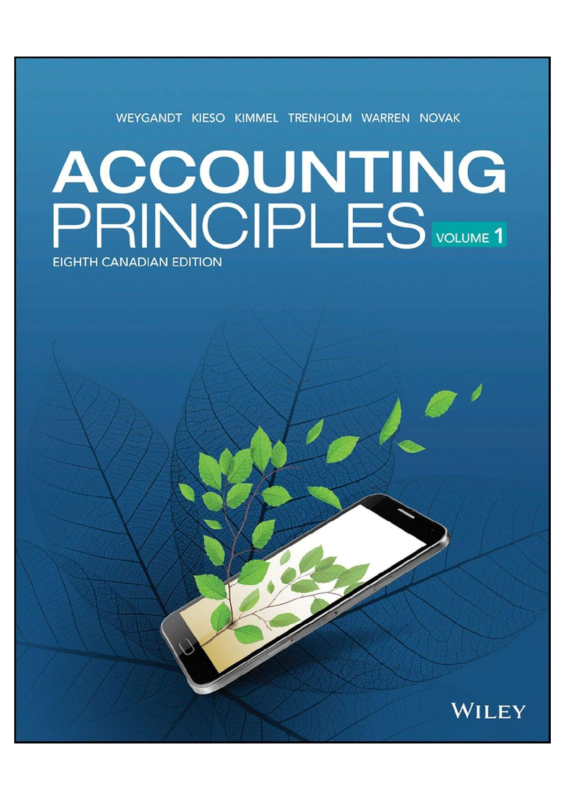
Solution manual for Accounting Principles Volume 1 8th Canadian Edition by Jerry J. Weygandt
$23.00
Secure checkout
Instant digital download
PDF document
Document details
- Pages
- 1,798
- File size
- 6.01 MB
- Format
- Digital PDF
- Course
- Accounting
- Category
- SOLUTIONS MANUAL
Sign in or create a free account to continue. Your purchase will be saved in My Downloads.
About this ebook
Solution manual for Accounting Principles Volume 1 8th Canadian Edition by Jerry J. Weygandt, Donald E. Kieso, Paul D. Kimmel, Barbara Trenholm, Valerie Warren, and Lori Novak covers the fundamental principles of financial accounting tailored specifically to the Canadian regulatory framework, including Canadian GAAP (ASPE) and IFRS. [1, 2, 3]
The textbook is divided into 10 core chapters that guide students step-by-step through the foundational accounting cycle and basic asset/liability management. [1, 2, 3, 4]
Chapter-by-Chapter Topics Covered
- Chapter 1: Accounting in Action
- Identifies the use and users of financial accounting information.
- Explains forms of business organization (proprietorship, partnership, corporation).
- Introduces the basic accounting building blocks (ethics, standards).
- Explains the accounting equation: Assets = Liabilities + Owner's Equity.
- Analyzes business transactions and introduces basic financial statements. [1, 2, 3, 4]
- Chapter 2: The Recording Process
- Chapter 3: Adjusting the Accounts
- Chapter 4: Completion of the Accounting Cycle
- Chapter 5: Accounting for Merchandising Operations
- Chapter 6: Inventory Costing
- Chapter 7: Internal Control and Cash
- Defines internal control principles and their limitations.
- Focuses on cash controls over receipts and disbursements.
- Teaches how to prepare a comprehensive bank reconciliation.
- Covers accounting for petty cash funds. [1]
- Chapter 8: Accounting for Receivables
- Chapter 9: Long-Lived Assets
- Chapter 10: Current Liabilities and Payroll
- Explains how to account for determinable current liabilities (Accounts Payable, Notes Payable, Sales Taxes).
- Covers accounting for unearned revenues and current maturities of long-term debt.
- Details basic payroll accounting, including employee earnings, deductions, and employer payroll taxes. [1, 2, 3, 4]
Supplementary Appendices
- Appendix A: Specimen Financial Statements using a real Canadian corporate example (such as Aritzia Inc.).
- Appendix B: Accounting for Canadian Sales Taxes (GST, PST, HST). [1]
File included
Solution-manual-for-Accounting-Principles-Volume-1-8th-Canadian-Edition-by-Jerry-J.-Weygandt.pdf
6.01 MB
Related ebooks