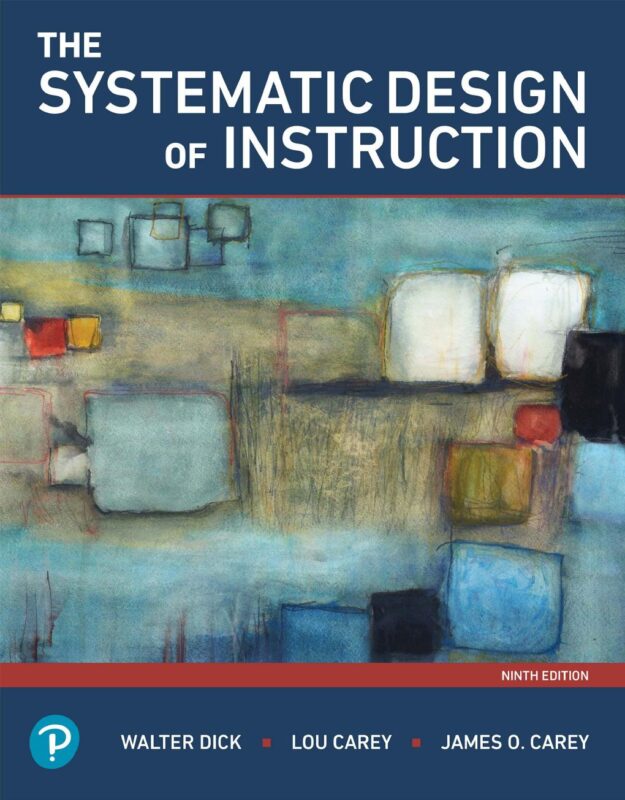
The Systematic Design of Instruction 9th Edition By Walter Dick, Lou Carey, James Carey
$30.00
Secure checkout
Instant digital download
PDF document
Document details
- Pages
- 513
- File size
- 11.4 MB
- Format
- Digital PDF
- Course
- Education
- Category
- eBook[PDF]
Sign in or create a free account to continue. Your purchase will be saved in My Downloads.
About this ebook
The 9th Edition of The Systematic Design of Instruction by Walter Dick, Lou Carey, and James O. Carey covers the core fundamentals of the Dick and Carey Systems Approach Model. The textbook walks the reader through every individual phase of analyzing, designing, developing, and evaluating instruction. [1, 2, 3]
The specific topics covered, organized by their sequential step in the instructional design (ID) process, include: [1, 2]
- Introduction to Instructional Design: An overview of the systems approach model and fundamental ID concepts.
- Identifying Instructional Goals Using Front-End Analysis: Determining what learners need to achieve based on performance problems or requirements.
- Conducting a Goal Analysis: Breaking down the primary instructional goal into specific steps or domains of learning.
- Identifying Subordinate and Entry Skills: Isolating the foundational skills or prerequisite behaviors learners must already possess, along with supporting concepts they need to master.
- Analyzing Learners and Contexts: Evaluating target audience demographics, motivations, prior experiences, as well as the settings where learning and performance will occur.
- Writing Performance Objectives: Crafting precise, measurable statements outlining what the student will be able to do, under what conditions, and by what criteria.
- Developing Assessment Instruments: Designing goal-directed criterion-referenced tests, rubrics, and evaluation tools aligned directly with performance objectives.
- Planning the Instructional Strategy (Theoretical Bases): Utilizing psychological and learning theories to map out the overall approach to sequencing content and learning activities.
- Planning Logistics and Management for the Instructional Strategy: Mapping operational details, resources, timelines, and implementation criteria for managing the delivery.
- Developing Instructional Materials: Selecting existing materials or creating original, media-appropriate modules and packages for the target delivery format (including digital and distance platforms).
- Designing and Conducting Formative Evaluations: Gathering user data through individual, small-group, or field trials to pinpoint structural or content weaknesses.
- Revising Instructional Materials: Using formative evaluation feedback data to refine, correct, and optimize the instruction.
- Designing and Conducting Summative Evaluations: Evaluating the long-term effectiveness, efficiency, and real-world utility of the finalized instruction. [1, 2, 3, 4, 5, 6]
File included
tmpphpHOo1Zq
11.4 MB
Related ebooks