
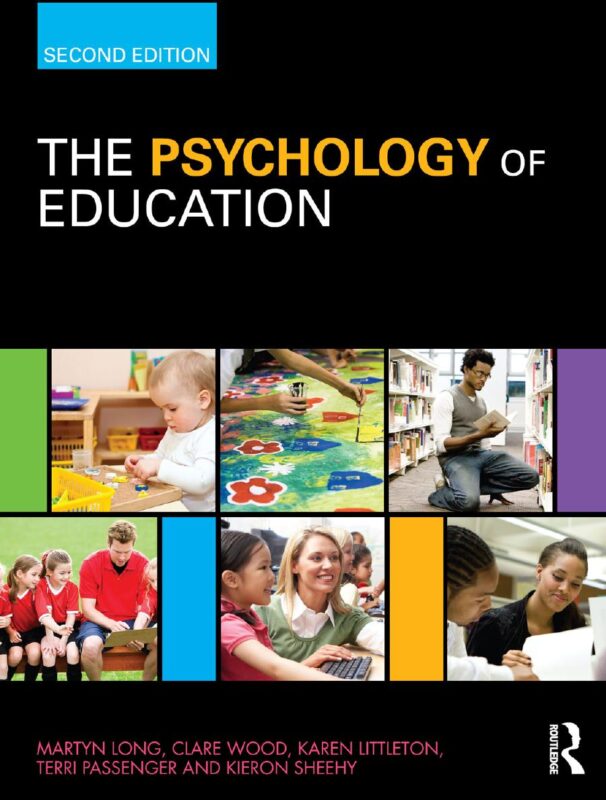
The Psychology of Education The Evidence Base for Teaching 2nd Edition By Martyn Long, Clare Wood, Karen Littleton, Terri Passenger
$27.00
Secure checkout
Instant digital download
PDF document
Document details
- Pages
- 449
- File size
- 4.76 MB
- Format
- Digital PDF
- Course
- Education
- Category
- eBook[PDF]
Sign in or create a free account to continue. Your purchase will be saved in My Downloads.
About this ebook
The Psychology of Education: The Evidence Base for Teaching (2nd Edition), authored by Martyn Long, Clare Wood, Karen Littleton, Terri Passenger, and Kieron Sheehy, is structured around 13 core chapters that explore how empirical psychological theories apply directly to British school classrooms. [1, 2]
The textbook covers the following core topics: []
- Introduction to Psychology and Education: Establishes the foundations of educational psychology and explores the role of evidence-based practice and research methods in teaching.
- Learning: Evaluates fundamental psychological frameworks of learning, including behavioral, cognitive, and constructivist perspectives.
- Assessment: Examines the techniques and psychological aspects of student evaluation, balancing developmental metrics with curriculum-based assessments.
- Individual Differences and Achievement: Focuses on student uniqueness by exploring variation in intelligence, creativity, cognitive styles, personality, and problem-solving skills.
- Student Engagement and Motivation: Reviews how concepts like achievement motivation, academic self-concept, attributions, and self-efficacy influence a child's drive to learn.
- The Educational Context: Details the structural impact of the school environment, analyzing how physical space, classroom management, pupil grouping, and teaching styles alter student progress.
- Society and Culture: Looks broadly at how sociological realities, systemic poverty, gender inequalities, and cultural backgrounds affect student attainment.
- Learning Interactions and Social Worlds: A dedicated chapter analyzing adult–child and peer–peer dynamics, highlighting dialogue quality, Vygotsky’s zone of proximal development, and scaffolding.
- Language & Literacy: Examines how children acquire language, how literacy skills develop, and the evidence-based links between the two.
- Inclusive Education and Special Educational Needs (SEN): Focuses on the core concepts of inclusion, identification of learning needs (such as dyslexia), and executing additional provisions.
- Behaviour Problems & Dealing with Behaviour Problems: Spans two final chapters assessing why classroom disruption occurs and outlines evidence-based behavioral strategies to manage and de-escalate these issues. [1, 2, 3, 4, 5, 6]
File included
tmpphptzym75
4.76 MB
Related ebooks