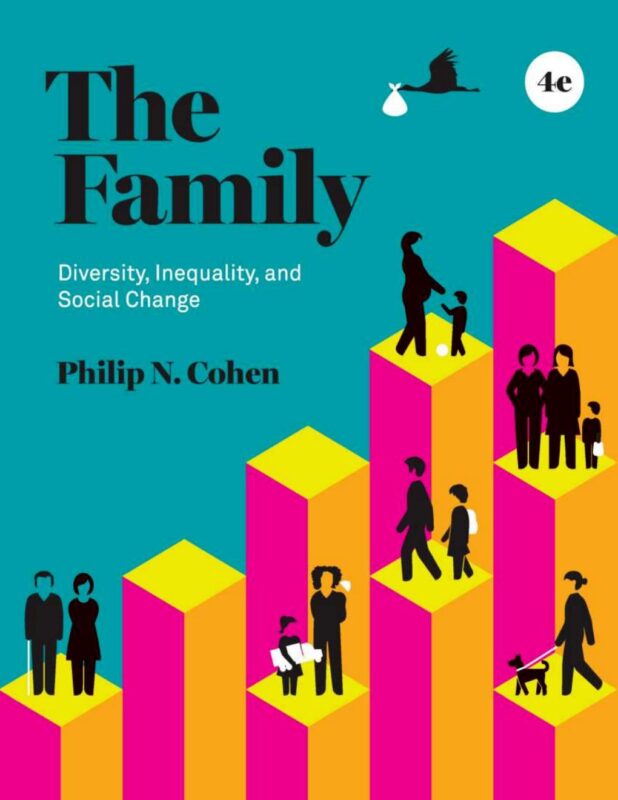
The Family: Diversity, Inequality, and Social Change by Philip N. Cohen
$30.00
Secure checkout
Instant digital download
PDF document
Document details
- Pages
- 710
- File size
- 14.4 MB
- Format
- Digital PDF
- Course
- Social Sciences
- Category
- eBook[PDF]
Sign in or create a free account to continue. Your purchase will be saved in My Downloads.
About this ebook
The Family: Diversity, Inequality, and Social Change by Philip N. Cohen covers the core structural, historical, and demographic facets of modern family life through the lens of sociology. [1, 2]
The textbook is typically organized into 13 comprehensive chapters that systematically explore how external social institutions, inequality, and cultural shifts shape personal relationships. [1, 2]
1. Foundations of Family Sociology
- A Sociology of the Family: Introduction to sociological perspectives (e.g., functionalism, conflict theory, feminism) and the three overlapping definitions of family: personal, legal, and institutional arenas (the state, market, and family). [1, 2]
- The Family in History: Evolution of family structures from pre-industrial setups to the rise of the mid-century nuclear family and the modern shift toward diverse, individualized household arrangements. [1, 2]
2. Social Divisions and Inequalities
- Race, Ethnicity, and Immigration: How racial discrimination, cultural heritage, and immigration statuses fragment family experiences, specifically looking at marriage trends and singlehood among different ethnic groups. [1, 2]
- Families and Social Class: The impact of poverty, wealth, and Max Weber’s concept of "life chances" on family stability and intergenerational social mobility. [1, 2]
- Gender: Exploration of gender socialization, expectations within relationships, and how gender constructs affect behavior inside and outside the home. [1, 2]
- Sexuality: Societal shifts regarding sexual identity, the structural reinforcement of sexual norms, and how sexuality shapes modern romantic bonds. [1, 2]
3. Relationship Formation and Dynamics
- Love and Romantic Relationships: The sociology of attraction, dating culture, technology's transformation of romance, and patterns of script-sharing in dating. [1, 2]
- Marriage and Cohabitation: Analysis of why people are marrying later (or not at all), the rise of cohabitation, and disparities in marriage rates among different demographic groups. [1, 2]
- Families and Children: The economics and highly unequal costs of child-rearing, parenting philosophies, and changing fertility trends. [1, 2]
4. Transitions, Crises, and Institutional Overlaps
- Divorce, Remarriage, and Blended Families: Structural causes of marital dissolution, the "divorce decline" among certain education demographics, and the complexities of stepfamilies.
- Work and Families: The intersection of economic labor and family life, specifically looking at the gendered division of unpaid housework, childcare, and dual-income strains.
- Family Violence and Abuse: Sociological examination of intimate partner violence, child abuse, and elder neglect, focusing on power dynamics and systemic prevention challenges.
- The Future of the Family: Projections on demographic shifts, emerging legislative fights over family rights, and global trends impacting how humans bond. [, 3, 4, 5, 6]
File included
ScholarFriends.com-the-family-4th-edition-by-diversity-inequality-social-change.pdf
14.4 MB
Related ebooks