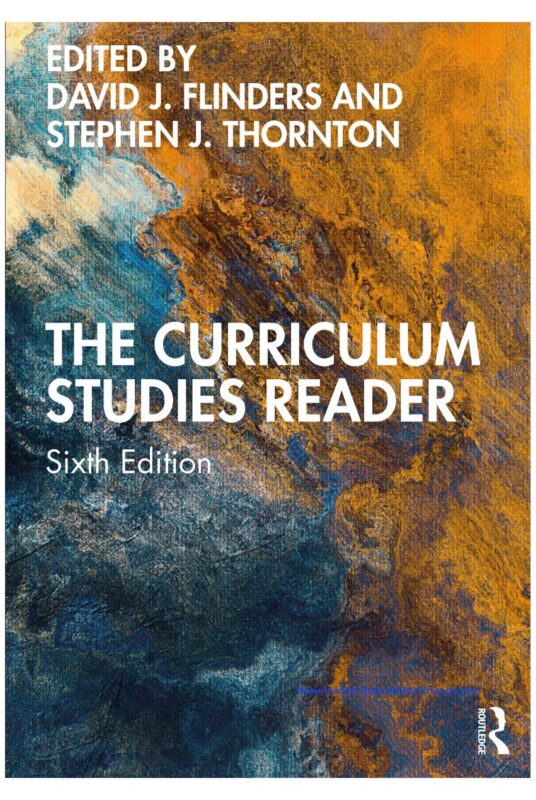
The curriculum studies reader 6th edition by david j flinders, stephen j thornton
$25.00
Secure checkout
Instant digital download
PDF document
Document details
- Pages
- 473
- File size
- 6.26 MB
- Format
- Digital PDF
- Course
- Education
- Category
- eBook[PDF]
Sign in or create a free account to continue. Your purchase will be saved in My Downloads.
About this ebook
The Curriculum Studies Reader (6th Edition), edited by David J. Flinders and Stephen J. Thornton, provides a comprehensive survey of curriculum scholarship by blending historical foundational texts with contemporary educational research. [1, 2]
The primary topics and themes covered in this edition include:
Core Historical and Foundational Concepts
- The Origins of Curriculum-Making: Early perspectives on structured education, including the scientific approach to curriculum design (e.g., Franklin Bobbitt) and early modern pedagogy (e.g., Maria Montessori). [1]
- Progressive and Social Reconstructionist Foundations: Historical educational creeds, the relationship between public schooling and immigrant integration, and debates on whether schools should actively reshape the social order (e.g., John Dewey, Jane Addams, George S. Counts). [1, 2]
Curriculum Design, Instruction, and Evaluation
- Basic Principles of Curriculum: Classic structural models for constructing and evaluating instructional programs (e.g., Ralph W. Tyler). [1]
- Objectives and Classroom Realities: Debates surrounding the usefulness versus the constraints of strict educational objectives, alongside sociological examinations of the hidden curriculum and the everyday experience of schooling (e.g., Elliot W. Eisner, Philip W. Jackson). [1]
- Consciousness and Liberation: Exploring education as a tool for political liberation and personal awareness (e.g., Paulo Freire, Maxine Greene). [1]
The Reconceptualization and Institutional Change
- Theoretical Shifts: The structural "reconceptualization" of how curriculum is studied, moving from purely technical planning to a broader cultural, political, and historical understanding (e.g., William F. Pinar).
- Implementation and Adaptation: How educational policy and intended curriculum change when adapted to practical, real-world classroom settings. [1]
Contemporary Dilemmas and Critical Social Issues (New & Expanded in the 6th Edition)
- High-Stakes Testing and Accountability: Qualitative analyses of how standardized testing impacts curriculum control and shifts focus between tested and untested subjects.
- Multicultural Literacy and Institutional Racism: Addressing representation in school materials, multicultural curriculum reform, and directly confronting white supremacy in the curriculum.
- Gender and Identity Politics: Perspectives on how schools impact gender equality, global citizenship education for women, and the historic institutional silence surrounding LGBTQ+ topics in social studies curricula.
- Globalization and Environmental Crisis: The challenges curriculum faces when responding to global economic integration and the incorporation of climate change and environmental "commons" education into the modern classroom. [1, 2, 3]
File included
tmpphpChqHCY
6.26 MB
Related ebooks