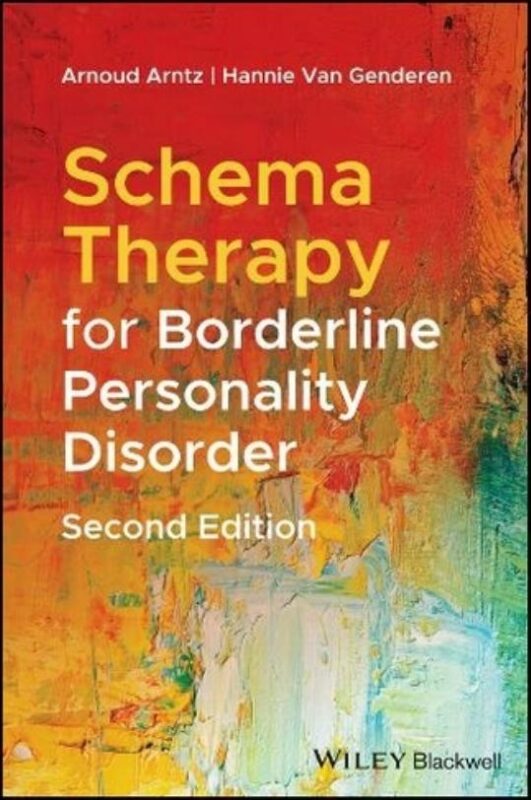
Schema Therapy for Borderline Personality Disorder 2nd Edition By Arnoud Arntz, Hannie van Genderen
$25.00
Secure checkout
Instant digital download
PDF document
Document details
- Pages
- 275
- File size
- 2.91 MB
- Format
- Digital PDF
- Course
- Occupational Therapy
- Category
- eBook[PDF]
Sign in or create a free account to continue. Your purchase will be saved in My Downloads.
About this ebook
The second edition of Schema Therapy for Borderline Personality Disorder by Arnoud Arntz and Hannie van Genderen provides a practical guide on using the schema mode model to treat Borderline Personality Disorder (BPD). It bridges cognitive-behavioral techniques with experiential, psychodynamic, and attachment theories. [1, 2, 3]
The primary topics and chapters covered in the book include:
1. Conceptual Framework and the Schema Mode Model
- Understanding BPD: Overview of borderline pathology, including severe mood swings, identity confusion, and chronic emotional dysregulation. [1]
- The Schema Mode Model: Breaking down how BPD patients rapidly shift between distinct moment-to-moment emotional states (modes). It covers the core BPD modes:
2. Treatment Planning and Phases of Therapy
- Assessment and Case Conceptualization: Formulating a personalized mode map to help patients recognize their triggers.
- Phases of Therapy: Navigating the non-linear stages of long-term treatment. This spans from the initial bonding/stabilization and crisis management, through the core mode-change phase, up to the termination phase and autonomy building. [1, 2]
3. Core Therapeutic Interventions and Techniques
- The Therapeutic Relationship as a Tool: Detailed guidance on limited reparenting, where the therapist acts as an antidote to past abusive or neglectful environments by safely meeting the patient's unmet childhood needs. [1]
- Experiential Techniques: Practical instruction on emotional processing through imagery rescripting (rewriting traumatic childhood memories) and chairwork dialogues (interventions to fight back against the punitive parent mode). [1]
- Cognitive Methods: Restructuring automatic distorted thoughts and providing targeted psychoeducation about schemas and modes. [1, 2]
- Behavioral Pattern-Breaking: Replacing impulsive, self-destructive coping styles (such as self-harm or substance abuse) with healthy, adaptive everyday behaviors. [1, 2]
4. Advanced Applications and New Developments
- Group Schema Therapy: Adapting the individual framework for a collaborative group setting.
- Couples Therapy: Utilizing schema therapy to resolve relational gridlocks and attachment wounds between partners. [1, 2]
5. Practical Handouts and Appendices
File included
ScholarFriends.com-schema-therapy-for-borderline-personality-disorder-2nd-edition-by-arnoud.pdf
2.91 MB
Related ebooks