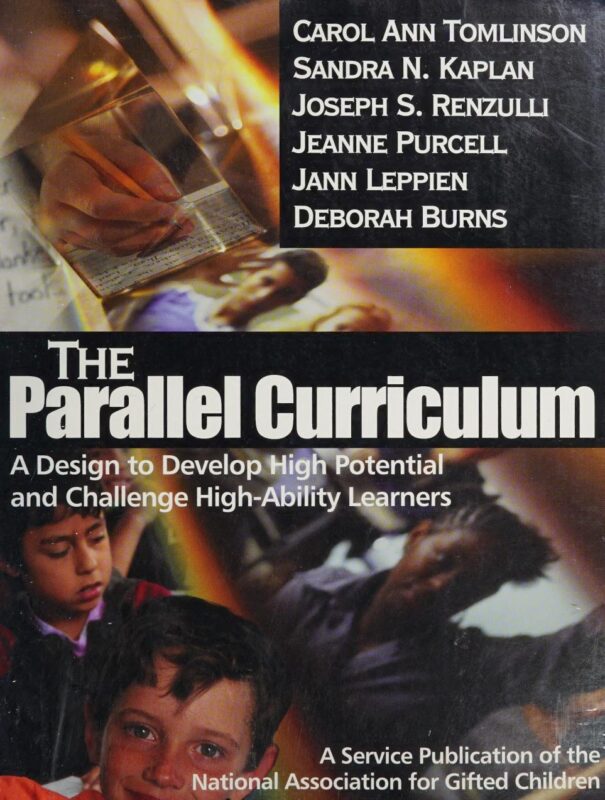
(scan copy) The Parallel Curriculum A Design to Develop Learner Potential and Challenge Advanced Learners 2nd Edition By C
$41.00
Secure checkout
Instant digital download
PDF document
Document details
- Pages
- 292
- File size
- 18.87 MB
- Format
- Digital PDF
- Course
- Education
- Category
- eBook[PDF]
Sign in or create a free account to continue. Your purchase will be saved in My Downloads.
About this ebook
The Parallel Curriculum: A Design to Develop Learner Potential and Challenge Advanced Learners" (2nd Edition) by Carol Ann Tomlinson, Sandra N. Kaplan, Joseph S. Renzulli, Jeanne H. Purcell, Jann H. Leppien, and Deborah E. Burns provides a comprehensive framework known as the Parallel Curriculum Model (PCM). [1, 2, 3]
The book is structured around the rationale, design, and practical implementation of four interrelated curriculum pathways (parallels) paired with the concept of Ascending Intellectual Demand (AID) to help learners progress from basic understanding toward authentic discipline expertise. [1, 2, 3, 4, 5]
The main topics and core chapters covered in the text include:
1. Foundations and Rationale of PCM
- Developing Learner Expertise: The conceptual shift from rote learning to moving PreK–12 students along a continuum toward becoming subject-matter experts. [1, 2]
- Ascending Intellectual Demand (AID): Strategies to increase cognitive complexity, abstractness, and pace to match a student's rising capabilities. [1, 2]
- 11 Key Curriculum Components: High-quality instructional design indicators (such as content, assessments, learning activities, resources, and execution methods) structured to align with national standards. [1, 2]
2. The Four Curricular Parallels
The heart of the book details the distinct nature, goals, and design templates for each of the four parallel pathways: [1]
- The Core Curriculum Parallel: Focuses on the foundational information, vital concepts, principles, and essential skills that outline the baseline of any given discipline.
- The Curriculum of Connections Parallel: Teaches students to extend core knowledge across different times, cultures, geographical locations, and academic disciplines (cross-curricular integration).
- The Curriculum of Practice Parallel: Positions the student as a practitioner or researcher in the field, encouraging them to address real-world problems using the authentic methodologies, tools, and ethics of professionals.
- The Curriculum of Identity Parallel: Promotes self-reflection by prompting students to explore their personal interests, strengths, values, and identities through the lens of the discipline they are studying. [1, 2, 3, 4]
3. Implementation and Classroom Application
- Designing and Modifying Units: Practical guides for utilizing parallels independently or combining them to form highly customizable unit maps.
- Instructional Assessment: Utilizing ongoing, quality classroom assessments as a vital tool to customize the learning experience.
- Classroom Management in Differentiated Settings: Creating a responsive environment tailored to meet the needs of diverse, heterogeneous student populations.
- Sample Units and Rubrics: The 2nd Edition provides comprehensive, cross-disciplinary tables, sample unit structures, and evaluation rubrics to assist educators in implementing the PCM framework. [1, 2, 3, 4]
File included
tmpphp8shz2I
18.87 MB
Related ebooks