
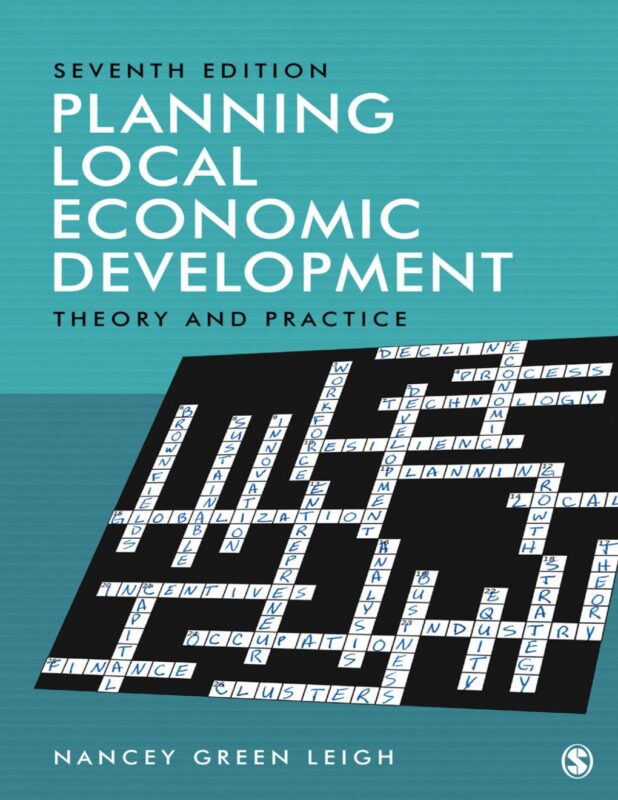
Planning Local Economic Development Theory and Practice 7th Edition By Nancey Leigh
$30.00
Secure checkout
Instant digital download
PDF document
Document details
- Pages
- 302
- File size
- 9.6 MB
- Format
- Digital PDF
- Course
- Economics
- Category
- eBook[PDF]
Sign in or create a free account to continue. Your purchase will be saved in My Downloads.
About this ebook
The 7th Edition of Planning Local Economic Development: Theory and Practice by Nancey Green Leigh (published by SAGE Publications) explores the foundational theories of economic planning while addressing contemporary challenges faced by cities and local governments. [1, 2]
The primary updates in this edition place a massive focus on sustainability, resiliency, and equity, alongside the economic disruptions and structural shifts brought on by the global COVID-19 pandemic. [1, 2]
The text is organized into core themes across its analytical framework:
1. Foundations and Theories of Local Economic Development
- The Concept of Local Economic Development (LED): Defining the field, its evolution, and the changing roles of local and municipal governments. [1, 2]
- Theoretical Frameworks: Examining traditional and modern economic development theories, including comparative vs. competitive advantage in a globalized economy. [1, 2]
- Equity and Lagging Regions: Addressing systemic disparities, regional economic integration, and wealth distribution. [1, 2]
2. Analytical Techniques and Data Collection
- Economic Analysis: Techniques for assessing local economies, evaluating a community's strengths, weaknesses, opportunities, and threats (SWOT analysis), and forecasting. [1]
- Labor Market and Demographics: Methods to analyze the local workforce, identify skills gaps, and track consumer behavior and demographic shifts. [1]
- Social Network Analysis: Using connectivity data to map relationships within local business and civic environments. [1]
3. Strategy Formulation and Implementation
- Creating an LED Strategy: Establishing goals, building consensus, and identifying prerequisites for planning success.
- Integration into Comprehensive Plans: Embedding localized economic initiatives within a city or region's broader master plans.
- Financing and Implementation: Sourcing capital, leveraging public-private partnerships (PPPs), and avoiding common pitfalls during execution. [1, 2]
4. Core Development Domains (The "How-To" Components)
- Locality Development: The intersection of urban design, physical infrastructure, zoning regulations, Business Improvement Districts (BIDs), and community land trusts.
- Business Development: Fostering a robust business environment through enterprise zones, venture financing, economic gardening, Small Business Development Centers (SBDCs), and localized incentives.
- Human Resource and Workforce Development: Job training programs, aligning human capital with emerging industries, and responding to pandemic-era shifts in remote work and labor structures. [1, 2, 3, 4]
5. Advanced and Sustainable Economic Horizons
- High-Technology Industry and Innovation: Navigating R&D deployment, tech-led growth, and the digital economy.
- Sustainable and Resilient Development: Creating "green" economies, implementing climate resiliency planning, and utilizing sustainable design elements (such as LEED neighborhood standards). [1, 2, 3, 4]
File included
tmpphpHp3lwO
9.6 MB
Related ebooks