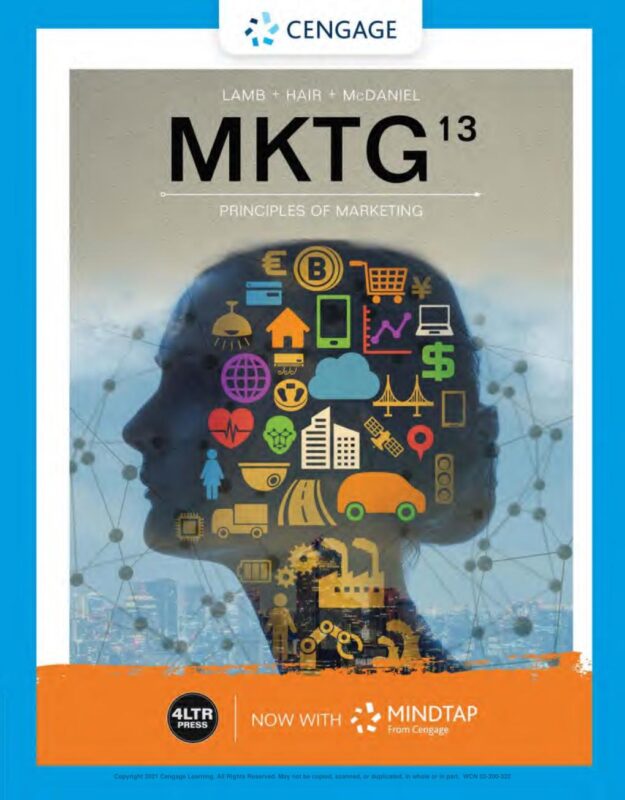
MKTG 13 (Principles of Marketing) By Hair Lamb Mcdaniel
$25.00
Secure checkout
Instant digital download
PDF document
Document details
- Pages
- 418
- File size
- 10.59 MB
- Format
- Digital PDF
- Course
- Marketing
- Category
- eBook[PDF]
Sign in or create a free account to continue. Your purchase will be saved in My Downloads.
About this ebook
The textbook MKTG 13 (Principles of Marketing) by Charles W. Lamb, Joe F. Hair, and Carl McDaniel (published by Cengage Learning) structures the fundamental core principles of modern marketing across distinct procedural parts. [1, 2]
The primary topics and chapters covered in the textbook include:
Part I: The World of Marketing
- An Overview of Marketing: Defining marketing, exploring marketing management philosophies (production, sales, market, and societal orientations), and understanding the value exchange. [1, 2]
- Strategic Planning for Competitive Advantage: Developing a marketing plan, conducting a SWOT analysis, and establishing a sustainable competitive advantage.
- Ethics and Social Responsibility: Corporate social responsibility, sustainability, and transparency in marketing decisions. [1, 2]
- The Marketing Environment: Analyzing external macroeconomic factors, including demographic, economic, technological, political, legal, and social trends.
- Developing a Global Vision: Navishing international markets, global marketing mixes, and entering foreign economies.
Part II: Analyzing Market Opportunities
- Consumer Decision Making: Exploring how individuals select, buy, use, and dispose of goods, including cultural, social, individual, and psychological influences.
- Business Marketing: Analyzing business-to-business (B2B) markets and organizational buying behaviors.
- Segmenting and Targeting Markets: Dividing broad markets into specific groups based on demographics, psychographics, behaviors, or geography.
- Marketing Research: Using data collection, surveys, and information tracking to make informed management decisions. [1, 2, 3]
Part III: Product Decisions
- Product Concepts: Understanding what a product is, branding strategies, trademarks, and packaging.
- Developing and Managing Products: Managing the new product development lifecycle, innovations, and the product life cycle (PLC) stages.
- Services and Nonprofit Marketing: Addressing the unique challenges of marketing intangible goods, services quality, and nonprofit outreach. [1]
Part IV: Distribution (Place) Decisions
- Supply Chain Management and Marketing Channels: Determining how products reach final consumers via intermediaries, wholesalers, and retail partnerships.
- Retailing: Strategic management of brick-and-mortar storefronts, e-commerce spaces, and non-store operations.
Part V: Promotion and Communication Decisions
- Promotion and Advertising: Exploring integrated marketing communications (IMC), advertising strategies, and public relations.
- Public Relations and Sales Promotion: Managing consumer relations, publicity, and short-term incentives to motivate purchases.
- Personal Selling and Sales Management: Aligning relationship selling with corporate account management.
- Digital and Social Media Marketing: Leveraging modern digital platforms, SEO, and social network strategies to establish targeted reach. [1, 2]
Part VI: Pricing Decisions
- Pricing Concepts and Strategies: Determining baseline costs, examining supply and demand, setting introductory prices (skimming vs. penetration), and executing tactical price modifications. [1]
File included
tmpphpo6mnPz
10.59 MB
Related ebooks