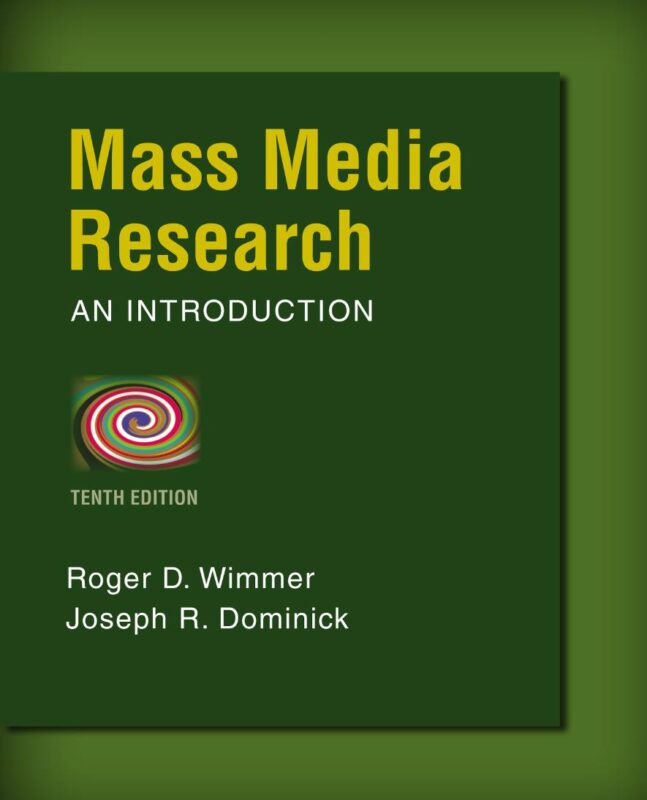
Mass media research an introduction 10th edition by roger wimmer, joseph dominick
$30.00
Secure checkout
Instant digital download
PDF document
Document details
- Pages
- 498
- File size
- 4.46 MB
- Format
- Digital PDF
- Course
- Education
- Category
- eBook[PDF]
Sign in or create a free account to continue. Your purchase will be saved in My Downloads.
About this ebook
The Mass Media Research: An Introduction (10th Edition) by Roger D. Wimmer and Joseph R. Dominick is structured into core sections that provide a comprehensive overview of mass communication research methods, data analysis techniques, and real-world applications. [1]
The primary topics and chapters covered in this edition include:
1. Introduction to Research & Core Elements
- The Science of Research: Defining mass media, exploring the scientific method, and analyzing the emergence of "smart media".
- Elements of Research: Concepts, constructs, variables, and operational definitions used to establish a research framework.
- Research Ethics: Guidelines for conducting ethical research, with a heavy emphasis on social media research ethics and digital privacy.
- Sampling Methods: Types of probability and non-probability sampling, along with the common errors and problems associated with sampling. [1]
2. Major Research Approaches
- Qualitative Research: Methods like focus groups and field observations, including specialized digital sub-types like "netnography" (online ethnography) and mixed-method techniques. [1, 2]
- Content Analysis: Systematic tracking of media messages, featuring an expanded focus on framing analysis. [1, 2]
- Survey Research: Designing questionnaires and conducting polls, with updated sections handling statistical outliers and online survey biases. [1, 2]
- Longitudinal Research: Methods for studying media patterns over extended periods, including trend, cohort, and panel studies. [1]
- Experimental Research: Laboratory and field experiment execution, focusing heavily on minimizing participant drop-out rates in online experiments. [1, 2]
3. Data Analysis & Interpretation
- Introduction to Statistics: Explaining basic descriptive and inferential statistics.
- Statistical Procedures: Clarifying complex statistical principles such as Degrees of Freedom, t-tests, ANOVA, and chi-square tests. [1]
4. Practical Applications of Media Research
- Print Media: Research methods for newspapers and magazines, detailing the modern impact of tablet computers and digital apps on readership.
- Electronic Media: Audience measurement techniques for television, cable, radio, and streaming industries.
- Advertising: Copy testing, media efficiency tracking, and evaluation of new digital advertising channels and social media message analytics.
- Public Relations: Image research, public relations audits, and methods used to gauge campaign effectiveness. [1, 2, 3, 4]
File included
tmpphpzkw5BH
4.46 MB
Related ebooks