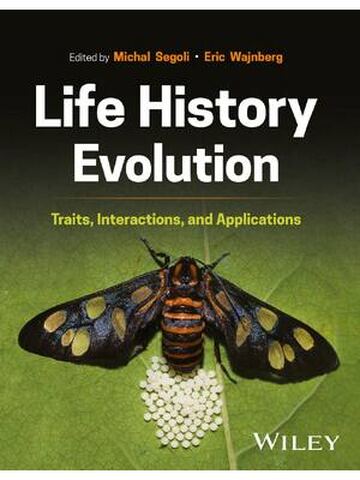
Life History Evolution By Michal Segoli, Eric Wajnberg
$30.00
Secure checkout
Instant digital download
PDF document
Document details
- Pages
- 499
- File size
- 7.3 MB
- Format
- Digital PDF
- Course
- Education
- Category
- eBook[PDF]
Sign in or create a free account to continue. Your purchase will be saved in My Downloads.
About this ebook
The Life History Evolution: Traits, Interactions, and Applications, edited by Michal Segoli and Eric Wajnberg, provides a comprehensive synthesis of the mechanisms driving life history strategies across diverse taxa. [1]
The book is structured into several core thematic categories, covering both classical theories and modern ecological or anthropogenic realities: [1, 2]
1. Foundational & Classical Life History Traits
- Theory and Modelling: Insights into foundational theory, modern optimization models, frequency- and density-dependence, explicit population dynamics, and evolutionary game theory. [1, 2]
- Core Biological Traits: The allocation of energy and resources toward traditional parameters like lifespan, developmental speed, growth rates, maturation, and reproduction (including traits like clutch size or reproductive scheduling). [1, 2, 3]
2. Complex & Co-evolved Inter-Specific Interactions
- Predator-Prey Dynamics: How predatory pressures select for specific life-cycle adaptations and survival strategies. [1, 2]
- Parasite-Host & Endosymbiont-Host Relationships: Evolution of defensive and reproductive adaptations within symbiotic and parasitic ecosystems. [1]
- Plant-Herbivore Interactions: Evolutionary feedbacks dictating how plants and the insects or animals that consume them co-evolve life history traits over time. [1]
3. Behavioural & Social Complexity
- Social Behaviour: The evolution of life history strategies within complex social groupings and community structures.
- Eco-Evolutionary Feedbacks: Integration of ecological modifications and their direct loop back into phenotypic and genotypic evolution. [1, 2]
4. Anthropogenic Pressures & Environmental Challenges
- Climate Change: Adaptation mechanisms and shifts in lifecycle timing due to a warming planet.
- Species Invasions: How invasive species evolve rapid or flexible life history traits to thrive in novel environments.
- Pollution: Human-induced evolutionary processes resulting from artificial chemical or environmental stressors. [1, 2]
5. Applied Case Studies
- Biological Pest Control: Leveraging life history knowledge of natural predators or parasitoids to manage crop-destroying pests.
- Wildlife Management: Applying evolutionary principles to the conservation and regulation of vulnerable animal species. [1]
File included
tmpphpDLKgn6
7.3 MB
Related ebooks