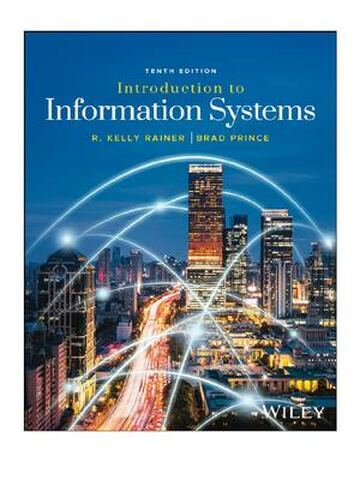
Introduction to Information Systems 10th Edition By R. Kelly Rainer, Brad Prince
$30.00
Secure checkout
Instant digital download
PDF document
Document details
- Pages
- 622
- File size
- 18.37 MB
- Format
- Digital PDF
- Course
- Education
- Category
- eBook[PDF]
Sign in or create a free account to continue. Your purchase will be saved in My Downloads.
About this ebook
The Introduction to Information Systems 10th Edition By R. Kelly Rainer, Brad Prince topic covered
The 10th Edition of Introduction to Information Systems by R. Kelly Rainer and Brad Prince focuses on teaching students how modern organizations use information technology (IT) and information systems (IS) to drive digital transformation, maintain competitive advantages, and handle daily operations. [1, 2]
🏢 Foundational Concepts & Business Strategy
- Chapter 1: Introduction to Information Systems – Core components of computer-based information systems, IT impacts on organizations, and how technology shapes society. [1, 2]
- Chapter 2: Organizational Strategy, Competitive Advantage, and Information Systems – Business processes, business process management (BPM), organizational pressures, and strategic alignment using information systems. [1, 2]
🔒 Governance, Ethics, & Security
- Chapter 3: Ethics and Privacy – Ethical frameworks, policies, and protecting individual and customer privacy.
- Chapter 4: Information Security – Cyber threats, vulnerabilities, defense mechanism structures, and risk mitigation protocols. [1, 2]
💻 Infrastructure & Data Management
- Chapter 5: Data and Knowledge Management – Databases, big data infrastructure, corporate data warehouses, and managing organizational knowledge. [1, 2]
- Chapter 6: Telecommunications and Networking – Network protocols, internet infrastructure, communication systems, and collaborative tools. [1, 2]
🌐 Digital Commerce & Connectivity
- Chapter 7: E-Business and E-Commerce – Online business models, internet marketing, and e-payment systems.
- Chapter 8: Wireless, Mobile Computing, and Mobile Commerce – Cellular networks, Wi-Fi architectures, smart devices, and m-commerce trends.
- Chapter 9: Social Computing – Social media platforms in business, Web 2.0 innovations, and user-generated corporate engagement. [1, 2, 3, 4]
⚙️ Enterprise Applications & Intelligence
- Chapter 10: Information Systems within the Organization – Core functional area systems, including Transaction Processing Systems (TPS) and Enterprise Resource Planning (ERP).
- Chapter 11: Customer Relationship Management (CRM) and Supply Chain Management (SCM) – Managing customer cycles, supply networks, tracking logistics, and optimization.
- Chapter 12: Business Analytics – Business intelligence, operational analytics, and management decision-support architectures. [1, 2, 3, 4]
🚀 Development & Advanced Technologies
- Chapter 13: Acquiring Information Systems and Applications – Software sourcing options, planning lifecycle models (SDLC), and deployment methodologies.
- Chapter 14: Artificial Intelligence – Intelligent automation, machine learning paradigms, and the expanding landscape of cognitive systems. [1, 2, 3, 4]
File included
tmpphpbiVqNl
18.37 MB
Related ebooks