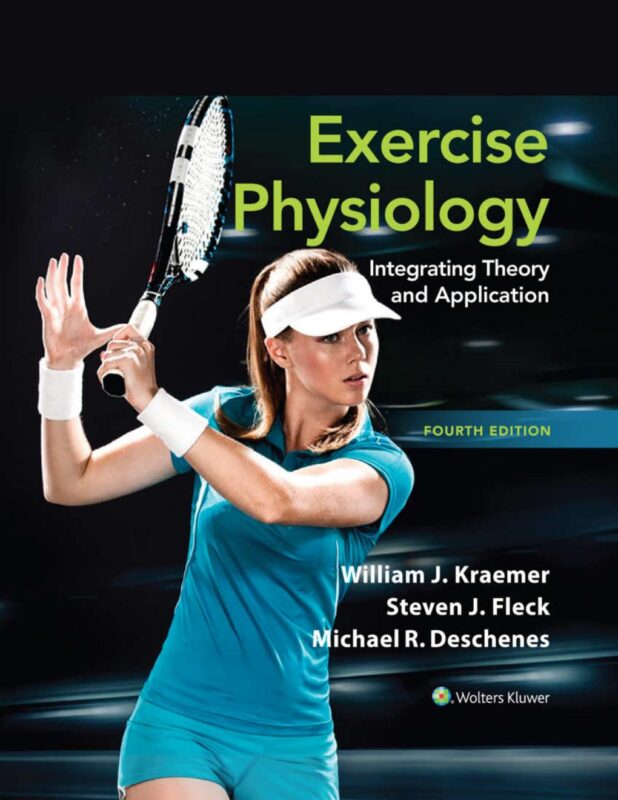
Exercise Physiology Integrating Theory and Application 4th Edition By William Kraemer, Steven Fleck, Michael Deschenes
$30.00
Secure checkout
Instant digital download
PDF document
Document details
- Pages
- 1,187
- File size
- 32.25 MB
- Format
- Digital PDF
- Course
- Medicine
- Category
- eBook[PDF]
Sign in or create a free account to continue. Your purchase will be saved in My Downloads.
About this ebook
Exercise Physiology: Integrating Theory and Application, 4th Edition by William J. Kraemer, Steven J. Fleck, and Michael R. Deschenes focuses on connecting scientific research to real-world decision-making for strength and conditioning, fitness, and clinical professionals. [1, 2]
The textbook is structurally organized into four core parts that span fundamental physiological science to training design. [1]
Part 1: Foundations of Exercise Physiology
- Research Methodology: Focuses on Applying Research to Everyday Exercise Physiology, parsing scientific literature, and translating evidence into practical client applications. [1, 2]
- Bioenergetics: Covers anaerobic metabolic pathways, the ATP-PC system, glycolysis, and how the body meets the metabolic demand for immediate energy. [1, 2]
- Aerobic Metabolism: Explores oxidative pathways, mitochondrial respiration, and carbohydrate/lipid metabolism during prolonged physical exertion. [1, 2]
Part 2: Exercise Physiology and Body Systems
- Nervous System: Examines neuromuscular control, voluntary movement regulation, motor unit recruitment, and neural adaptations to training. [1, 2]
- Musculoskeletal System: Details muscle structure, the sliding filament theory, fiber types, proprioception, and mechanisms of force production. [1, 2]
- Cardiovascular System: Analyzes cardiac structure, hemodynamic regulation, blood pressure response, and systemic adjustments to absolute versus relative training loads. [1, 2]
- Respiratory System: Covers pulmonary ventilation mechanics, gas diffusion, gas transport in the blood, and the respiratory regulation of acid-base balance. [1, 2]
- Endocrine System: Focuses on neuroendocrine regulation, hormone receptor dynamics, and hormonal responses to acute stress and chronic training. [1]
Part 3: Nutrition and Environment
- Nutritional Support: Discusses macronutrient and micronutrient management, timing of competition meals, and fuel utilization.
- Hydration and Fluids: Covers fluid balance, electrolyte management, thermoregulation mechanisms, and avoiding dehydration.
- Environmental Stress: Evaluates physical performance adaptations to extreme conditions, including heat, cold, and updated practices for altitude training. [1, 2]
Part 4: Training for Health and Performance
- Ergogenic Aids: Provides expanded discussions on ergogenic supplements, performance enhancers, and safety parameters.
- Program Design & Tech: Integrates periodization concepts for strength and aerobic training alongside new tools like cooling vests.
- Clinical & Lifetime Fitness: Targets special populations, aging variables, and the clinical paradigm of physical activity as a preventative medical intervention. [1, 2, 3]
File included
eBook-EPUB-Exercise-Physiology-Integrating-Theory-and-Application-4e-William-Kraemer-Steven-Fleck-Michael-Deschenes.pdf
32.25 MB
Related ebooks