
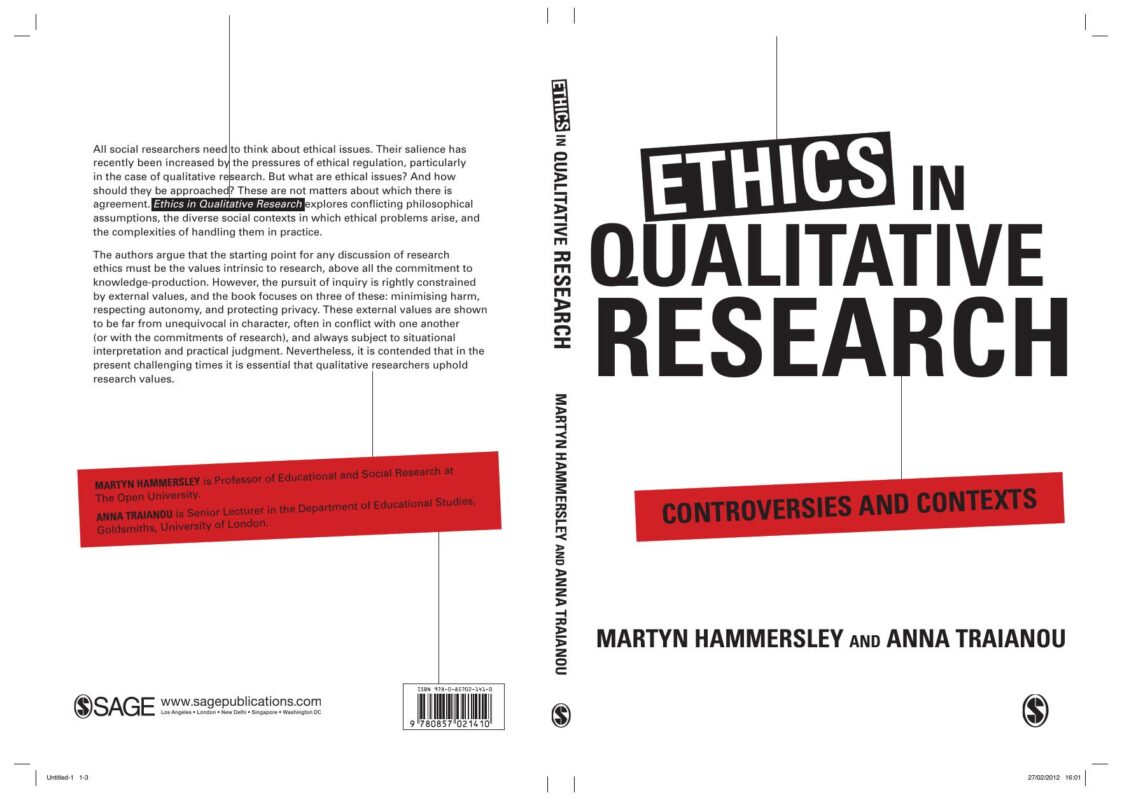
Ethics in Qualitative Research Controversies and Contexts By Martyn Hammersley, Anna Traianou
$30.00
Secure checkout
Instant digital download
PDF document
Document details
- Pages
- 185
- File size
- 1.73 MB
- Format
- Digital PDF
- Course
- Education
- Category
- eBook[PDF]
Sign in or create a free account to continue. Your purchase will be saved in My Downloads.
About this ebook
The Ethics in Qualitative Research: Controversies and Contexts by Martyn Hammersley and Anna Traianou (published by SAGE Publications) explores the complicated, situational, and often contested nature of ethics in qualitative studies. [1]
Instead of treating ethics as a checklist, the authors challenge the bureaucratisation and formal regulations of institutional review boards (what they call "ethics creep"), arguing that rigid frameworks often clash with the flexible, emergent nature of qualitative inquiry. [1, 2]
The core chapters and specific topics covered in the book include: [1]
1. What Is Ethics?
- Exploring the fundamental definition of ethics in the social sciences.
- Unpacking conflicting philosophical assumptions and the diverse social contexts where ethical problems emerge.
- Analyzing the fragmentation of qualitative research paradigms (e.g., liberal approaches vs. feminist, child-centred, communitarian, and postmodernist perspectives). [1, 2, 3, 4]
2. The Research Ethos
- The intrinsic values of research, specifically focusing on the ultimate commitment to knowledge production.
- Evaluating the balance between the "moralistic" vs. "Machiavellian" stances adopted by different researchers.
- Upholding the core values of research during politically challenging times. [1, 2, 3]
3. The Risk of Harm
- Deconstructing the external value of minimizing harm to participants.
- Assessing the unique dangers inherent in qualitative research, which often involves building close, long-term relationships in naturalistic settings.
- Addressing controversial case studies that have historical significance in social science ethics. [1, 2, 3, 4, 5, 6]
4. Autonomy and Informed Consent
- Unpacking the principle of respecting participant autonomy.
- The practical challenges of obtaining genuine informed consent when a research design is fluid, unpredictable, and changes over time. [1, 2, 3]
5. Privacy, Confidentiality, and Anonymity
- The inevitable tension between a researcher's free intellectual curiosity (the goal to publicize findings) and the participant's right to protect privacy.
- Managing secrecy, maintaining informational confidentiality, and using anonymity in qualitative reporting.
- The rise of new data fields, such as visual data and the challenges of internet research ethics. [1, 2, 3, 4]
6. Challenging Moralism
File included
tmpphpZt9T02
1.73 MB
Related ebooks