
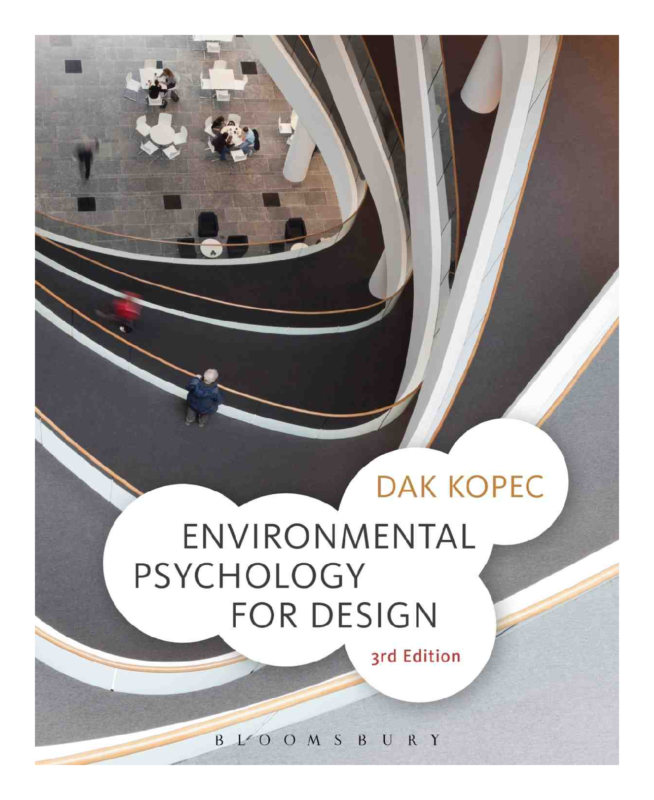
Environmental Psychology for Design 3rd Edition By DAK Kopec
$29.00
Secure checkout
Instant digital download
PDF document
Document details
- Pages
- 334
- File size
- 24.65 MB
- Format
- Digital PDF
- Course
- Environmental Science
- Category
- eBook[PDF]
Sign in or create a free account to continue. Your purchase will be saved in My Downloads.
About this ebook
Environmental Psychology for Design (3rd Edition) by Dak Kopec focuses on the symbiotic relationship between the built environment and human psychosocial behavior and well-being. Published by Fairchild Books, this edition integrates concepts of human biology, psychology, and spatial design to help interior designers and architects create healthier, more supportive spaces. [1, 2, 3, 4]
The main topics and structural themes covered in the 3rd edition include:
Foundations of Environmental Psychology
- Human-Environment Interaction: Foundations of how physical surroundings dictate emotional, mental, and behavioral health.
- Research and Evidence-Based Design: Utilizing academic and scientific research methods to justify design solutions.
- Theories and Hypotheses: In-depth explanations of prominent industry concepts, with an added emphasis on the Biophilia Hypothesis (human connection to nature). [1, 2]
Biological and Psychological Dimensions
- Neurobiology and Design: Basic understanding of the nervous system and how built spaces trigger neurobiological development and decline.
- Perception and Sensation: How humans process sensory inputs like lighting, acoustics, textures, and color schemas.
- Spatial Constructs: The psychological impact of personal space, territoriality, crowding, and privacy. [1]
Individual and Cultural Differences
- Lifespan Development: Spatial needs catered to different life stages, from early childhood developmental spaces to elder care.
- Vulnerable Populations: Design adaptations for people experiencing cognitive or physical challenges, such as dementia.
- Cultural and Gender Factors: How diverse cultural backgrounds and gender demographics experience and utilize space. [1, 2, 3, 4]
Special Edition Features
- Cultural & Sustainability Connections: Spotlights highlighting diversity in spatial use and sustainable environmental strategies.
- Point of View (POV) Boxes: Commentary from global scholars illustrating differing or complementary design philosophies. [1]
File included
eTextBook-PDF-Environmental-Psychology-for-Design-3rd-Edition-By-DAK-Kopec.pdf
24.65 MB
Related ebooks