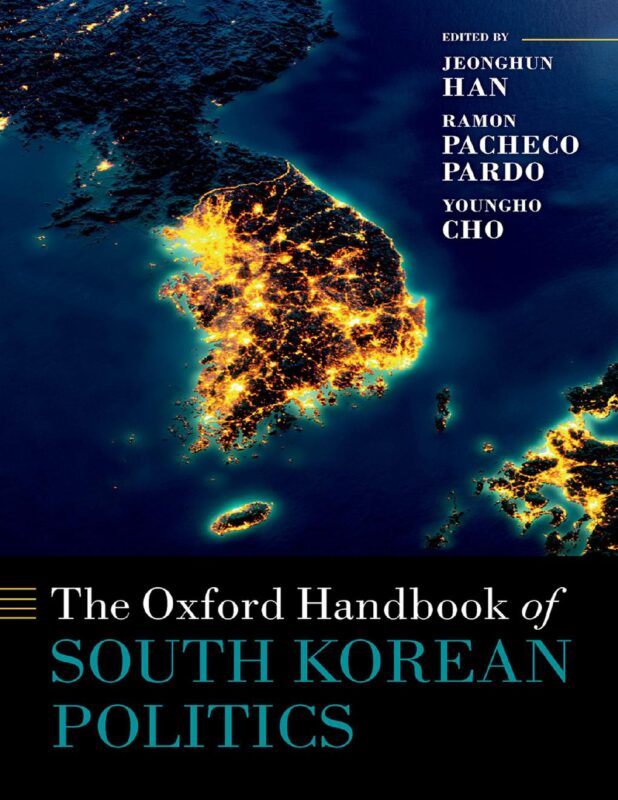
(EPUB) eBook The Oxford Handbook of South Korean Politics (Oxford Handbooks) 1st Edition By JeongHun Han , Ramon Pacheco Pardo , Youngho Cho.
$44.00
Secure checkout
Instant digital download
PDF document
Document details
- Pages
- 392
- File size
- 12.54 MB
- Format
- Digital PDF
- Course
- Political Science
- Category
- eBook[PDF]
Sign in or create a free account to continue. Your purchase will be saved in My Downloads.
About this ebook
The Oxford Handbook of South Korean Politics (1st Edition), edited by JeongHun Han, Ramon Pacheco Pardo, and Youngho Cho, provides a comprehensive analysis of the country's transformation into a dynamic democracy. Moving away from static, traditional views, it explores the interaction between political institutions, economic changes, and cultural shifts. [1, 2]
The volume is structurally organized into seven core areas covering the following topics: [1]
1. Introduction & Historical Context
- Contemporary Democratic Evolution: Explores South Korean politics following major transitions.
- Early 20th Century History: Analyzes the colonial period and historical developments from 1905 to 1945.
- Modern Political History: Details the foundational eras of the state, authoritarian regimes, and the path to democracy between 1945 and 1987. [1]
2. Core Concepts
- System of Governance: Studies presidentialism with distinct parliamentary traits.
- Political & Social Friction: Explores deep-rooted regionalism, geographic divides, and social cleavages.
- Conservative Democratization: Examines how conservative elements shaped and evolved during the consolidation of democracy.
- Political Economy Foundations: Evaluates the legacy of the Developmental State and the far-reaching influence of Chaebols (family-owned business conglomerates).
- Nationalism & Identity: Analyzes the evolving discourses of nationalism amidst globalization. [1, 2, 3, 4]
3. Political Institutions
- Constitutional Politics: Covers the evolution and structural framework of the South Korean Constitution.
- Branches of Government: Breaks down legislative, executive, and judicial politics, highlighting accountability and power dynamics. [1, 2]
4. Parties, Elections, and Voters
- The Party System: Examines the fragmented, often personality-driven nature of political parties.
- Electoral Systems: Evaluates voting mechanisms, political communication, and the representation of minorities.
- Emerging Agendas: Looks at how new political issues alter traditional voting behavior. [1, 2]
5. Civil Society
- Grassroots Movements: Reviews social movements and structural changes in civic mobilization after democratization.
- Labor & Corporate Influence: Analyzes labor union activism and the dynamics of interest group politics.
- Public Beliefs: Examines the depth of ordinary citizens' support for democratic principles. [1]
6. Culture and Media
- Traditional & Digital Media: Evaluates the political roles played by the press, cinema, and television.
- Internet & Social Media: Investigates how digital networking platforms influence modern public discourse.
- Pop Culture & Intellectuals: Reviews the intersection of politics with popular music (K-pop) and the shifting authority of public intellectuals. [1, 2]
7. Public Policy, Policy-Making, and the International Arena
- Bureaucratic Accountability: Focuses on the state's oversight of bureaucratic autonomy.
- Welfare & Local Governance: Tracks the development of social welfare programs alongside regional decentralization.
- Institutional Challenges: Examines systemic issues like corruption.
- Global Relations: Explores foreign policy developments, including inter-Korean relations, alliances, and South Korea’s positioning in the international arena. [1, 2, 3]
File included
tmpphpmbgWcH
12.54 MB
Related ebooks