eBook[PDF]

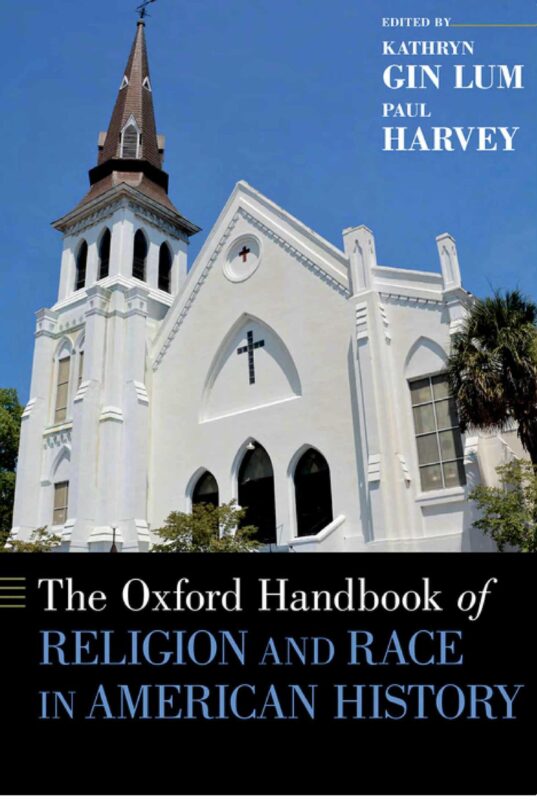
The Oxford Handbook of Religion and Race in American History 1st Edition By Kathryn Gin Lum, Paul Harvey

$30.00
✓ Secure checkout
✓ Instant digital download
✓ PDF document

Document details

Pages
641
File size
5.52 MB
Format
Digital PDF
Course
History
Category
eBook[PDF]
About this ebook
Edited by Kathryn Gin Lum and Paul Harvey, The Oxford Handbook of Religion and Race in American History features 34 essays by leading scholars exploring how religious myths, institutions, and practices have both shaped and challenged racial categories in America from pre-Columbian origins to the present. [1, 2]
Part One: Introductory Surveys and Thematic Concepts
  • Major Terms and Theories: Explores definitions and foundational concepts at the intersection of race and religion, drawing from history, sociology, and anthropology. [1, 2]
  • Discursive Formations: Examines concepts like "heathenism," Orientalism, colonization, and the cultural creation of racial difference. [1, 2]
  • Popular Culture and Media: Analyzes how American popular culture, media, and public rituals reflect and reinforce racialized religious ideas. [1, 2]
Part Two: Chronological Historical Accounts
  • Pre-Columbian and Colonial Era: Investigates early encounters, indigenous spiritualities, and the religious justifications used during initial European colonization and transatlantic slavery. [1, 2]
  • Revolution to Reconstruction: Focuses on the role of religion in abolitionist movements, pro-slavery theological arguments, and the formation of distinct African American denominations. [1, 2]
  • Jim Crow to the Mid-20th Century: Addresses the entrenchment of racial segregation in religious institutions, migration impacts, and early civil rights organizing. [1, 2]
  • Contemporary America: Discusses the religious experiences and social realities of diverse racial and ethnic minority groups, religious pluralism, and modern debates on systemic racism and justice. [1, 2, 3]
Core Analytical Focus Areas
  • Racialization Processes: How religious institutions and rhetoric actively contributed to categorizing and oppressing specific groups. [1, 2]
  • Theological Resistance: How marginalized and racialized groups utilized faith, ritual, and theology to contest oppression and assert dignity. [1, 2]
  • Intersectional Identities: The ways various traditions (Indigenous, African American, Asian American, Latino/a, and white Euro-American) navigated ethics, culture, and power. [1, 2, 3]

File included

PDF
tmpphpr8uLUF 5.52 MB

Topics