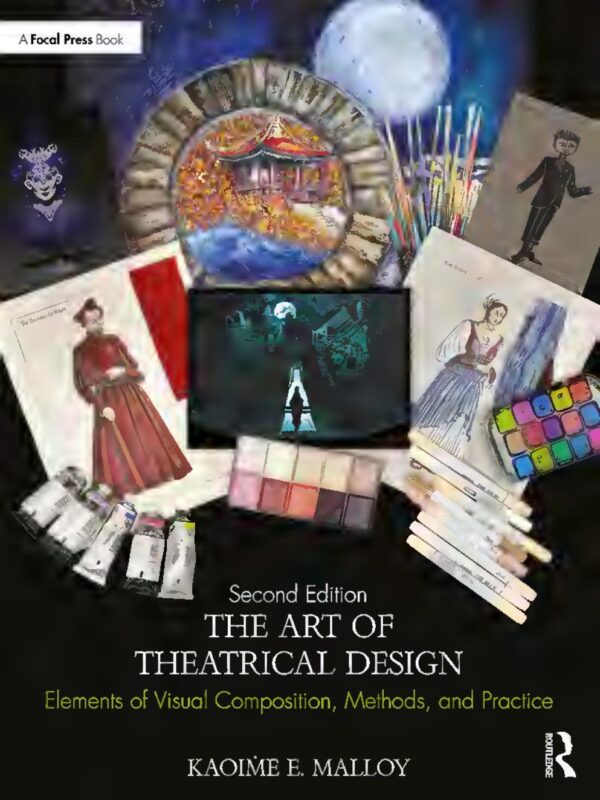
The Art of Theatrical Design: Elements of Visual Composition, Methods, and Practice 2nd Edition BY Kaoiṁe E. Malloy
$30.00
Secure checkout
Instant digital download
PDF document
Document details
- Pages
- 462
- File size
- 4.1 MB
- Format
- Digital PDF
- Course
- Physics
- Category
- eBook[PDF]
Sign in or create a free account to continue. Your purchase will be saved in My Downloads.
About this ebook
The Art of Theatrical Design: Elements of Visual Composition, Methods, and Practice (2nd Edition) by Kaoiṁe E. Malloy covers core design principles, collaborative workflows, rendering techniques, and specialized disciplines across seven major branches of theatrical production. [1, 2, 3, 4, 5]
The primary topics and structural focus areas included in this second edition consist of the following:
Core Disciplines of Theatrical Design
- Costume Design: Formulating character garments that support the script contextually and visually.
- Set Design: Structuring physical environments tailored to the limitations and demands of various theatrical spaces.
- Lighting Design: Managing visibility, mood, and atmosphere across performance areas.
- Sound Design: Integrating audio effects, music, and ambient sound to establish time and location.
- Projection / Multimedia Design: Implementing still and moving digital images into the stage landscape.
- Properties Management and Design: Brand-new standalone chapter targeting prop sourcing, creation, and coordination.
- Makeup Design: Brand-new dedicated chapter for theatrical makeup execution and character mapping. [1, 2, 3, 4, 5]
Elements and Principles of Visual Composition
The text builds a foundation using visual elements as building blocks for theatrical staging: [1]
- Core Design Elements: Detailed exploration of point, line, shape, form, value, color, and texture.
- Design Principles: Application of balance, contrast, emphasis, pattern, rhythm, movement, and unity.
- Applied Skill Exercises: Hands-on assignments added to each chapter to reinforce visual comprehension. [1, 2, 3]
Theatrical Analysis and Foundation Concepts
Critical academic frameworks required to evaluate text before initiating production work: [1]
- Content and Context: Breaking down the baseline narrative requirements of a script.
- Genre and Style: Differentiating between realistic, stylized, or avant-garde visual directions.
- Play Structure and Format: Reading and mapping the dramatic action, scene breakdowns, and formatting beats.
- Spatial Limitations: Adapting designs to distinct stage types like proscenium, thrust, arena, or environmental spaces. [1, 2, 3, 4, 5]
The Design Process and Professional Practice
- Collaboration: Communication methodologies used between directors, technicians, and fellow designers.
- Script Analysis & Sourcing: Steps for parsing text and executing target historical and thematic research.
- Visual Libraries: Building personal source archives to fuel creative inspiration.
- The Role of Critique: Navigating artistic feedback loops constructively within a design team. [1, 2]
Rendering Methods (Traditional & Digital)
- Traditional Rendering: Expanded look at legacy media including watercolor, gouache, and mixed media.
- Digital Rendering: A new chapter introducing program evaluation, file types, and step-by-step tutorials for Adobe Photoshop and Procreate. [1]
File included
tmpphpA5qn5n
4.1 MB
Related ebooks