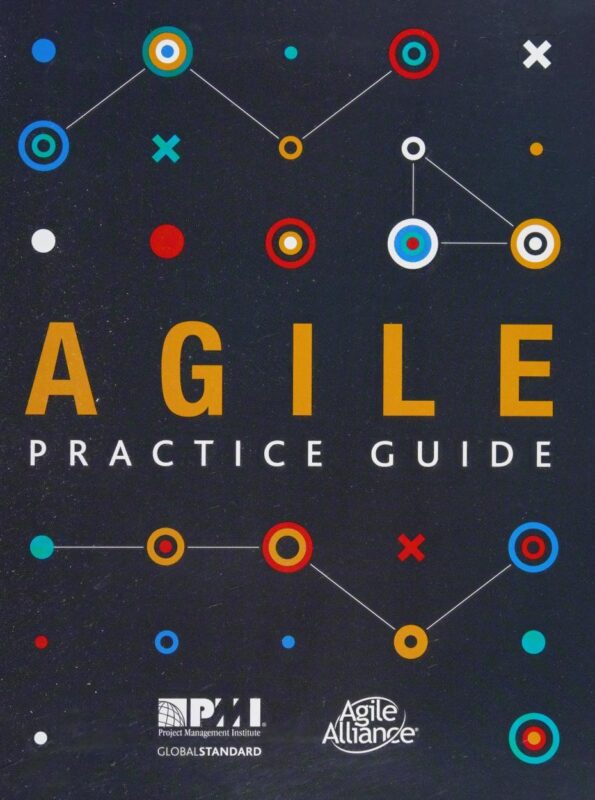
(Scan Copy) Agile Practice Guide By Project Management Institute
$20.00
Secure checkout
Instant digital download
PDF document
Document details
- Pages
- 185
- File size
- 10.36 MB
- Format
- Digital PDF
- Course
- Business
- Category
- eBook[PDF]
Sign in or create a free account to continue. Your purchase will be saved in My Downloads.
About this ebook
The Project Management Institute (PMI) Agile Practice Guide covers the core concepts, frameworks, and practical tools needed to understand and implement agile and hybrid agile project lifecycles. Developed in collaboration with the Agile Alliance, the guide serves as a bridge between traditional waterfall and agile methodologies. [1, 2]
PMI published the Agile Practice Guide – Second Edition (aligned with the PMBOK® Guide – Eighth Edition), which expands on the original 2017 text to incorporate modernized work environments and trends. [1]
The primary topics and chapters covered across the editions include:
1. Introduction to Agility
- Definitional foundational concepts of agility.
- The Agile Manifesto mindset, values, and core principles.
- The relationship between lean, Kanban, and agile approaches. [1, 2, 3, 4, 5]
2. Life Cycle Selection
- Characteristics of project lifecycles including predictive (waterfall), iterative, incremental, and agile.
- Hybrid lifecycles combining traditional and agile practices.
- Suitability filters and tools to determine the right lifecycle approach for a project. [1, 2, 3, 4, 5]
3. Implementing Agile: Creating an Agile Environment
- Servant leadership responsibilities and core style.
- Team composition, roles (Product Owner, Scrum Master/Facilitator, Team Member), and structures.
- Overcoming common organizational impediments during adoption. [1, 2, 3, 4, 5]
4. Implementing Agile: Delivering in an Agile Environment
- Chartering the project and defining team norms.
- Common agile practices including retrospectives, backlog refinement, daily standups, and demonstrations.
- Troubleshooting common challenges in agile execution. [1, 2, 3, 4, 5]
5. Organizational Considerations for Project Agility
- Organizational change management and cultural transformations.
- The role of a Project Management Office (PMO) in an agile environment.
- Procurement, contracts, and multi-vendor agile structures. [1, 2, 3, 4, 5]
6. Scaling and Advanced Frameworks
- Frameworks for scaling agile across large programs (e.g., SAFe, LeSS, Disciplined Agile).
- Coordinating multiple distributed or virtual teams. [1, 2, 3, 4, 5]
7. Modern & Emerging Practices (Second Edition Updates)
File included
tmpphpBvkKDK
10.36 MB
Related ebooks