
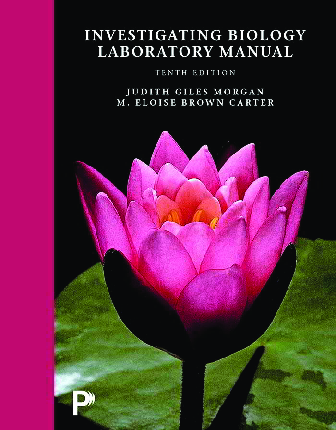
Investigating Biology 10th Edition By Judith Morgan, M. Eloise Carter
$30.00
Secure checkout
Instant digital download
PDF document
Document details
- Pages
- 552
- File size
- 4.59 MB
- Format
- Digital PDF
- Course
- Education
- Category
- eBook[PDF]
Sign in or create a free account to continue. Your purchase will be saved in My Downloads.
About this ebook
The 10th Edition of the Investigating Biology Laboratory Manual, written by Judith Morgan and M. Eloise Carter and published by Pearson, covers fundamental majors-level general biology topics through an investigative, hands-on, and hypothesis-based scientific approach. [1, 2, 3]
The primary laboratory topics and core structural themes detailed throughout this manual include: [1]
Core Laboratory Topics Covered
- Scientific Methodology & Core Cellular Biology
- Scientific Investigation: Learning how to form questions, hypotheses, design experimental variables, analyze results, and effectively communicate scientific findings.
- Microscopes and Cells: Mastering light microscopy, basic structural observation, and exploring cell organization across different organisms.
- Diffusion and Osmosis: Mechanistic examination of molecule diffusion, cellular osmotic activity, and calculating the osmolarity of plant tissues.
- Enzymes: Studying enzyme mechanics, reaction dynamics, and the variables affecting catalytic efficiency. [1, 2, 3]
- Energetics & Molecular Genetics
- Cellular Respiration and Fermentation: Quantitative assessment of energy production path mechanisms under aerobic and anaerobic environments.
- Photosynthesis: Testing light reactions, pigments, and variables driving plant carbon fixation.
- Mitosis and Meiosis: Visual and developmental analysis of cellular reproduction and gamete division.
- Mendelian Genetics I & II: Tracking phenotypic traits using Fast Plants (Lab I) and exploring gene patterns/gene mapping through Drosophila fruit fly variations (Lab II).
- Molecular Biology: Mapping DNA structures using tools like restriction enzymes and gel electrophoresis.
- Bioinformatics: Exploring molecular phylogeny to understand biological evolutionary lineages.
- Population Genetics: Assessing genetic variations and calculating systemic equilibrium using the Hardy-Weinberg Theorem. [1, 2, 3]
- Biological Diversity & Evolution
- Bacteriology: Distinguishing bacterial groups, colony properties, and structures.
- Protists & The Kingdom Fungi: Comparative studies of unicellular eukaryotic clades and distinct fungal lifecycle lineages.
- Plant Diversity (I & II): From bryophytes (nonvascular) and seedless vascular plants up to advanced seed-producing variants.
- Animal Diversity (I & II): An evolutionary survey spanning primitive invertebrates (Porifera, Cnidaria, Platyhelminthes, Mollusca, Annelida) into higher-order phylums (Nematoda, Arthropoda, Echinodermata, Chordata). [1, 2]
- Organismal Anatomy, Development, and Ecology
- Plant Anatomy & Growth: Anatomical investigation of tissues, primary growth cells, and root/shoot morphology.
- Vertebrate Anatomy (I, II & III): Multi-layered functional analysis of the skin, digestive, circulatory, respiratory, excretory, reproductive, and nervous organ systems.
- Animal Development & Behavior: Tracking embryological development phases alongside laboratory-simulated models of animal behavioral patterns.
- Ecology (Terrestrial & Aquatic): Field and classroom experiments testing community interactions, energy flow, and computer simulations of ecosystems. [1, 2]
File included
eBook-PDF-Investigating-Biology-10th-Edition-By-Judith-Morgan-M.-Eloise-Carter.pdf
4.59 MB
Related ebooks



