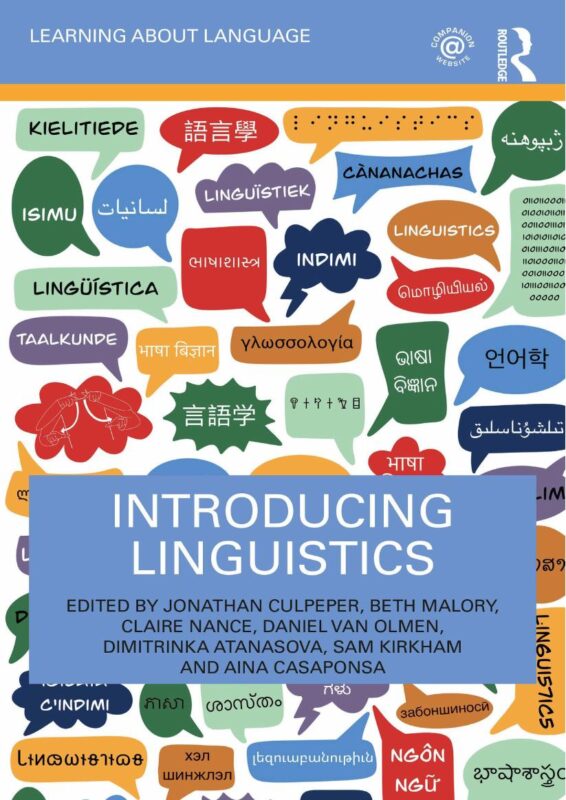
Introducing Linguistics By Jonathan Culpeper, Beth Malory
$27.00
Secure checkout
Instant digital download
PDF document
Document details
- Pages
- 532
- File size
- 20.84 MB
- Format
- Digital PDF
- Course
- Education
- Category
- eBook[PDF]
Sign in or create a free account to continue. Your purchase will be saved in My Downloads.
About this ebook
Introducing Linguistics, edited by Jonathan Culpeper and Beth Malory (along with co-authors from Lancaster University), covers five key thematic areas broken down across introductory chapters that blend linguistic theory with real-world applications. [1, 2, 3, 4, 5]
The book is structured into the following core sections and topics:
1. Language Structures
This section covers the foundational "building blocks" of how human language is constructed: [1]
- Phonetics: The physical production, transmission, and perception of speech sounds.
- Phonology: How sounds function as a systematic patterns within a specific language.
- Morphology: The internal structure, formation, and grammar of words.
- Syntax: The rules governing sentence structure and how words combine into phrases.
- Semantics: The study of literal and conventional meaning in language. [1, 2, 3]
2. Mind and Society
This area addresses how language interacts with human cognition and social structures: [1]
- Sociolinguistics: How factors like region, social class, gender, and ethnicity influence language use.
- Psycholinguistics: The mental processes behind comprehension, storage, and production of language.
- Language Acquisition: How children learn their first language and how adults acquire subsequent ones. [1, 2, 3]
3. Applications
Moving beyond pure theory, this section covers how linguistic knowledge solves real-world problems: [1, 2]
- Forensic Linguistics: The application of language analysis to legal contexts and criminal investigations.
- Clinical Linguistics: The study of language disorders and how speech therapy applies linguistic principles.
- Language Teaching and Policy: Applying linguistic insights to foreign language education and public planning. [1]
4. Methods
- Corpus Linguistics: Using computerized databases of text to analyze language patterns.
- Experimental Methods: How to design tests, track eye movements, or record speech sounds to gather reliable data.
- Fieldwork Techniques: Methodologies for documenting endangered or understudied spoken and signed languages. [1]
5. Issues
This section tackles contemporary debates, ethical considerations, and evolving subfields: [1]
- Language Ideologies: Social biases regarding "correct" versus "incorrect" dialects.
- Language and Power: How political, media, and digital structures weaponize or leverage language.
- Global and Signed Languages: How sign language behaves exactly like spoken language rather than an exception, featuring diverse global examples spanning from isiZulu to Washo. [1, 2, 3, 4, 5]
File included
tmpphpIgn8dP
20.84 MB
Related ebooks