eBook[PDF]

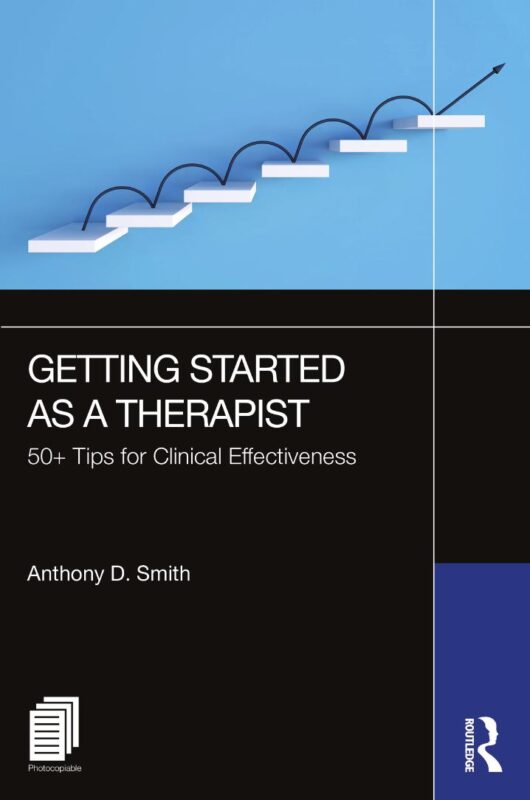
Getting Started as a Therapist: 50+ Tips for Clinical Effectiveness By Anthony D. Smith

$30.00
✓ Secure checkout
✓ Instant digital download
✓ PDF document

Document details

Pages
245
File size
1.57 MB
Format
Digital PDF
Category
eBook[PDF]
About this ebook
Getting Started as a Therapist: 50+ Tips for Clinical Effectiveness” by Anthony D. Smith is organized into 52 distinct chapters divided across five primary clinical categories. The book is designed as a transtheoretical guide to help new practitioners bridge the gap between academic theory and real-world therapy practice. [1]
The exact topics and categories covered in the book include:
🤝 Establishing Better Therapeutic Relationships
    • Building strong, trusting rapport with diverse patient populations.
    • Navigating difficult client behaviors, such as dealing with resistant or oppositional silence.
    • Using curiosity and open-ended questions to increase active dialogue. [1, 2]
🎯 Increasing Diagnostic Accuracy
    • Reframing clinical diagnosis as a critical tool for successful patient outcomes.
    • Overcoming the misconception that diagnosing is a "dirty word" or purely clinical labeling.
    • Developing accurate diagnostic frameworks to guide targeted treatment plans. [1, 2]
🚫 What to Avoid Saying to Patients
    • Identifying common linguistic and conversational traps that damage clinical rapport.
    • Recognizing unhelpful phrases that alienate clients or invalidate their experiences.
    • Shifting communication styles to maximize psychological safety in the therapy room. [1, 2, 3]
🗣️ Specialized Clinical Topics
    • Talking effectively, safely, and constructively about self-injury.
    • Utilizing therapeutic metaphors to help clients conceptualize abstract emotional struggles.
    • Handling niche behavioral and emotional presentations that standard text books omit. [1, 2, 3, 4]
📈 Professional Development & Ethics
  • Making the most out of clinical supervision sessions.
  • Implementing legal and ethical practices to limit liability and protect your license.
  • Transitioning successfully from a student mindset into an independent practitioner. [1, 2, 3]

File included

PDF
tmpphpHlkfXT 1.57 MB

Topics