
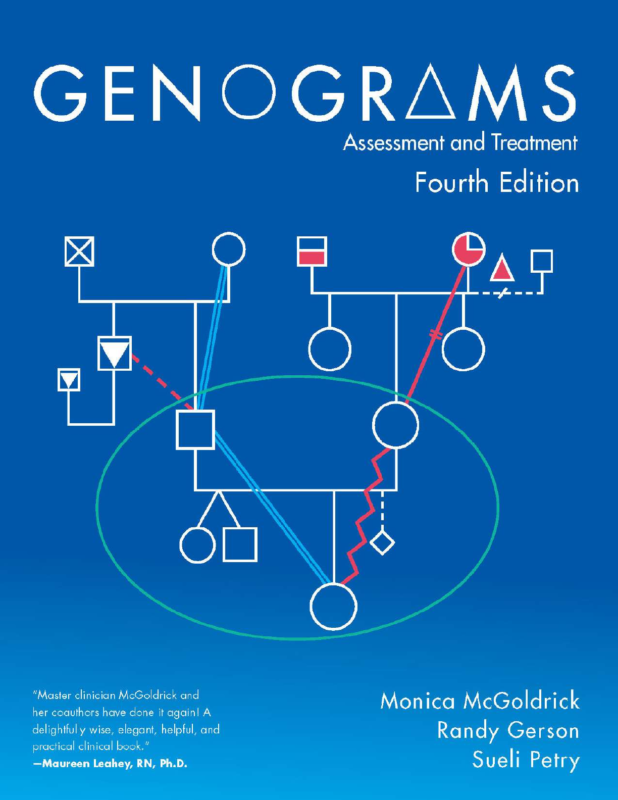
Genograms Assessment and Treatment 4th Edition By Monica Mcgoldrick, Randy Gerson, Sueli Petry
$30.00
Secure checkout
Instant digital download
PDF document
Document details
- Pages
- 468
- File size
- 7.17 MB
- Format
- Digital PDF
- Course
- Psychology
- Category
- eBook[PDF]
Sign in or create a free account to continue. Your purchase will be saved in My Downloads.
About this ebook
Genograms: Assessment and Treatment (4th Edition) by Monica McGoldrick, Randy Gerson, and Sueli Petry provides a comprehensive, updated framework for mapping family systems and interpreting intergenerational dynamics. [1, 2]
The book is structured into major core areas that walk clinicians through construction, interviewing, interpretation, and specific applications. [1, 2]
1. Constructing and Mapping Family Systems
- Standardized Symbol Language: Utilizing specific shapes (squares for males, circles for females), structural lines for marriages, divorces, or separations, and color-coded emotional lines to map connections like enmeshment, conflict, or alienation. [1, 2, 3, 4, 5]
- Demographic and Functional Information: Documenting key milestones such as births, deaths, illnesses, occupations, and geographic moves. [1, 2, 3]
- Family Chronology (The Timeline): Building a parallel historical ledger of critical life events to capture coincidences and historical impacts on the family structure. [1]
2. The Genogram Interview
- Systemic Interviewing Techniques: Navigating client sessions to extract sensitive historical data naturally while building therapeutic rapport. [1, 2]
- Connecting the Presenting Problem: Showing clients how current stressors or symptoms (e.g., anxiety, depression, behavioral issues) map onto ancestral or family systemic dynamics. [1, 2]
- Addressing Resistance: Navigating client hesitancy to share family secrets, traumatic histories, or unresolved losses. [1]
3. Interpreting Family Structures and Patterns
- Family Constellations: Examining household composition, birth order, gender configurations, and sibling spacing to understand individual identity development. [1]
- Intergenerational Patterns: Tracking repeating behavioral loops across generations, such as substance abuse, physical/mental health issues, and parenting styles. [1]
- Relational Patterns and Triangles: Assessing how dyads interact and map out triangles (e.g., two parents focusing conflict onto a child) to stabilize tension. [1, 2, 3, 4]
- The Family Life Cycle: Reviewing how the family navigates mandatory transitions, such as launching young adults, marriage, retirement, and aging. [1, 2, 3, 4]
4. Specialized Clinical and Structural Applications
- Couples and Sibling Dynamics: New and expanded content explicitly detailing the unique systemic stressors found within couple systems, marriage, divorce, and complex sibling relationships.
- Family Play Genograms: Incorporating creative, play-based strategies to engage children in the mapping process.
- Sociocultural and Diversity Context: Integrating cultural frameworks, race, economic status, sexual orientation, and geographic displacement into systemic assessment.
- The Clinician's Own Family: Guidelines for therapists to build their own genograms to minimize personal biases and countertransference in treatment. [1, 2, 3, 4, 5]
File included
tmpphpF00Dkw
7.17 MB
Related ebooks