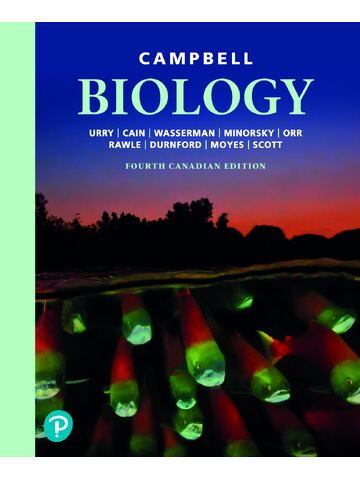
Campbell Biology, 4th Canadian Edition By Urry, Cain, Wasserman, Minorsky, Orr, Hull
$29.00
Secure checkout
Instant digital download
PDF document
Document details
- Pages
- 1,320
- File size
- 1.05 MB
- Format
- Digital PDF
- Course
- Biology
- Category
- eBook[PDF]
Sign in or create a free account to continue. Your purchase will be saved in My Downloads.
About this ebook
The Campbell Biology, 4th Canadian Edition—authored by Lisa A. Urry, Michael L. Cain, Steven A. Wasserman, Peter V. Minorsky, Rebecca B. Orr, Kerry L. Hull, and a specialized team of Canadian co-authors—is structured into 8 core units and 56 chapters. It comprehensively integrates foundational biological principles with specific Canadian case studies, biodiversity, and ecosystem research. [1, 2, 3]
🏢 Unit 1: The Chemistry of Life & Cellular Biology
- Evolution & Scientific Inquiry: The foundational themes of biology and the process of scientific exploration.
- Chemical Context of Life: Basic chemistry, the structural properties of water, and carbon's role in molecular diversity.
- Macromolecules: The structure and function of carbohydrates, lipids, proteins, and nucleic acids.
- Cell Structure & Function: Organization of prokaryotic and eukaryotic cells, cell membranes, and intracellular trafficking.
- Metabolism & Bioenergetics: Cellular respiration, fermentation, and photosynthesis.
- Cell Communication & Cycle: Mechanisms of cell signaling, mitosis, and regulation of the cell cycle. [1, 2]
🧬 Unit 2: Genetics
- Meiosis & Inheritance: The chromosomal basis of inheritance, Mendelian genetics, and life cycles.
- Molecular Genetics: DNA structure, replication, transcription, translation, and gene expression.
- Gene Regulation & Biotechnology: Mechanisms controlling gene expression, viruses, and DNA tools/biotechnology.
- Genomics: Genome evolution and analysis.
🦎 Unit 3: Mechanisms of Evolution
- Darwinian Descent: Evolution with modification and historical context.
- Evolution of Populations: Microevolution, genetic drift, and natural selection.
- Origin of Species: Macroevolution, speciation events, and reproductive barriers.
- History of Life: The geological record, mass extinctions, and fossil history.
🌲 Unit 4: The Evolutionary History of Biological Diversity
- Microbial Life: Viruses, prokaryotes, protists, and basic microbiology.
- Plant Diversity: Evolution of nonvascular, seedless vascular, gymnosperms, and angiosperms.
- Fungal Diversity: Fungal structures, life cycles, and ecological roles.
- Animal Diversity: Invertebrate evolution and the rise of vertebrates.
🌿 Unit 5: Plant Structure & Function
- Plant Anatomy & Growth: Vascular tissue systems, primary growth, and secondary growth.
- Resource Acquisition: Transport of water and nutrients in xylem and phloem.
- Reproduction & Development: Angiosperm reproduction and biotechnology.
- Plant Responses: Responses to internal plant hormones and external environmental stimuli.
🐾 Unit 6: Animal Structure & Function
- Homeostasis: Basic principles of animal form, function, and internal regulation.
- Nutrition & Digestion: Animal diets, digestive compartments, and metabolic processing.
- Circulation & Gas Exchange: Heart structures, respiratory systems, and fluid transport.
- Immune System: Innate and adaptive immunity defenses.
- Excretion & Osmoregulation: Fluid balance and waste removal.
- Endocrine & Reproductive Systems: Hormonal regulation and reproductive biology.
- Nervous & Sensory Systems: Neuron signaling, brain anatomy, and sensory perception.
- Musculoskeletal System: Motor mechanisms and locomotion.
🌎 Unit 7: Ecology
- Biosphere & Biomes: Global climate patterns and distribution of terrestrial and aquatic biomes (with contextual focus on Canadian ecosystems and tundra/boreal flora and fauna).
- Population Ecology: Population growth models, density-dependent factors, and life history traits.
- Community Ecology: Interspecific interactions, trophic structures, and disturbance succession.
- Ecosystems & Conservation: Energy flow, chemical cycling, landscape ecology, and biodiversity restoration. [1, 2]
File included
Campbell-Biology-4th-Canadian-Edition-By-Urry-Cain-Wasserman-Minorsky-Orr-Hull.pdf
1.05 MB
Related ebooks