
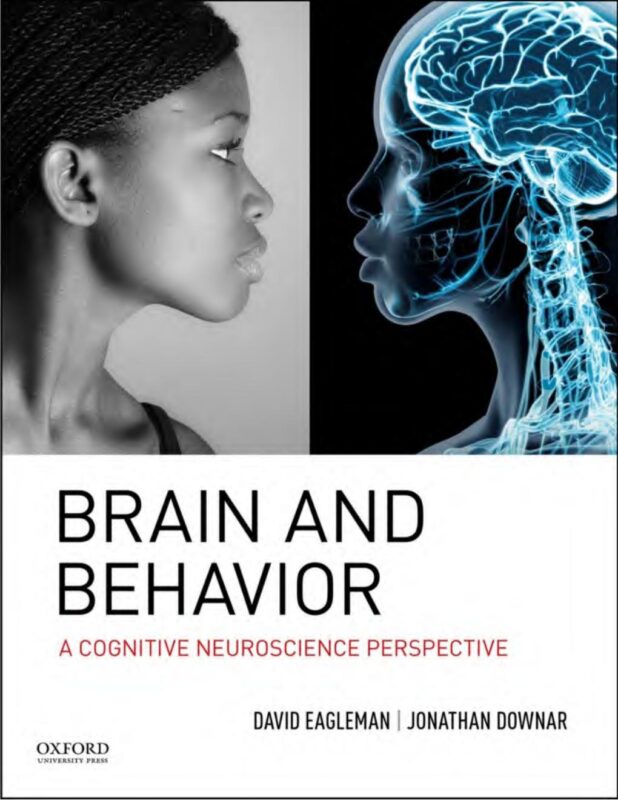
Brain and Behavior: A Cognitive Neuroscience Perspective 1st Edition By David Eagleman, Jonathan Downar
$30.00
Secure checkout
Instant digital download
PDF document
Document details
- Pages
- 689
- File size
- 243.92 KB
- Format
- Digital PDF
- Course
- Neuroscience
- Category
- eBook[PDF]
Sign in or create a free account to continue. Your purchase will be saved in My Downloads.
About this ebook
The textbook Brain and Behavior: A Cognitive Neuroscience Perspective (1st Edition) by David Eagleman and Jonathan Downar provides a comprehensive, principles-based introduction to how neural mechanisms drive human behavior. Rather than delivering a dry list of facts, the text weaves clinical case studies and everyday examples around core cognitive neuroscience concepts, with a heavy emphasis on neuroplasticity. [1, 2, 3]
The topics covered in the book are organized into logical sections mapping the progression from cellular building blocks to high-level complex human behaviors: [1]
1. Foundations of the Nervous System
- Neuroanatomy: Structural architecture of the brain, including the cerebral cortex, limbic system, and brainstem.
- Neural Communication: How neurons process information, send electrical signals (action potentials), and utilize chemical neurotransmitters.
- Neuroplasticity: The dynamically changing nature of the brain and how experiences reshape synaptic connections over time. [1, 2, 3, 4, 5, 6]
2. Interaction with the World (Sensory & Motor Systems)
- Vision: The pathways, visual cortex functioning, and active interpretation of visual stimuli.
- Other Senses: Auditory, somatosensory (touch/pain), olfactory, gustatory systems, and multisensory integration centers.
- The Motor System: How the brain coordinates voluntary movement, reflexes, fine motor skills, and balance. [1, 2, 4]
3. Higher Levels of Interaction
- Attention and Consciousness: Top-down modulation, selective focus, and the neural substrates of conscious awareness.
- Memory: Mechanisms of short-term, long-term, working memory, and the vital role of the hippocampus.
- Sleep and Circadian Rhythms: Neural regulation of the sleep-wake cycle and the biological importance of sleep.
- Language and Lateralization: Brain areas specialized for speech, comprehension, and functional differences between the left and right hemispheres. [1, 2, 4, 5]
4. Motivated and Social Behaviors
- Decision-Making and Free Will: Neurological basis of choices, executive functions of the prefrontal cortex, and subconscious processing vs. conscious rationalization. [1, 2]
- Emotions: How the amygdala and limbic structures regulate emotional responses, fear, and pleasure. [1, 2]
- Motivation and Reward: The brain's dopamine reward pathways, drives, and the neuroscience underlying drug addiction. [1, 2, 3]
- Social Cognition: The neural basis of interpersonal relationships, trust, empathy, and how the brain is biologically wired for social groups. [, 2]
5. Clinical Applications & Brain Disorders
- Neurological & Psychiatric Conditions: Real-world insight into diseases resulting from neural dysfunction, including schizophrenia, autism spectrum disorder, and recovery from traumatic brain injury. [1]
File included
tmpphpcPxTjF
243.92 KB
Related ebooks