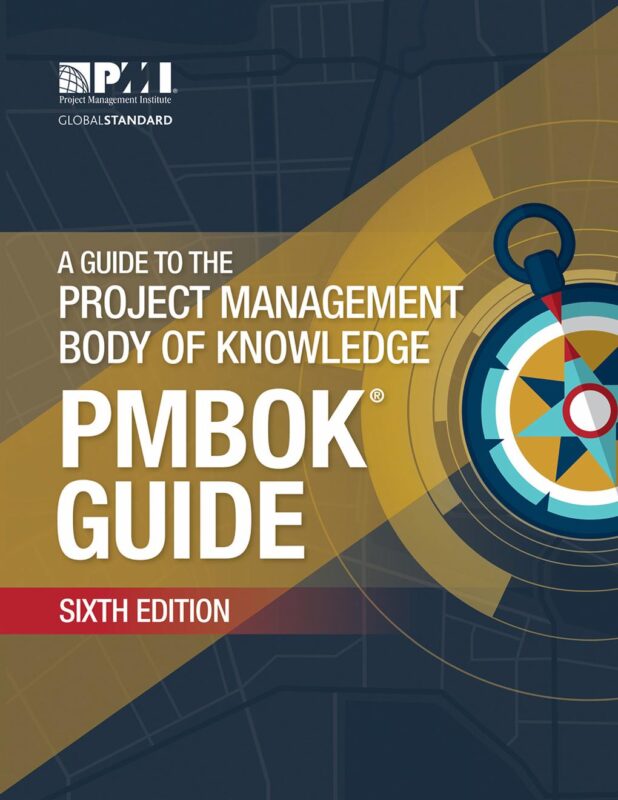
A Guide to the Project Management Body of Knowledge (PMBOK® Guide) 6th Edition By PMI
$30.00
Secure checkout
Instant digital download
PDF document
Document details
- Pages
- 792
- File size
- 10.86 MB
- Format
- Digital PDF
- Course
- Business
- Category
- eBook[PDF]
Sign in or create a free account to continue. Your purchase will be saved in My Downloads.
About this ebook
The PMBOK® Guide 6th Edition by the Project Management Institute (PMI) organizes the core topics of project management into 3 foundational chapters, 5 Process Groups, and 10 Knowledge Areas, totaling 49 individual management processes. [1, 2, 3, 4, 5]
A core feature of this specific edition is the systemic integration of Agile, iterative, and hybrid methodologies across every topic area. [1, 2]
Foundational Chapters (The Framework)
The first section establishes how projects function in contemporary business climates. [1]
- Introduction & Foundations: Basic project definitions, concepts, lifecycle strategies, and data frameworks.
- Project Environments: Internal/external influences, Enterprise Environmental Factors (EEFs), and Organizational Process Assets (OPAs).
- The Role of the Project Manager: PM competencies, spheres of influence, leadership skills, and the PMI Talent Triangle™ (Technical, Leadership, Strategic/Business Management). [1, 2, 3, 4, 5]
The 5 Process Groups
- Initiating: Defining a new project or phase and obtaining authorization to begin.
- Planning: Establishing project scope, objectives, and the course of action required to attain them.
- Executing: Completing the work defined in the project management plan to satisfy specifications.
- Monitoring & Controlling: Tracking, reviewing, and regulating progress, as well as managing change.
- Closing: Formally finalizing all activities across all Process Groups to close the project or phase. [1, 2, 3, 4, 5]
The 10 Knowledge Areas
These form the subject-matter core of the guide, mapping directly to the 49 project management processes: [1, 2, 3, 4]
- Project Integration Management: Coordination, creating the charter, creating the project plan, directing work, and managing project knowledge. [1, 2]
- Project Scope Management: Defining what work is required, collecting requirements, creating the Work Breakdown Structure (WBS), and controlling scope. [1, 2]
- Project Schedule Management: (Renamed from Time Management) Defining and sequencing activities, estimating durations, and developing/controlling the schedule. [1, 2]
- Project Cost Management: Estimating costs, determining the budget, and controlling expenditures using tools like Earned Value Management (EVM). [1, 2]
- Project Quality Management: Establishing quality policies, managing quality standards, and continuous control of deliverables. [1, 2]
- Project Resource Management: (Expanded from Human Resource Management) Acquiring, developing, and managing both team members and physical resources. [1, 2, 3, 4, 5]
- Project Communications Management: Planning, managing, and monitoring internal and external project communications. [1, 2]
- Project Risk Management: Identifying risks, performing qualitative/quantitative risk analysis, planning responses, and implementing risk responses. [1, 2, 3, 4, 5]
- Project Procurement Management: Planning purchases, acquiring goods/services, selecting sellers, and controlling contracts. [1, 2]
- Project Stakeholder Management: Identifying project stakeholders, analyzing their expectations, and executing strategies to engage them effectively. [1, 2, 3, 4]
File included
tmpphpyhlefI
10.86 MB
Related ebooks