
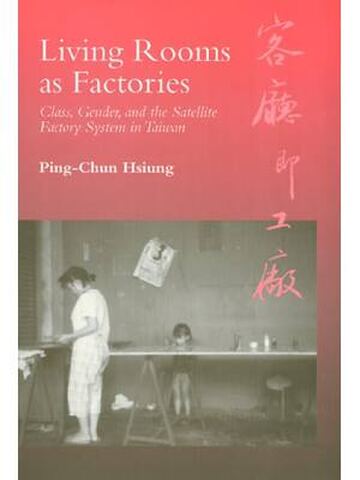
Living Rooms Class, Gender, and the Satellite Factory System in Taiwan 1st Edition By Ping-Chun Hsiung
$25.00
Secure checkout
Instant digital download
PDF document
Document details
- Pages
- 226
- File size
- 1.39 MB
- Format
- Digital PDF
- Course
- Education
- Category
- eBook[PDF]
Sign in or create a free account to continue. Your purchase will be saved in My Downloads.
About this ebook
Living Rooms as Factories: Class, Gender, and the Satellite Factory System in Taiwan is a landmark sociological book written by Ping-Chun Hsiung and published by Temple University Press in 1996. The book provides a detailed ethnographic study of how small-scale, home-based subcontracting factories fueled Taiwan's rapid export-led industrialization and economic growth—often called the "Economic Miracle"—during the 1970s and 1980s. [1, 2, 3, 4]
Core Themes and Key Concepts
-
- The "Living Rooms as Factories" Slogan: The Taiwanese government actively promoted a national slogan urging citizens to turn their residential spaces into manufacturing hubs. This integrated industrial development into the domestic sphere. [1, 2]
- The Satellite Factory System: This system consisted of networks of tiny, family-centered, subcontracting factories—usually employing fewer than 30 workers—tucked away in urban living rooms, front yards, and rural rice fields. They produced low-technology, labor-intensive export goods like wooden jewelry boxes. [1, 2, 3]
- Gender and Class Exploitation: The system relied heavily on the cheap, flexible labor of married women. These women managed dual responsibilities as wives, mothers, and daughters-in-law while working long hours as manufacturing laborers. [1, 2]
- Intersecting Capitalism and Patriarchy: Hsiung analyzes how capitalist market logic merged with traditional patriarchal family dynamics. While some women achieved upward mobility by marrying into factory-owning families, others remained confined to low-wage home labor. [1]
- Worker Resistance: Despite oppressive labor conditions, the book documents the clandestine tactics and small acts of defiance that women workers used to reclaim control over their labor. [1]
Methodology
The author offers a unique "insider-outsider" perspective. Having grown up in Taiwan, Ping-Chun Hsiung collected her ethnographic data by personally working alongside these women in six different satellite factories. [1, 2]
Book Specifications
File included
tmpphpuKn83e
1.39 MB
Related ebooks