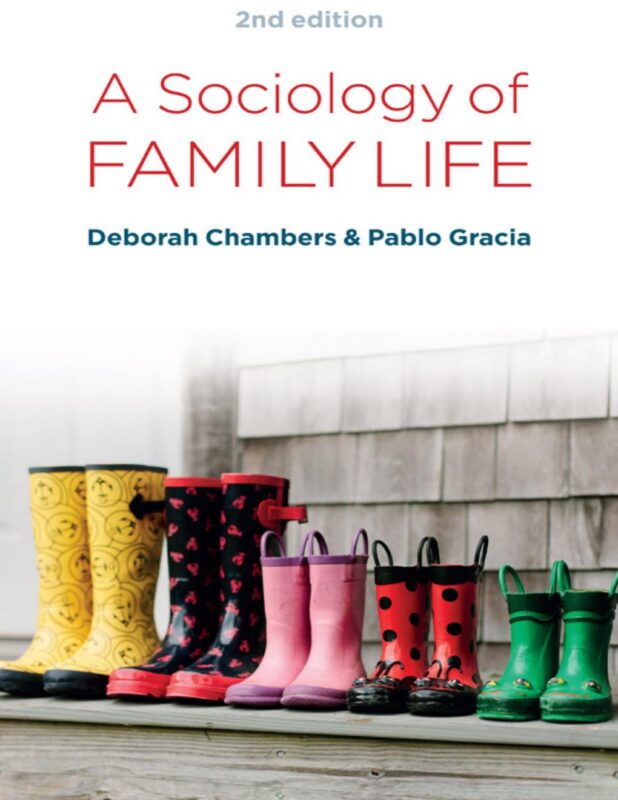
A Sociology of Family Life: Change and Diversity in Intimate Relations 2nd Edition By Deborah Chambers, Pablo Gracia
$20.00
Secure checkout
Instant digital download
PDF document
Document details
- Pages
- 185
- File size
- 1.56 MB
- Format
- Digital PDF
- Course
- Sociology
- Category
- eBook[PDF]
Sign in or create a free account to continue. Your purchase will be saved in My Downloads.
About this ebook
The textbook "A Sociology of Family Life: Change and Diversity in Intimate Relations" (2nd Edition) by Deborah Chambers and Pablo Gracia covers the evolving landscape of personal relationships, blending classical sociological theories with contemporary global issues. It explores how modern families maintain ties of commitment and reciprocity despite major social, economic, and digital shifts. [1, 2]
The major topics and core themes covered in this edition include:
1. Sociological Approaches to the Family
- Classical Foundations: Early perspectives on private property, the state, and late nineteenth-century sociology.
- Functionalism: The 20th-century ideal of the functional nuclear family and companionate marriage.
- Critical Perspectives: Critical race theory in family studies and how feminist movements reshaped family sociology. [1]
2. Individualization, Diversity, and Intimacy
- The Individualization Thesis: Debates surrounding autonomy, individual choices, and "confluent love".
- New Forms of Intimacy: Broadening definitions of family, including "friends as family" and LGBTQ+ / same-sex personal networks.
- Practicing Family: How families "do" and "display" their connections to onlookers in everyday life. [1, 2, 3, 4]
3. Parenting Practices and Values
- Changing Ideals: Shifting moral frameworks around motherhood and the unique experiences of single or teenage mothers.
- Fatherhood Trends: Shifting expectations from traditional breadwinners to active co-parents, including fatherhood after divorce.
- Diverse Parenting: Cultural variations in minority ethnic parenting and the social dynamics of gay and lesbian parenting. [1]
4. The Changing Nature of Childhood
- Historical Evolution: How the concept of childhood has transformed over time.
- Children's Agency: Looking at children as active social participants rather than passive subjects. [1]
5. Inequalities and Structural Barriers
- Intersectionality: How family structures and individual options are restricted by class, gender, race, ethnicity, and sexuality.
- Conservative Backlashes: The rise of right-wing populist movements and policy shifts affecting reproductive autonomy (e.g., abortion bans) and immigrant families. [1, 2, 3]
6. Transnational and Global Dimensions
- Global Migration: The impact of migration on transnational marriage strategies and family separation.
- Global Care Chains: The economic reliance and interdependencies between rich and poor nations through outsourced domestic labor and care.
- Reproductive Technologies: Global policies on fertility and the ethical dilemmas of modern reproductive tech across different cultures. [1, 2]
7. Contemporary and Digital Transformations (New to 2nd Edition)
File included
tmpphp9ExKEW
1.56 MB
Related ebooks