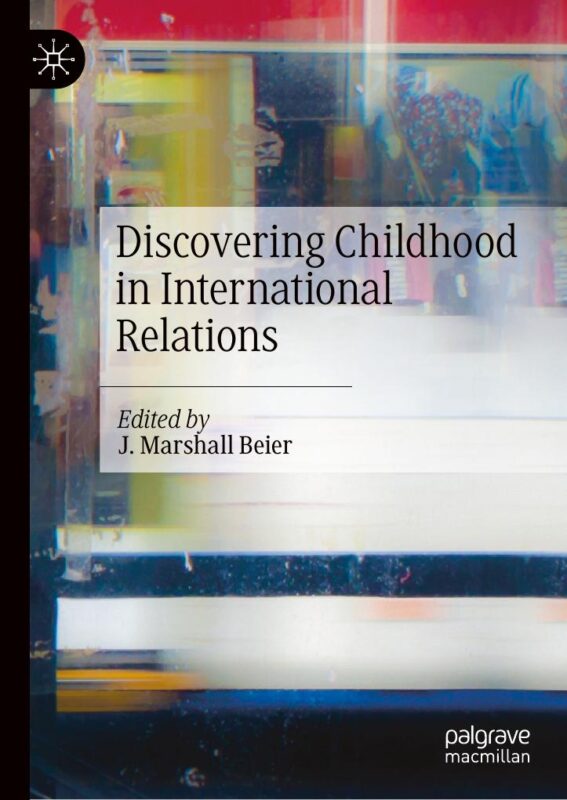
Discovering Childhood in International Relations 1st Edition by J. Marshall Beier
$41.00
Secure checkout
Instant digital download
PDF document
Document details
- Pages
- 276
- File size
- 3.04 MB
- Format
- Digital PDF
- Course
- Political Science
- Category
- eBook[PDF]
Sign in or create a free account to continue. Your purchase will be saved in My Downloads.
About this ebook
Discovering Childhood in International Relations, edited by J. Marshall Beier, focuses on moving children from the margins of global politics to a central position of political subjecthood and agency. The book critiques how International Relations (IR) traditionally treats childhood as a "technology of global governance" or simplifies children as helpless victims. [1]
The primary topics and themes covered throughout the volume include:
1. Critiquing Traditional IR Framings
- Victimhood and Vulnerability: Investigating why children are almost exclusively associated with vulnerability in international discourse (e.g., automatically categorized alongside women or restricted to discussions about the Global South). [1]
- Childhood as a Technology of Governance: Analyzing how the concept of childhood is constructed, manipulated, and deployed globally to justify political projects, security interventions, or sovereign authority. [1, 2, 3]
- Decolonizing Childhood: Re-evaluating Western-centric ideas of childhood and breaking down the power asymmetries built into how knowledge about children is gathered and analyzed in IR. [1, 2]
2. Situating Children's Agency and Activism
- Transnational Activism: Examining how children act as deliberate, impactful political subjects through various movements and transnational networks. [1, 2]
- The Politics of Age: Exploring how international norms define and restrict political capacity based on age, and how young people navigate or challenge these boundaries. [1]
3. Global Security, Conflict, and Resilience
- Securing Children: Evaluating how children's security is framed, who it serves, and what it looks like when children are treated as participants in security rather than passive objects.
- Vulnerable Situations: Addressing the lived realities and institutional responses to specific categories of youth, such as child soldiers and refugees.
- Resilience: Looking at how children adapt to, survive, and actively interpret severe geopolitical challenges. [1, 2]
4. Climate Change and Environmental Politics
- Environmental Subjecthood: Exploring children's roles and distinct vulnerabilities within the global politics of climate change, alongside their contributions to environmental defense. [1]
5. Popular Culture and Everyday Politics
- Representation and Media: Analyzing how images of suffering children or pop culture icons are utilized in world politics to shape public opinion or sanctify state actions.
- Meaning-Making: Understanding how children interact with media and pop culture to make sense of international issues like war, deportation, poverty, and racism in their everyday environments. [1]
6. Governing the Future
File included
tmpphpwwvPCT
3.04 MB
Related ebooks