
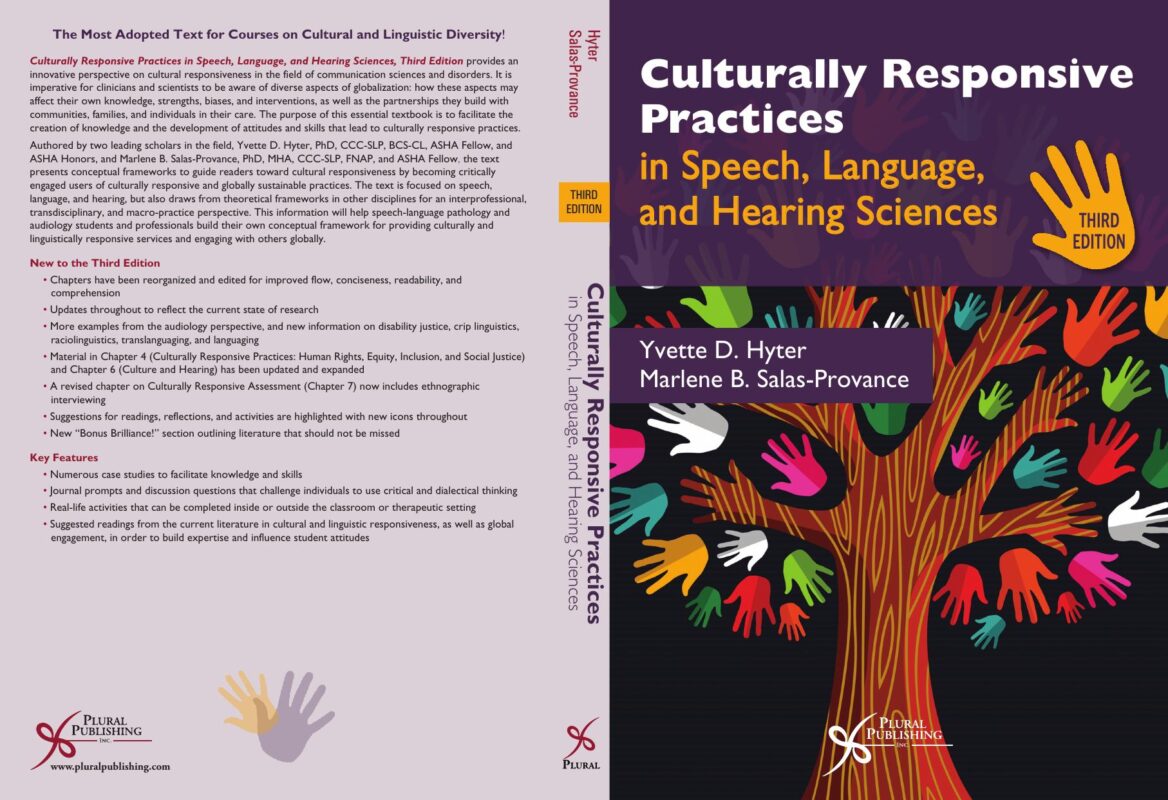
Culturally Responsive Practices in Speech, Language, and Hearing Sciences 3rd Edition By Yvette Hyter, Marlene Salas-Provance
$30.00
Secure checkout
Instant digital download
PDF document
Document details
- Pages
- 465
- File size
- 12.06 MB
- Format
- Digital PDF
- Course
- Medical Studies
- Category
- eBook[PDF]
Sign in or create a free account to continue. Your purchase will be saved in My Downloads.
About this ebook
The Culturally Responsive Practices in Speech, Language, and Hearing Sciences (3rd Edition) by Yvette D. Hyter and Marlene B. Salas-Provance provides a comprehensive framework for speech-language pathologists (SLPs) and audiologists to offer equitable, globally sustainable, and culturally attuned care. [1, 2]
The primary topics and core themes covered in this edition include:
1. New to the Third Edition Topics
The third edition incorporates recent research shifts and expands into novel areas of communication equity: [1, 2]
- Disability Justice and Crip Linguistics: Exploring how systemic disability discrimination intersects with language and structural access. [1, 2]
- Raciolinguistics: Examining the deep-rooted relationship between race, language, and systemic power dynamics. [1, 2]
- Translanguaging and "Languaging": Understanding how multilingual individuals fluidly utilize their full linguistic repertoires rather than keeping languages strictly separate. [1, 2]
2. Foundational Frameworks and Globalization
- Cultural Responsiveness vs. Cultural Competence: The book shifts the paradigm from a static endpoint ("competence") to an ongoing process and lifetime journey of growth ("responsiveness"). [1]
- Global Systems Perspective: Analyzing the diverse aspects of globalization and macro-practice perspectives. It helps clinicians understand how global events, migration, and systemic inequalities shape the lives of the individuals and families they serve. [1, 2]
- Human Rights and Social Justice: Expanded content (specifically in Chapter 4) focusing on structural equity, inclusion, and the ethical responsibility of communication scientists to act as advocates. [1, 2]
3. Culturally Responsive Clinical Assessment
- Moving Beyond Standardized Testing: Addressing how traditional, Western-normed standardized tools routinely misdiagnose or underdiagnose individuals from culturally and linguistically diverse (CLD) backgrounds.
- Ethnographic Interviewing: Fully updated strategies (specifically in Chapter 7) teaching clinicians how to use open-ended, non-judgmental active listening techniques to discover a family’s true lived experiences, beliefs, and expectations.
- Alternative Assessment Methods: Utilizing systematic observations, artifact analysis, and alternative testing formats to capture genuine communicative competence. [1, 2, 3, 4]
4. Culturally Responsive Intervention & Practice
- Culture and Hearing: Expanded coverage (specifically in Chapter 6) dedicated to the audiology perspective, highlighting cultural variations in hearing health, attitudes toward amplification/assistive devices, and Deaf culture.
- Working with Interpreters: Frameworks for effectively and ethically collaborating with spoken and sign-language interpreters to maintain diagnostic and therapeutic integrity.
- Interprofessional and Transdisciplinary Care: Building partnerships across allied health care fields to support holistically sustainable communication health. [1, 2, 3, 4]
5. Practical Application Tools
The textbook emphasizes critical and dialectical thinking through several integrated educational features: [1]
- Extensive case studies spanning speech-language pathology and audiology.
- Journal prompts and real-world reflexivity activities.
- The “Bonus Brilliance!” section, highlighting essential multicultural and social justice literature that clinicians should read to broaden their cultural lens. [1, 2, 3]
File included
tmpphpJS0f8W
12.06 MB
Related ebooks