
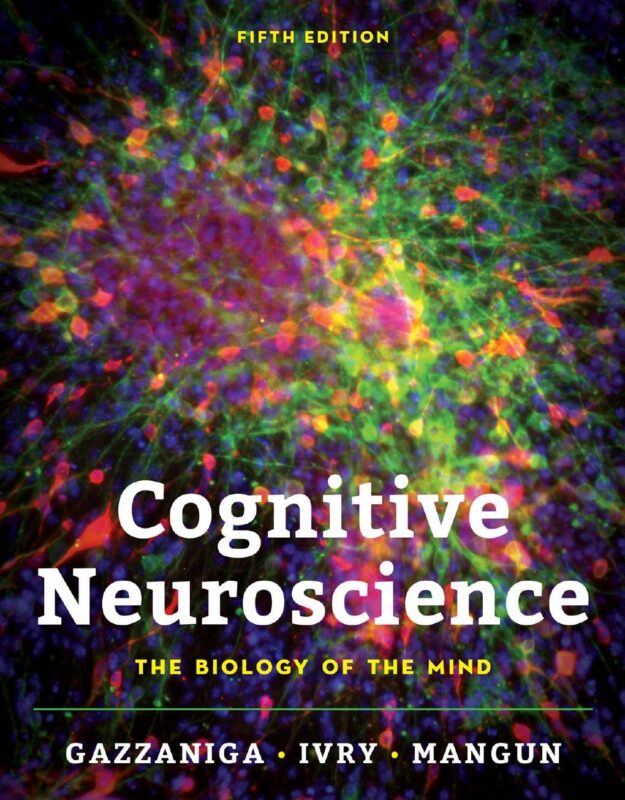
Cognitive Neuroscience The Biology of the Mind 5th Edition By Gazzaniga, Michael Ivry, Richard Mangun, George
$30.00
Secure checkout
Instant digital download
PDF document
Document details
- Pages
- 772
- File size
- 47.76 MB
- Format
- Digital PDF
- Course
- SCIENCE 101
- Category
- eBook[PDF]
Sign in or create a free account to continue. Your purchase will be saved in My Downloads.
About this ebook
The 5th Edition of Cognitive Neuroscience: The Biology of the Mind by Michael S. Gazzaniga, Richard B. Ivry, and George R. Mangun is comprehensively structured into three primary structural blocks: Background and Methods, Core Processes, and Control Processes / Complex Cognition. [1, 2]
Part I: Background and Methods
- A Brief History of Cognitive Neuroscience: Explores the historical roots of the field, the localization of function debates (phrenology vs. aggregate field theory), the evolution of cognitive psychology, and early neurological milestones. [1]
- Structure and Function of the Nervous System: Covers neuroanatomy, cellular composition (neurons and glial cells), and mechanisms of neural signaling. [1]
- Methods of Cognitive Neuroscience: Examines behavioral and computer modeling techniques alongside neuroimaging technologies including fMRI, PET, EEG/ERP, and transcranial magnetic stimulation (TMS). [1]
Part II: Core Processes
- Hemispheric Specialization: Investigates the anatomical and functional differences between the left and right hemispheres, heavily drawing on landmark split-brain research.
- Sensation and Perception: Examines how sensory organs gather information and how the brain processes modalities like vision, audition, olfaction, gustation, and somatosensation.
- Object Recognition: Details the neural pathways responsible for identifying shapes, patterns, objects, and faces (including agnosia and prosopagnosia).
- Attention: Analyzes the neural mechanisms that govern selective attention, neglect syndrome, and how the brain prioritizes specific sensory inputs.
- Action (The Control of Action): Explores motor pathways, subcortical structures like the basal ganglia and cerebellum, and the planning and execution of physical movements.
- Memory (Learning and Memory): Outlines sensory, short-term, working, and long-term memory systems, as well as the roles of structures like the hippocampus.
- Emotion: Investigates the neural circuits behind emotional processing, including the amygdala, appraisal, and the impact of emotion on learning and memory.
- Language: Covers the neurobiology of language, including speech production and comprehension, reading, and language deficits such as aphasia. [1, 2, 3, 4, 5, 6, 7]
Part III: Control Processes & Higher Cognition
- Cognitive Control (Executive Function): Details the lateral and medial prefrontal cortex systems that regulate goal-directed behavior, decision-making, and working memory. [1]
- Social Cognition: Explores the neural basis for understanding others, theory of mind, empathy, and social knowledge. [1, 2]
- Consciousness (The Conscious Brain): Examines the biological underpinnings of wakefulness, awareness, and philosophical perspectives on mind-brain relationships. [1, 2]
File included
tmpphp2dZ19r
47.76 MB
Related ebooks



