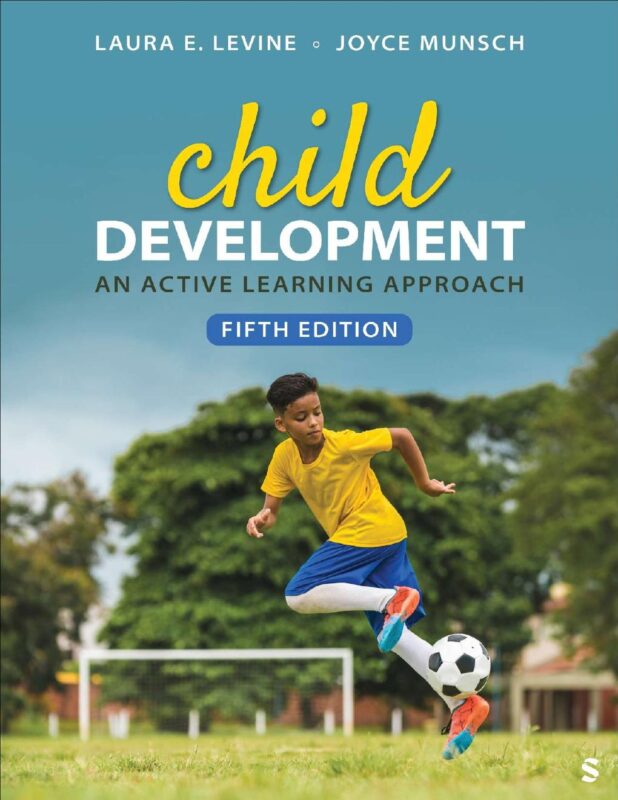
Child Development An Active Learning Approach 5th Edition By Laura Levine, Joyce Munsch
$30.00
Secure checkout
Instant digital download
PDF document
Document details
- Pages
- 995
- File size
- 25.2 MB
- Format
- Digital PDF
- Course
- Psychology
- Category
- eBook[PDF]
Sign in or create a free account to continue. Your purchase will be saved in My Downloads.
About this ebook
The Child Development: An Active Learning Approach (5th Edition) by Laura E. Levine and Joyce Munsch is a topically organized textbook published by SAGE Publications. Instead of tracing development strictly chronologically (age by age), the book is structured around fundamental domains of development from conception through adolescence. [1, 2, 3]
The primary topics and themes covered in the 5th edition include:
1. Biological and Physical Foundations
- Genetic and Biological Bases: Understanding human genetics, prenatal development, and birth.
- Developmental Neuroscience: The structural and functional development of the brain and nervous system.
- Perceptual and Motor Skills: How infants and children develop sensory perception and motor controls (fine and gross motor skills). [1, 2, 3]
2. Cognitive and Language Development
- Intellectual Development: Examination of major cognitive theories (such as Piaget and Vygotsky) detailing how children learn, think, reason, and solve problems.
- Language and Literacy: The mechanics of how children acquire language, communicate, and transition into reading and writing. [1]
3. Social and Emotional Development
- Socialization: How children learn the customs of their society and navigate social roles.
- Emotional Growth & Attachment: The development of self-concept, emotional regulation, and deep relational bonds.
- Positive Youth Development (PYD): Modern frameworks focused on fostering strengths, resilience, and positive outcomes in older children and adolescents. [1, 2, 3]
4. Cultural, Contextual, and Family Dynamics
- Diversity and Culture: Societal and cultural influences are integrated throughout all chapters rather than relegated to a standalone section.
- The Role of Fathers: Enhanced focus on paternal contributions to modern child rearing and development.
- Contexts of Development: The overarching impact of family structure, peer groups, media, schooling, and community socioeconomic status. [1, 2]
Core Pedagogical Features Wrapped Around These Topics:
- True/False Quizzes: Deployed at the beginning of chapters to actively confront and correct common myths and misconceptions about child development. [1, 2]
- Active Learning Activities: Hands-on exercises integrated directly into the text to apply theoretical research to real-world child behaviors. [1, 2]
- Journey of Research: Features outlining the historical background of developmental science, showing students how scientific knowledge evolves over time. [1, 2]
File included
tmpphpWkDnlD
25.2 MB
Related ebooks