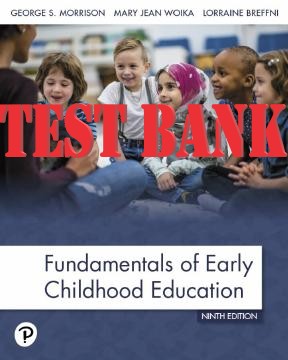
TEST BANK for Fundamentals of Early Childhood Education 9th Edition By George Morrison, Mary Jean Woika, Lorraine Breffni
$25.00
Secure checkout
Instant digital download
PDF document
Document details
- Pages
- 70
- File size
- 679.67 KB
- Format
- Digital PDF
- Course
- Education
- Category
- TEST BANKS
Sign in or create a free account to continue. Your purchase will be saved in My Downloads.
About this ebook
The TEST BANK for “Fundamentals of Early Childhood Education” (9th Edition) by George S. Morrison, Mary Jean Woika, and Lorraine Breffni provides a highly practical, brief, and contemporary overview of the early childhood education (ECE) field. [1, 2, 3]
1. Foundations, History, and Theories
2. Developmental and Age-Specific Stages (Birth through Age 8)
The textbook breaks down the educational and developmental needs of young children across dedicated age-specific chapters: [1, 2]
-
- Infants and Toddlers: Exploring responsive caregiving, physical/motor growth, socio-emotional development, and infant mental health.
- Preschool Years: School readiness, cognitive milestones, and social maturation.
- Kindergarten: Transitioning to structured school environments and foundational learning.
- Early Elementary Grades (1–3): Deepening educational approaches for primary school-aged children. [1, 2, 3, 4]
3. Curriculum, Instruction, and Classroom Practice
-
- Developmentally Appropriate Practice (DAP): Implementing core pedagogical guidelines rooted in children's specific cognitive, social, and physical milestones. [1, 2]
- STEM/STEAM and Digital Literacy: Integrating science, technology, engineering, arts, and math into everyday lessons. [1, 2]
- Technology Integration: A dedicated section ("Technology Today: Children, Families, and You") covering practical instruction on how to safely weave iPads, coding, video conferencing, blogging, and interactive tools into teaching. [1, 2]
- Guiding Behavior: Strategies for effective child guidance, classroom management, and supporting socio-emotional health. [1]
4. Diversity, Inclusion, and Special Needs
-
- Diverse Backgrounds: Serving and understanding children from varied cultural, linguistic, and socioeconomic backgrounds.
- Special Education Integration: Inclusive classroom practices, recognizing disabilities, and supporting children with exceptionalities.
- Poverty and Mental Health Impacts: Practical guidelines for assisting children and families facing structural challenges like poverty. [1, 2, 3]
5. Professionalism, Assessment, and Community
- Observing and Assessing Children: Implementing ethical methods to track, document, and evaluate child development to guide individualized instruction.
- Professional Roles and Standards: Meeting NAEYC professional standards, engaging in continuous lifelong learning, navigating real-life ethical dilemmas, and advocacy.
- Family and Community Partnerships: Cultivating collaborative relationships with parents and community stakeholders, including distinct outreach approaches for military, LGBTQ+, and non-traditional family structures. [1, 2, 3, 4]
File included
ScholarFriends.com-tb-ready.pdf
679.67 KB
Related ebooks